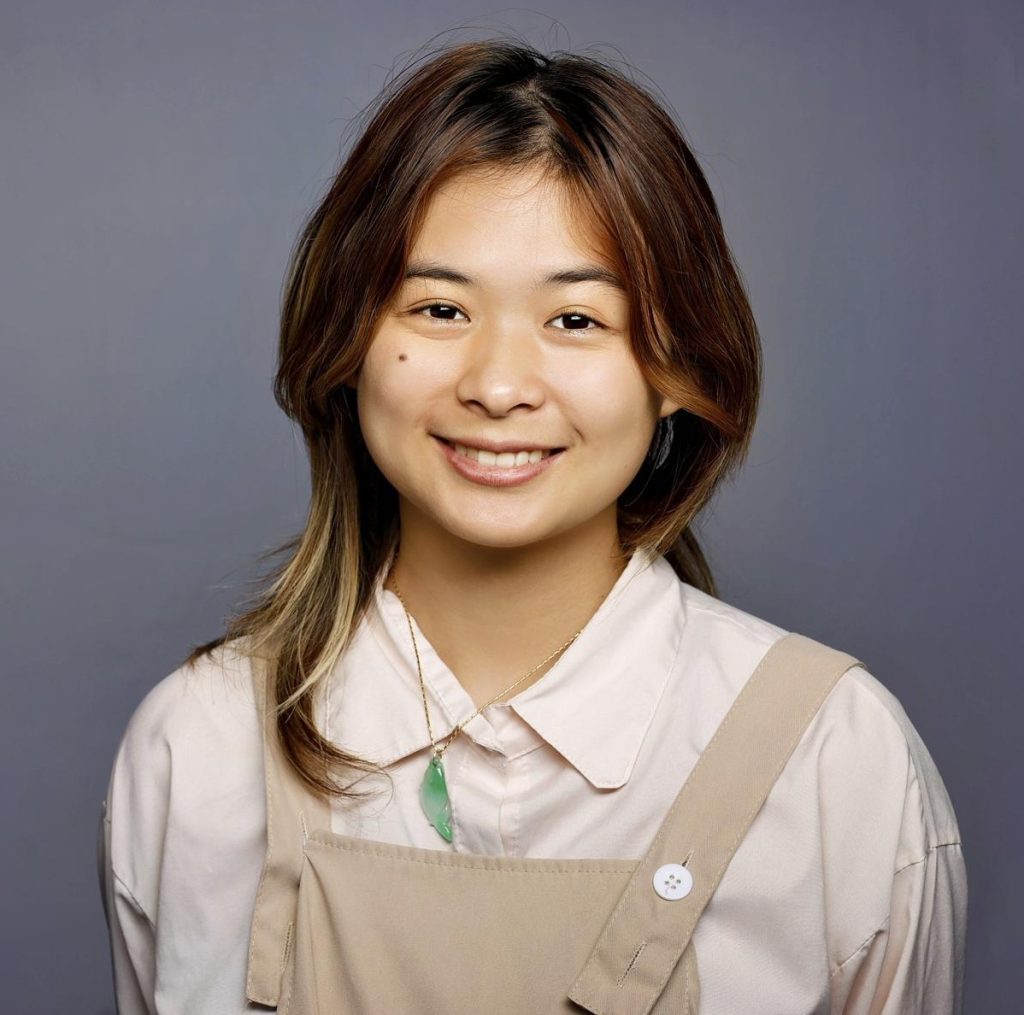
By Anne To | Contributing Writer | California Local News Fellow
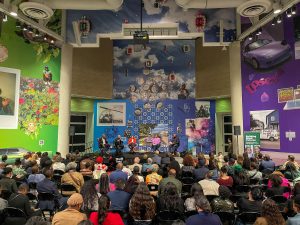
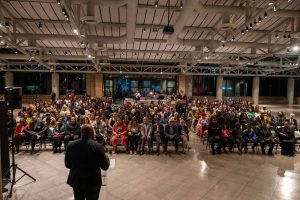
You On Wednesday evening, Feb. 25, dozens of people filled the atrium of the California African American Museum (CAAM) to discuss solutions, futures, and opportunities for Black individuals, youths, and families.
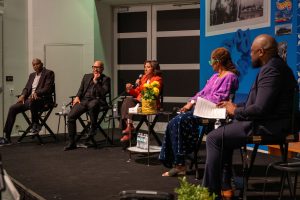
Hosted by CAAM and St. Joseph Center, the event gathered four panelists who shared methods for improving Black futures: LA County Supervisor Holly Mitchel, CEO of The California Endowment Brenda Solórzano, CEO of Diffusion Venture Studio Henry Hips, and founder of ORO Impact George C. Fatheree, III. Joanna Jackson, CEO of Weingart Foundation, also provided opening remarks.
Ryan J. Smith, CEO of St. Joseph Center and moderator for the event, spoke to The Observer about the roles of Black youth in the future.
“ We have no future without talking about how we invest in youth, and we have opportunities to right so many wrongs when not only do we think about ensuring that youth are in the room but also that they’re a part of the solutions,” Smith said.
He shared his personal experience where someone “invested” in him by giving him a job as a youth organizer at 15.
“So, imagine if we’re at scale investing in youth development and workforce development opportunities for youth, making sure that they understand the economy, understand home ownership and embed that in their academic supports.”
Mitchel emphasized the importance of imagination during the discussion.
“I think that when we begin to collectively imagine the possibilities, the future for Black eople … where we’re safe or it’s well lived, where we do have housing security where we can own,” Mitchel said. “I believe that if we collectively imagine those possibilities. We will collectively build them in a real and meaningful way.”
Mitchel recounted the time she spoke to a woman who participated in a dreaming exercise program for young women living in housing developments.
“This young woman, her mother had been diagnosed with HIV and [she was] afraid she might have to go in, in foster care,” Mitchel said. “ I’ll never forget, her dream was a two bedroom apartment near a hospital. I was like, ‘That’s your dream?’ So we don’t spend enough time really dreaming about what the possibility could be before we even try to get there.”
We look at any data set, there are significant disparities.
Black people make up 9% of LA County’s population, but they also make up 31% of the county’s homeless population, according to the LA County Chief Executive Office. From 2010 to 2020, all other ethnic minorities experienced some growth in homeownership status except for the Black community, according to data from the U.S. Census Bureau.
You “When we look at any data set, there are significant disparities, and when we look, the Black community is always circling the bad category,” Solórzano said.
Fatheree recalled a 2016 study by the Corporation for Enterprise Development that stated it would take 228 years for Black families to reach the wealth of White families. According to the Pew Research Center, an average White household had 9.2 times more wealth than the average Black household.
“Slavery ended 160 years ago,” Fatheree said. “What that means is we are closer to the slavery era than we are to that era of wealth equity.”
You Fatheree said that there were “three essential ingredients” to protecting and expanding Black wealth as a means for Black power: demanding evidence over erasure, allies based on shared interest, and thoughtful strategic, radical solutions.
He shared that he founded the nonprofit Black Land Loss Narrative Archive Project to document and preserve stories about policies and practices that took land, businesses and homes from Black families.
“We’ve never faced a time where there is more pressure towards erasure,” Fatheree said as he referenced efforts within the Trump administration to ban books and alter information within museums about Black history and experiences.
Alongside the panel, the museum is currently hosting an exhibit by L.A. filmmaker J.J Anderson called Sometimes I Feel Like I am Almost Home. The exhibit displays footage, imagery, and intergenerational interviews.
Event attendees were able to visit the exhibit before the event as they were served snacks and drinks from Black-owned businesses: Bread & Roses Catering, 1919 Wine and Events, and Chef Bly.