
By Willie Brown as told to Terence McHale
Mike Royko was a Chicago columnist syndicated in hundreds of newspapers across America. His working man observations were written with the sarcasm of a man dipping his pen in a boilermaker. He dubbed Jesse Jackson “Jetstream Jesse” for the speed with which he publicly embraced issues. The comment was not meant to be a compliment. Jesse would generate impressions and emotions throughout his life.
A few weeks after the murder of John F. Kennedy, I went to a Young Democrats gathering in Las Vegas, Nevada. I flew in an airplane for the first time. A college kid from North Carolina was there. My first impression was of a quarterback who could run and throw while holding his own in policy discussions with eggheads.
“Hey,” he said. “My name is Jesse Jackson.”
He had taken on an unofficial role as the social chairman.
Even as a young man, Jesse was committed to finding stages far beyond his impoverished North Carolina birth. He was the child of a teenage mother who was the child of a teenage mother. As he said himself in one of his many classic speeches, he was born with a shovel engineered for his hands.
Jesse got to the microphone early at our Las Vegas meeting. He had the innate capacity of a church-going Baptist for pulling words from the stars and, without hesitation, squeezing them together with lightning cohesion. He was brilliant then, and he got substantially better at speaking with consequence and depth each year … I was born in the slum, but the slum was not born in me … the only justification for looking down on someone is we are going to stop and pick them up.
Jesse had a nickname within a few days of the Las Vegas gathering. Jesse Jackson was called “The Country Preacher.”
His own view of being country became more expansive. Jesse was not shy about burnishing his credentials and was already saying he was a disciple of Martin Luther King, Jr.
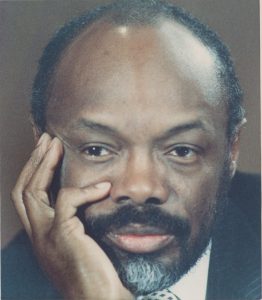
He was the most physically imposing of Martin’s followers. Jesse willingly made himself the first target for those who were given latitude by law enforcement in closing down even a peaceful protest. Jesse was not afraid of a beating. He was not frightened by incarceration. A snarling crowd screaming the ugliest invectives did not turn him around. Jesse Jackson’s physical courage is a matter of record.
I would get to know Jesse. We had no idea at our first meeting how our lives would weave in and out.
He knew how to have fun for someone who was fundamentally an angry young man. When I told Jesse I was running for office in San Francisco, he said he wanted to visit. He wanted to know what it was like to live in a place far away from the heated South.
“Is the weather ever bad in California?”
“Not that I’ve noticed,” I told him.
“I’ll be seeing you there,” he promised.
One of Jesse’s great speeches would be in San Francisco a quarter of a century later. It would take place at the Moscone Center named in honor of my fellow janitor at Hastings Law School. Jesse’s oratory by then had taken on an orchestral thunder that moved the clouds at a whim and reframed the Pacific Coast sky.
“We are often reminded that we live in a great nation – and we do … we must not measure our greatness from the mansion down, but from the manger up.”
Martin Luther King was stolen from us in 1968. Jesse was with Martin in Memphis when a low-rent man with a dollar crew cut was hiding with a stolen gun. Whether Jesse cradled a dying Martin and his shirt was stained with Martin’s blood has historically been a point of contention. Jesse was condemned in many quarters for telling yet another story to appease what many viewed as an addiction to the spotlight.
The criticism is unfair. The attention Jesse received was greater than the attention he sought. He attracted crowds. He has an activist’s heart. He was an ever-interesting public figure with a unique viewpoint that isolated the contemptibility of injustice. Cast somewhere between disciple and savior, people lined up to hear Jesse speak with the credibility of visible wounds from surviving the violent incredulity of Jim Crow.
Jesse had a falling out with other disciples of Martin Luther King. Some of them insisted Jesse’s popularity with the press was nettlesome to Martin himself and would have ended in a break had Martin lived. I don’t know. Jesse celebrated that Martin’s position as a preacher and a leader will not disappear over time. Martin’s legacy was enshrined long before he was killed on his way to the prime of life.
Whatever is true, Jesse found his own place as an American of significant note. He could travel the earth and national leaders welcomed him with celebrity treatment. More than once, American prisoners in foreign cells were set free due to a visit from Jesse Jackson. Even as someone who wanted to be a math teacher once, I cannot calculate the number of influential people who keep their picture with Jesse on their office walls.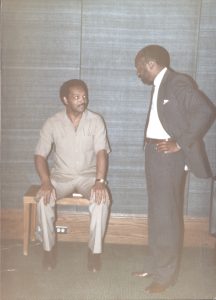
At the same time his fame grew, he would not desert those in the neighborhoods who shaped his thinking. He unapologetically explained his constituency was the damned, the disrespected, and the despised.
Jesse’s speeches unleashed the source of his anger. He was angry that racism was systemic. He was angry that different doors and different drinking fountains were enforced for use by loyal Americans of different color. He was angry that signs saying “whites only” were allowed to hang openly.
He was angry that Black businesses could not get their products on store shelves. He was angry that Black employees at top hotels were not making a livable wage and were forbidden from staying in the places where they worked.
Jesse was angry that Blacks could only live in certain areas of a city. He was angry that banks were reluctant to offer home ownership loans to qualified Black families. He was angry that Black health care providers could not afford to be treated at the hospitals where they cleaned up after white patients.
Jesse was angry that kids of color were sent to second-rate schools to be educated with outdated books. He could not stand that Blacks were given more severe penalties by the courts for their mistakes than their white counterparts. He was angry that more Black people could fit on one bus to protest voting laws than there were Black men and women elected to office nationwide.
Nobody put in a few words better the image of an entrenched wrong than Jesse … we lost the presidency by the margin of our despair … a man must be willing to die for justice … death is an inescapable reality, and men die daily, but good deeds live forever.
Jesse Jackson had the qualifications to be President. “He could win if he wasn’t Black,” was mainstream editorializing I heard too often.
I was his Northern California campaign chair for his presidential bid in 1984. San Francisco, the most beautiful city on the planet, held the Democratic convention that year, and threw one of her great parties for Jesse. The many offerings of California were replicated visually in a stunning attraction at the pier. The ticket to have a picture underneath an artistic rendering of the Golden Gate Bridge was more exclusive than getting inside the convention hall itself.
I was his national chair when he ran again in 1988. A constant influx of people wanting Jesse’s ear became a problem. It was difficult at times to discern if Jesse was holding religious revivals or running for office. Perhaps the only peril worse than having no staff is having too many people in the mix. Of course, such is the problem when campaigns become crusades.
I cheered with millions of others at the convention when Jesse enunciated a visual difference between Republican and Democratic leadership. “We cannot forget that fifty years ago, when our backs were against the wall, Roosevelt was in a wheelchair. I would rather have Roosevelt in a wheelchair than Reagan on a horse … don’t you surrender and don’t you give up.”
Jesse would retain personal bitterness after his presidential campaigns. He could be unguarded. In private, he acknowledged not getting the credit he deserved for paving the way for others in national politics. The bravery he showed walking the dark streets where a hatefully entitled Jim Crow had him in his sights was too easily trivialized.
The reason for the presidential candidacy of Jesse Jackson remains prescient.
“What is the fundamental challenge of our day?” he asked. “It is to end economic violence.”
The final analysis of Jesse’s public life is not a complicated conclusion. Few from the front line have gotten beyond the fevers of their time to tell simple truths as well as Jesse Jackson.
“The long arm of justice reaches neither for the political left nor the political right, but for the moral center,” he offered. “Vanity asks the question is it popular? Politics asks the question is it right? In the end, is it morally right? Politics and popularity must adjust to the unyielding power of the moral center. There was a right and left in slavery, but no moral center.”
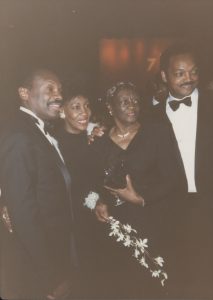
Jesse understood he was pulled in too many directions by folks expecting him to take up their battles. Hard for many to picture a time when there were no Black police chiefs, no Black judges, few Black lawyers, no Black people on television or in the movies, and Jesse Jackson was daring to introduce a dangerously intractable America to herself.
Born twenty years later as a beneficiary of someone like him, Jesse’s presidency would have been a marvel to witness.
Ultimately, as I guess it happens to most, Jesse was not immune to the scourges of time . The country preacher with the Jetstream Jesse tirelessness from my early days drew a bad hand when the years began to steal his health.
During the Democratic National Convention in 2024 they brought his story full circle. I was sad to see them wheel Jesse out to center stage without taking the time to share his deserved place in history. This remarkable leader with the voice that summoned the best of America was dying an old man. I wondered if the young people watching understood the enormity of his contributions.
Willie Brown was the longest serving Speaker of the California State Assembly and the first Black mayor of San Francisco. He shares his stories of the extraordinary people and remarkable moments in his long career in public service with his friend, Terence McHale. in a collection titled, “Stories of a Perfectly Tumultuous Life.”