
Joe Kocurek | California Black Media
Jasmine Young wasn’t sure what she had signed up for when a friend from church encouraged her to attend a Monday night Healing Circle in Victorville. “I didn’t know what it was about,” said Young, a local business owner. “There was a sign-up sheet, so I signed my name and started coming.”
What she found was relief from the pressures of daily life — and a sense of connection that can be difficult to come by in San Bernardino County’s High Desert, where communities are spread across vast distances.
“Even though we have a large Black population up here, we’re still spread out,” Young said. “So, it’s nice to see friendly faces. It’s a great mix of African ancestral traditions and modern American culture. A lot of us don’t know where we originally come from, so just having that sense of belonging is helpful.”
The Healing Circles are part of the Ubuntu Project, an initiative designed to foster community and resilience among Black Californians living in the region. A rugged stretch of mountains separates the High Desert — where many Black residents live — from the rest of San Bernardino County, a geographic barrier that can also deepen social isolation.
“A lot of times, we have to scream and yell for services to come up here,” said Nichole Williams-Artry, the project’s program coordinator.
Rooted in African traditions and contemporary African American culture, the Ubuntu Project creates spaces where participants can reflect on personal experiences, build relationships and develop tools for coping with bias and hate. The initiative has received funding from California’s Stop the Hate program and provides the type of healing services people can find when they call the CA vs Hate hotline and online reporting system.
The project’s name comes from the Southern African philosophy of ubuntu, often expressed as “I am because you are,” emphasizing the interconnectedness between individuals and their communities.
“We’re experiencing hate. We’re dealing with isolation. We’re dealing with generational harm,” Williams-Artry said. “And there were very few places where people could go for help. So, we’re creating those spaces — through healing, culture and connection.”
During Healing Circles, participants are encouraged to share lived experiences that are not always discussed openly.
“A lot of times in African American culture, we don’t highlight how negative stereotypes have impacted us,” Williams-Artry said. “The Healing Circle gives people a space to bring those experiences forward, grounded in community.”
For Young, the experience was impactful enough that she later encouraged her daughter, Jaslynn, to attend. As a busy high school student and president of her school’s Advancement Via Individual Determination (AVID) program, Jaslynn initially hesitated to add another commitment to her schedule.
“I was like, ‘I don’t want to do it. I want to stay home — especially on a Monday,’” she said.
After attending, however, she quickly recognized the value of the space.
“We talked about problems I’m not able to talk about at school,” Jaslynn said. “They also brought up things I didn’t even realize were tucked away. We talked about how we could better ourselves — as women, as Black women and as a community.”
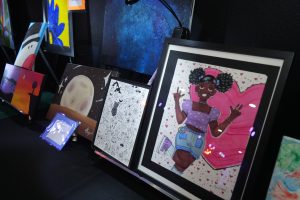
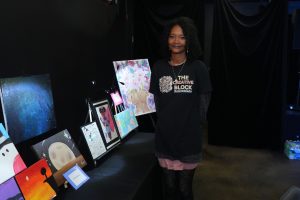
She also gained confidence in her artistic abilities when the Ubuntu Project hosted a gallery event showcasing participants’ work.
“I’m a shy person, so I was hoping not a lot of people would come,” she said. “But hearing other people’s perspectives on my drawings gave me a new boost of confidence.”
Williams-Artry is now working to expand the project’s reach by facilitating smaller, neighborhood-based Healing Circles throughout the region, an effort, she says, will bridge both geographic and social gaps.