
By Cecil Egbele | Contributing Writer | California Local News Fellow
If you watched the 2026 Africa Magic Viewers’ Choice Awards (AMVCA) red carpet and found yourself dazzled but not quite sure what you were seeing, you may just be missing the context. But for those who understand the context, they were not surprised by the global reaction.
The AMVCA, Africa’s premier film and television awards ceremony, held on May 9, 2026, in Lagos, Nigeria, has long been a spectacle for those on the African continent and those who know of it; some dubbed it “The Africa Met Gala.” But this year, it generated wider global attention. From a cathedral-inspired gown to a dress reportedly built from 500 loaves of bread to a ball gown constructed from repurposed kitchen sponges, the images went global. But what the international internet was reacting to was not just extravagance. It was a fashion language, rooted in culture, steeped in symbolism, that most of the world is only beginning to understand.
What the Looks Were Actually Saying
Actress Bisola Aiyeola’s gown, titled “Mmiri Ndu,” meaning “Water of Life” in the Igbo language spoken in the Southeastern part of the country, was designed by KGZ Opulence Couture. The piece featured a vivid blue silk waterfall from neckline to floor, with sculptural moss-green and brown elements curving around the skirt like riverbank foliage. The final detail was the coral beads. Coral beads are a symbol of royalty, spiritual authority, and ancestral connection in different African cultures. They are worn at coronations and the most significant moments of a life. When you add that water holds deep spiritual weight in Igbo cosmology, associated with the goddess Mami Wata and the concept of life force, the look stops being a fashion statement and becomes something closer to a prayer rendered in fabric.
Elsewhere, the gele, the formal head wrap worn by Yoruba women that communicates status and occasion through its size and intricacy, appeared across the carpet as a deliberate declaration of ancestral origin.

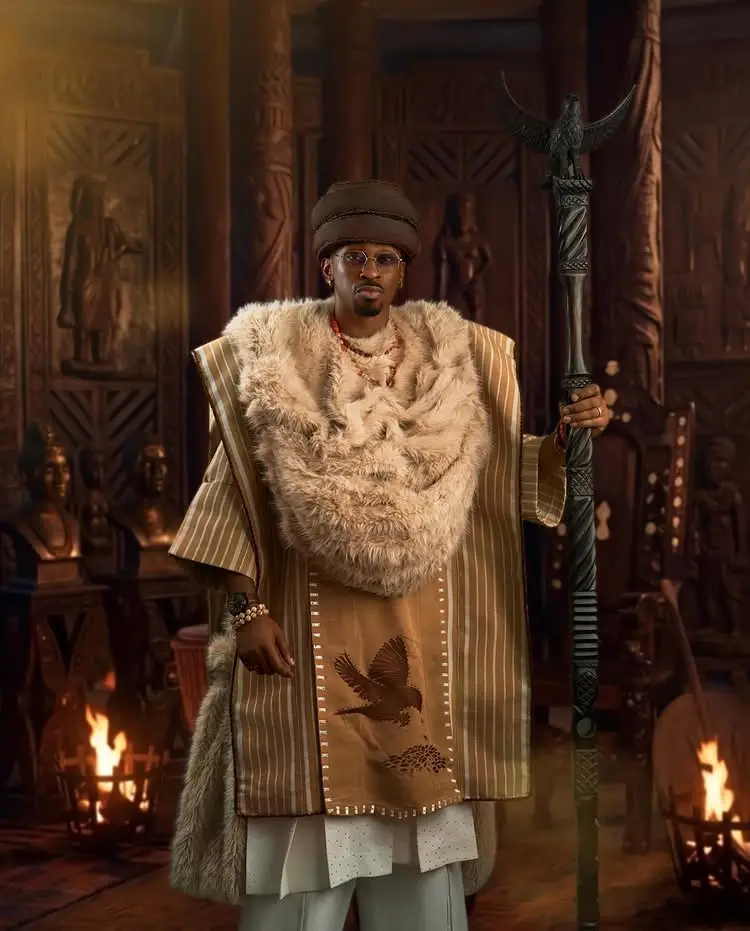
Photo credit: Instagram @tobibakre
Actor Tobi Bakre’s agbada, the centuries-old flowing robe worn by West African royalty and heads of state, completed with a custom brass staff, was not just a fashion statement but a symbol of culture and authority.
The World’s Reaction
This year, there was more global attention on the red carpet. The BBC described it as one of “dramatic trains, sculptural gowns, shimmering fabrics and heavily theatrical designs that once again transformed the event from an awards show into a spectacle of style.”
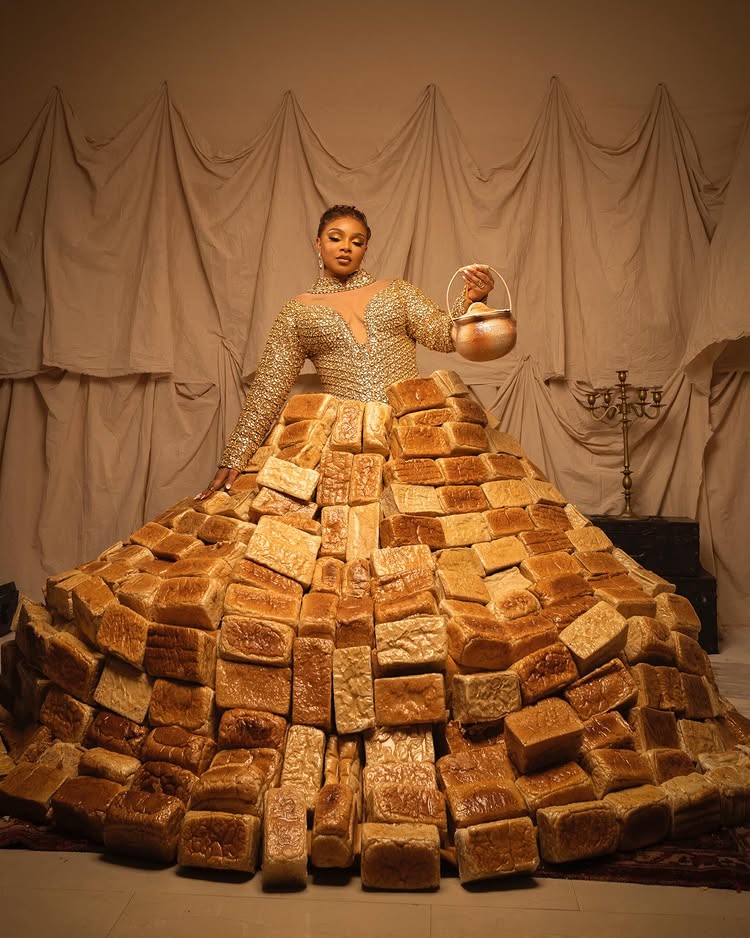
Photo credit: Instagram queenmercyatang
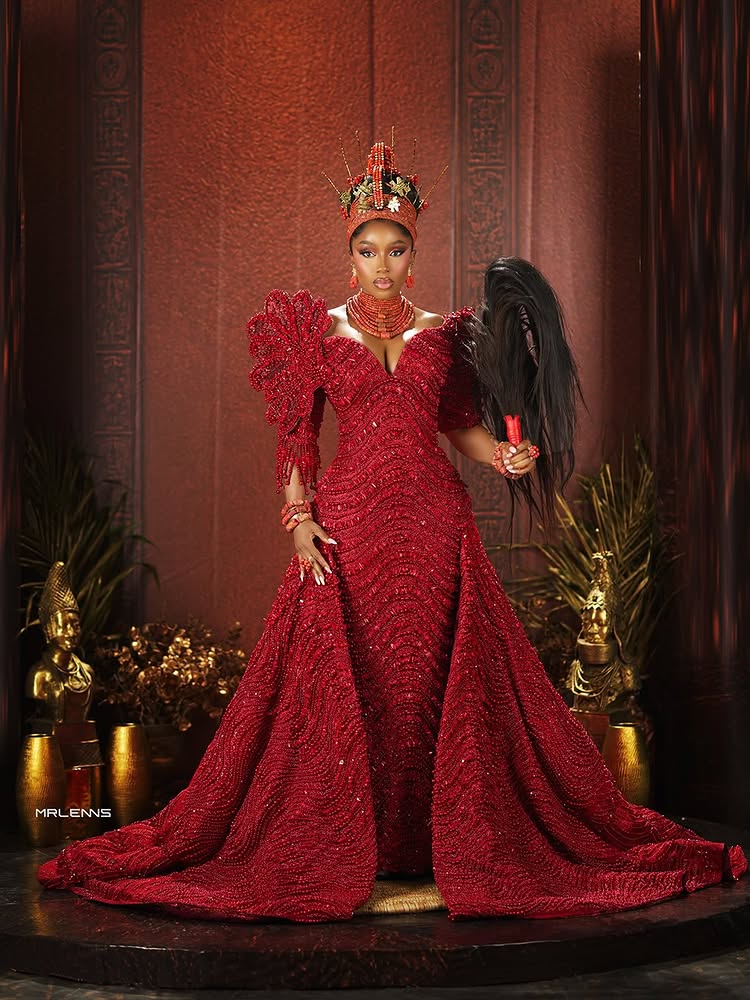
Photo credit: Instagram official_mercyeke
According to YouTuber and fashion analyst John Villa, compared to the AMVCA fashion, the Met Gala was “child’s play.”
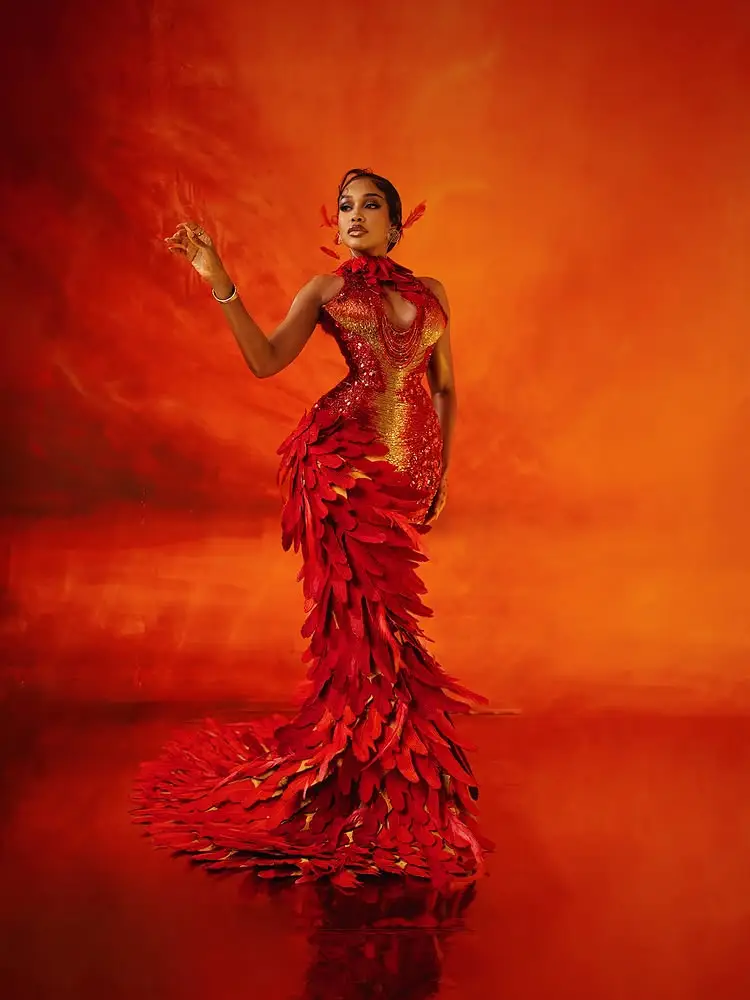
Styled by: @dahmola
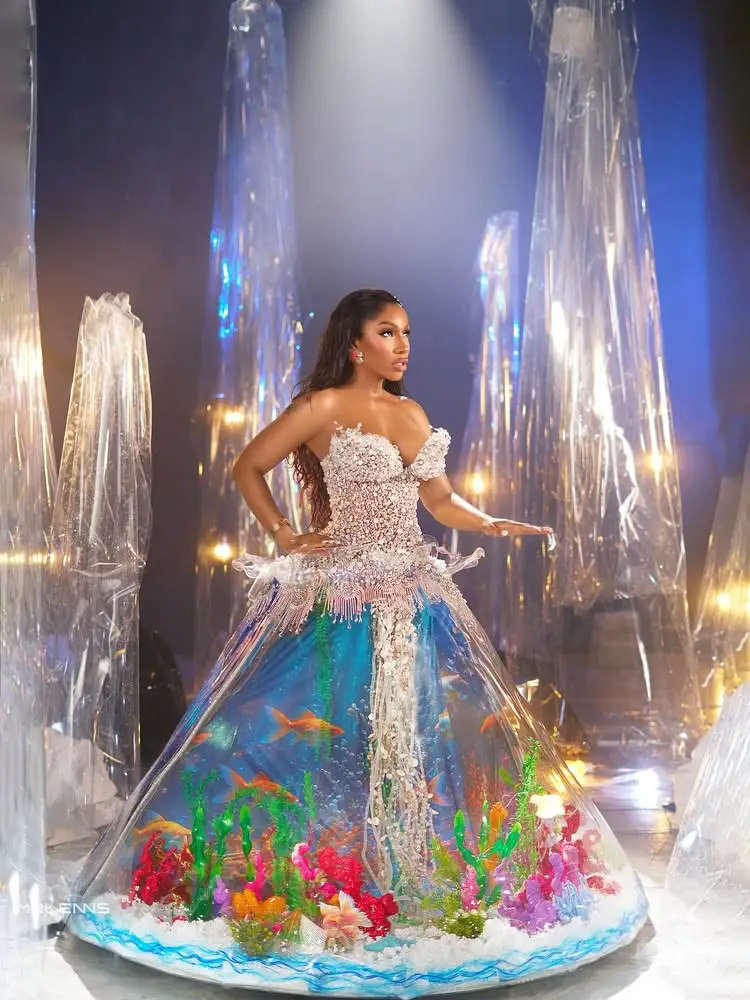
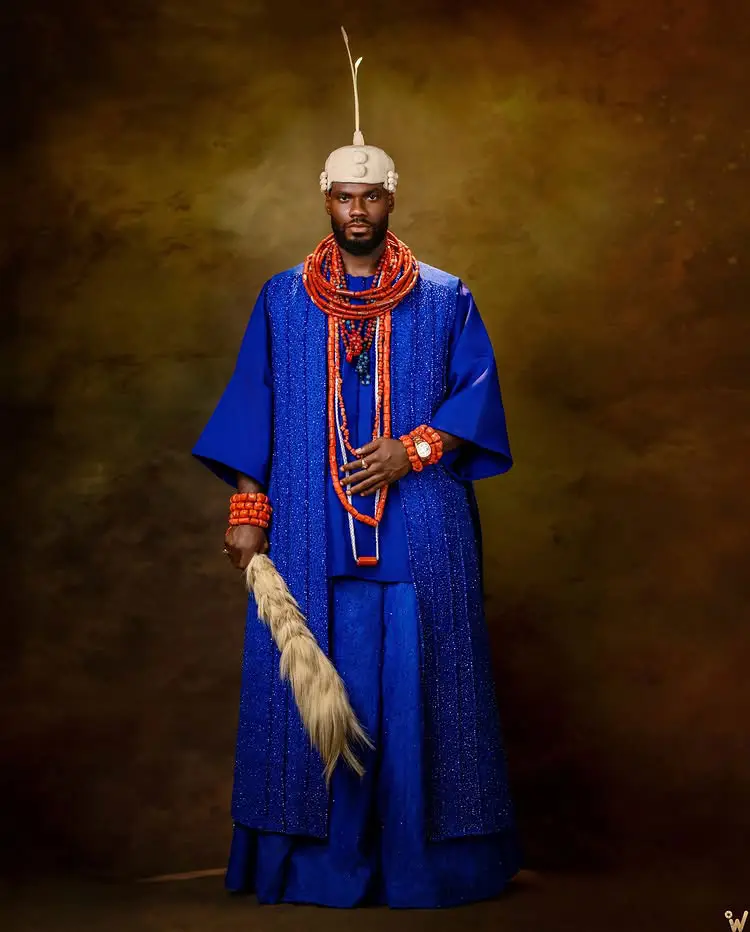
Photo credit: Instagram @princenelsonenwerem
Designer: @amdiddyy
Popular Instagram platform “I Deserve Couture” was among the first international voices to put words to what many were feeling, arguing that the AMVCA consistently outdelivers the Met Gala in creative ambition and originality, “I found my new Met Gala – it’s AMVCA red carpet.” The post spread quickly.
@refi captured the sentiment of the diaspora clearly: “Africans have always been looked down upon. Now y’all see where excellence actually originated from in some forms. Shine Africa. Take up your rightful space in the world.”
@_kehindebankole said ‘Nigeria. We hold things down. Any field. Any day. Anytime. Anywhere. Period”
YouTube reaction videos showed viewers from the US, UK, and Europe encountering the looks cold, and responding with stunned silence, then laughter, then awe. “Why isn’t this on every major fashion platform?” one commenter wrote. “Why am I only finding out about this now?”
A Designer Who Saw Both Sides
Chioma Perpetua, the Nigerian-born founder of Chiclasik, a Southern California couture brand, watched the AMVCA from her home in Bakersfield, California. She spoke from the point of view of a designer who understands couture design and African culture.
“This year’s AMVCA fashion was very expressive and more intentional artistically,” she said. “It wasn’t just about looking glamorous anymore. It felt more like wearable art and storytelling.”

Chioma Perpetua, Bakersfield-based Nigerian fashion designer and founder, Chiclasik
Though she gave a pass to all the creations, her standout look on the AMVCA red carpet mirrored what the wider conversation landed on. Nana Akua Addo’s silver cathedral gown by @abasswoman.ng, a six-month construction inspired by Cologne Cathedral, she called ‘a whole concept.’ “The cathedral inspiration, the structure, and the way it was carried made it feel powerful and intentional,” Perpetua said.
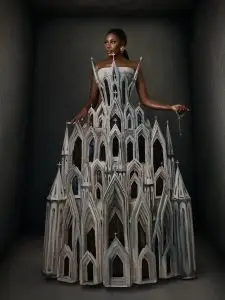
Ghanian actress Nana Akua Addo wearing a Cathedral dress inspired by the Cologne Cathedral, Germany.
Costume by @abbaswoman.ng
Of Osas Ighodaro’s metal sponge ballgown by Veekee James, she said: “Using metal sponges and turning them into something that still looked elegant and red-carpet worthy was very creative. I love when designers take everyday inspiration or unusual materials and transform them into something beautiful and wearable.”
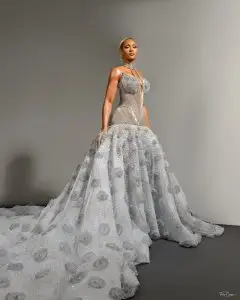
Actress, Osas Ighodaro wearing a shimmering dress made from 400 metal sponges designed by @veekeejames_official
For Perpetua, 2026 marks a turning point that has been building for years: “African designers are no longer trying to catch up. We’re creating our own lane now, and the world is paying attention.”
