By Marion Apio | Contributing Writer | California Local News Fellow
Amid stage smoke and West African rhythms, the piece explored memory and sacred dreams while honoring maternal ancestors. During the performance, artists paused to address systemic injustice, honoring Black children who have died without receiving justice and calling on the audience to speak their names aloud into the space.
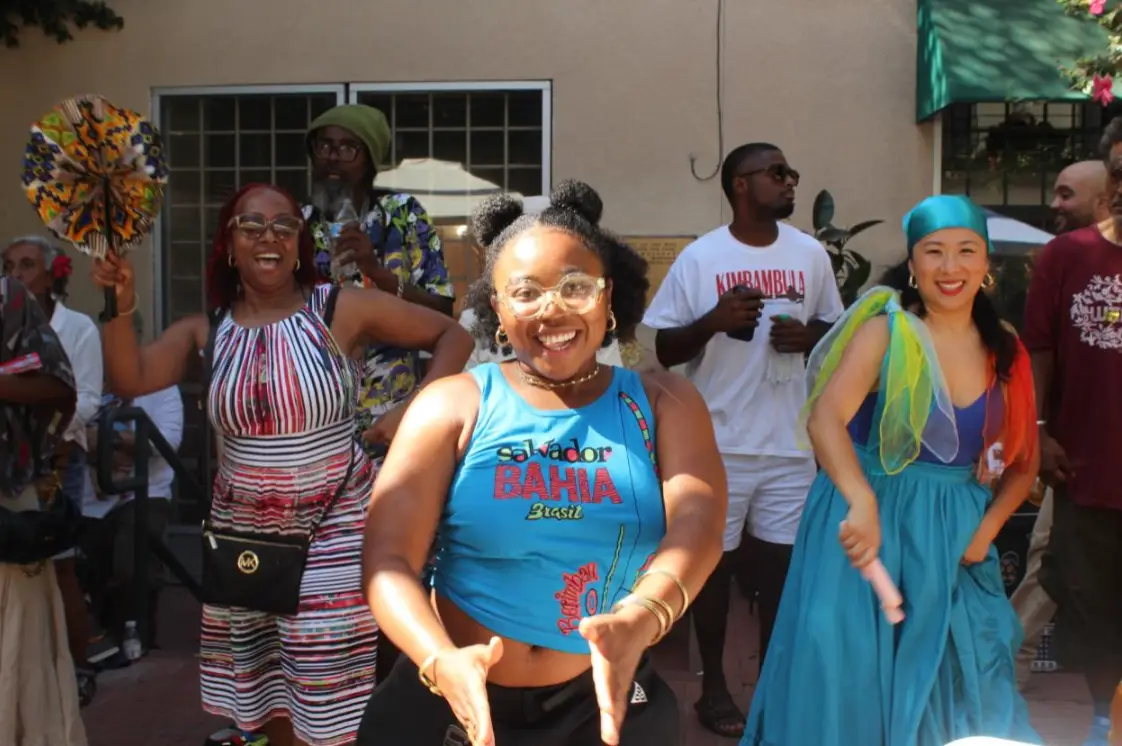
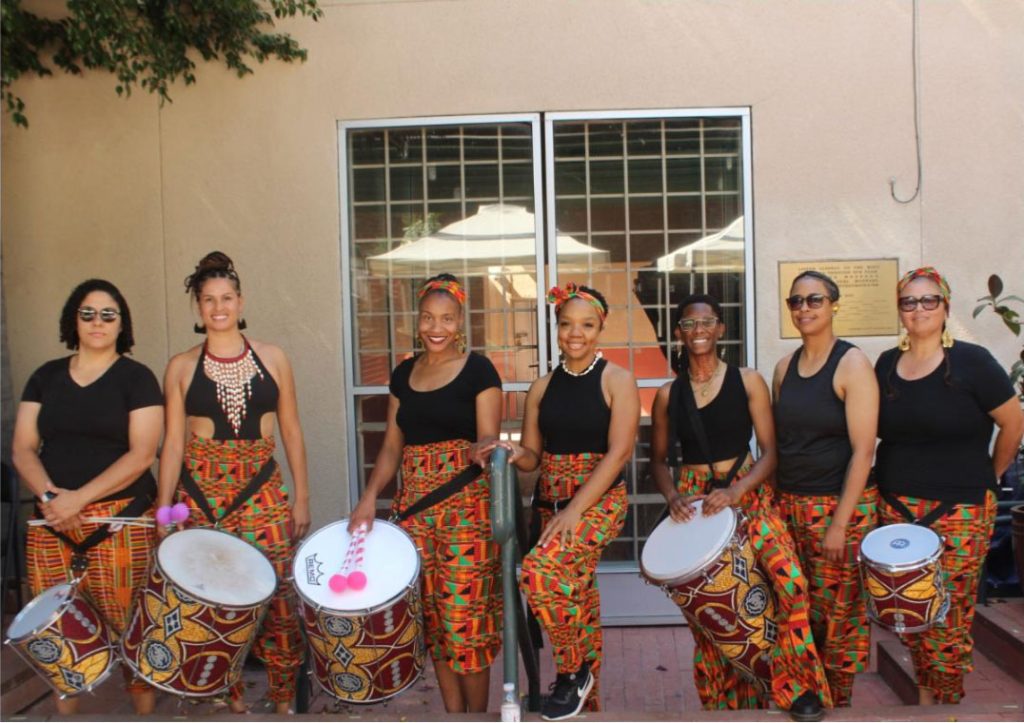
The all-women Afro-Brazilian percussion ensemble Bloco Obini—composed of local educators, nurses, activists, and healers—brought their drums into the center of the venue. Carrying the spirit of Ayan Agalu, the Yoruba spiritual archetype symbolizing the drum’s power to bring strength and unity, their polyrhythmic drumming drew attendees from across the grounds into an expansive dance circle.
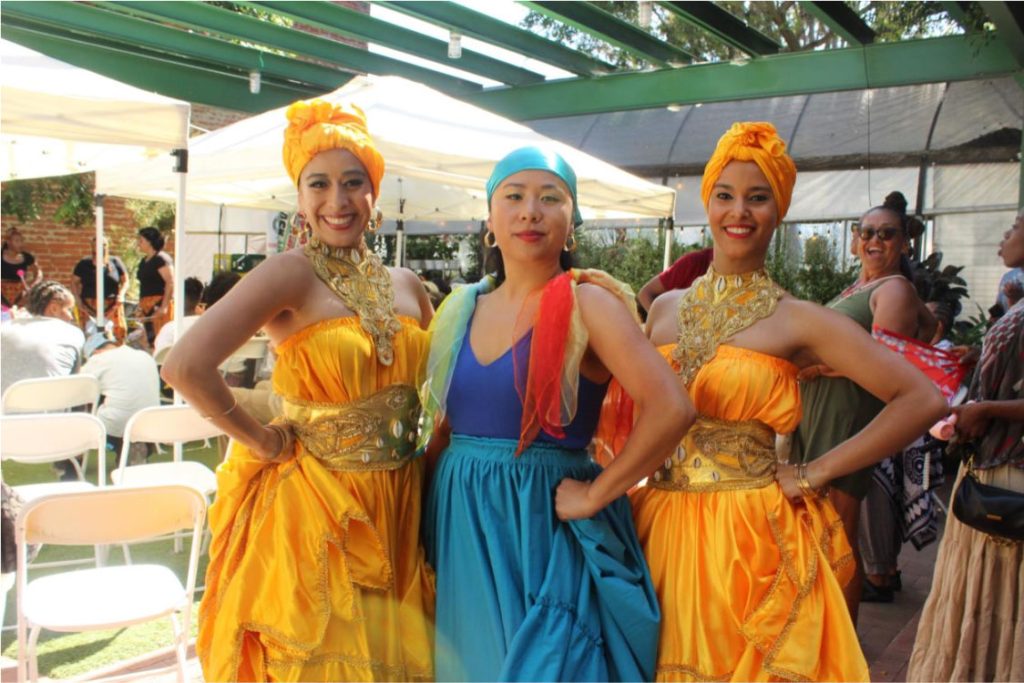
Dancers representing Kimbabula Cuban Dance and Music Ensemble showcased authentic Afro-Cuban traditions through choreography developed by director Kati Hernandez. Clad in vibrant attire, the three dancers performed traditional Cuban Rumba, Orisha sacred movement, Afro-Cuban jazz, and Cuban Son, illustrating the deep ties between dance, music, and Afro-Cuban heritage.
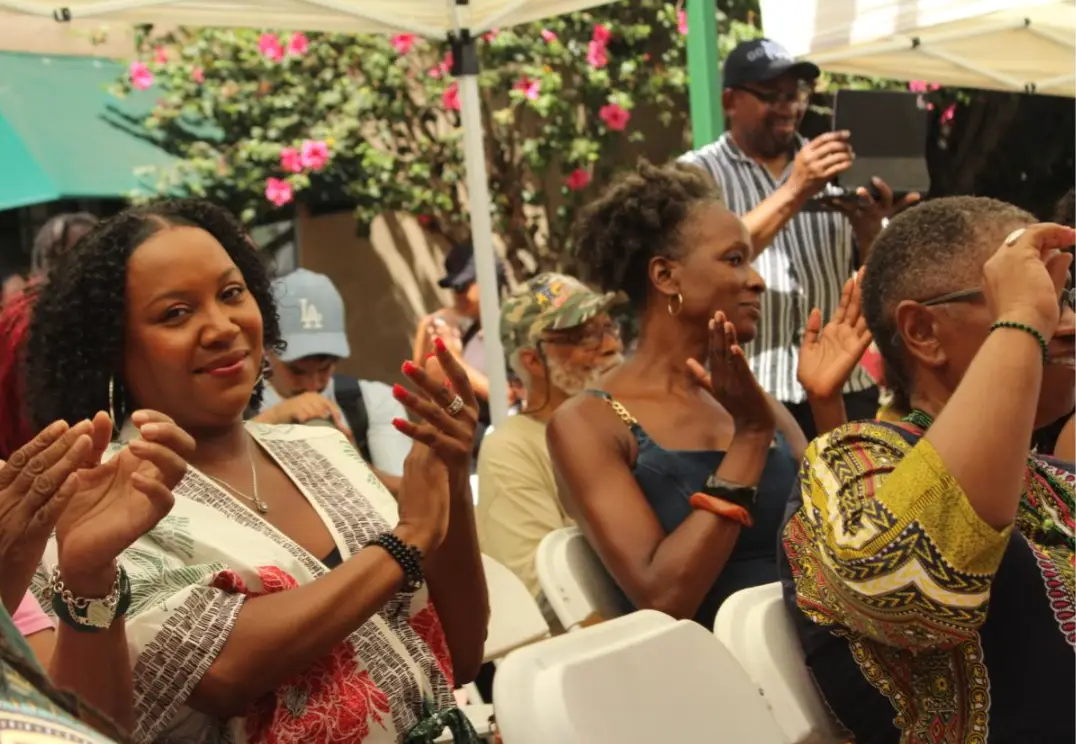
As dozens gathered at a South Los Angeles park on July 25 for the sixth annual Afro Mujeres Fest, the event focused on diaspora unity and ancestral healing. Featuring music, dancing and spoken word poetry, the day-long event at The Plant Chica in Leimert Park spotlighted diversity, strength and connection.
“Today we are honoring the mighty queens of the Afro diaspora,” said Barbara Fant, the event’s co-host and author of “Joy in the Belly of a Riot.” All human life was birthed through women, and all human life started in Africa. Therefore, the African woman is the original mother of human life.”
The festival coincided with International Afro-Latin American, Afro-Caribbean, and African Diaspora Women’s Day, which was established on July 25, 1992 in the Dominican Republic by Black women from 32 Latin American and Caribbean countries who sought to combat systemic racism and sexism. Recognized by the United Nations, the date serves as an annual international rallying point to center women of African descent across the globe.
The South Los Angeles event was co-organized by local initiative Afro Mujeres, youth arts nonprofit Project Knucklehead, and the Black Alliance for Just Immigration (BAJI).The program opened with a land acknowledgment showing honor and respect to the indigenous Tongva, Gabrielino, and Chumash peoples
The ceremony was immediately followed by a traditional libation offering led by Janet “Djembe” Ogunlande, founder of Rhythm Counts and a practitioner of Traditional Yoruba Isese culture, who invoked ancestral strength to open the space.
For organizers, holding the celebration in South Los Angeles directly reflected the demographic reality of the local Black community, where global migration and local heritage intersect.
Dr. Amir Whitaker, co-founder of Afro Mujeres and Project Knucklehead, emphasized the unique makeup of the region’s population and the intent behind the festival’s mission.
“Today we’re celebrating that Black women are diverse,” Whitaker said. “They can come in all shapes, sizes, and forms, and all come from all corners of the earth.”
Whitaker noted that25% of Black women in Los Angeles are immigrants or come from an immigrant family.
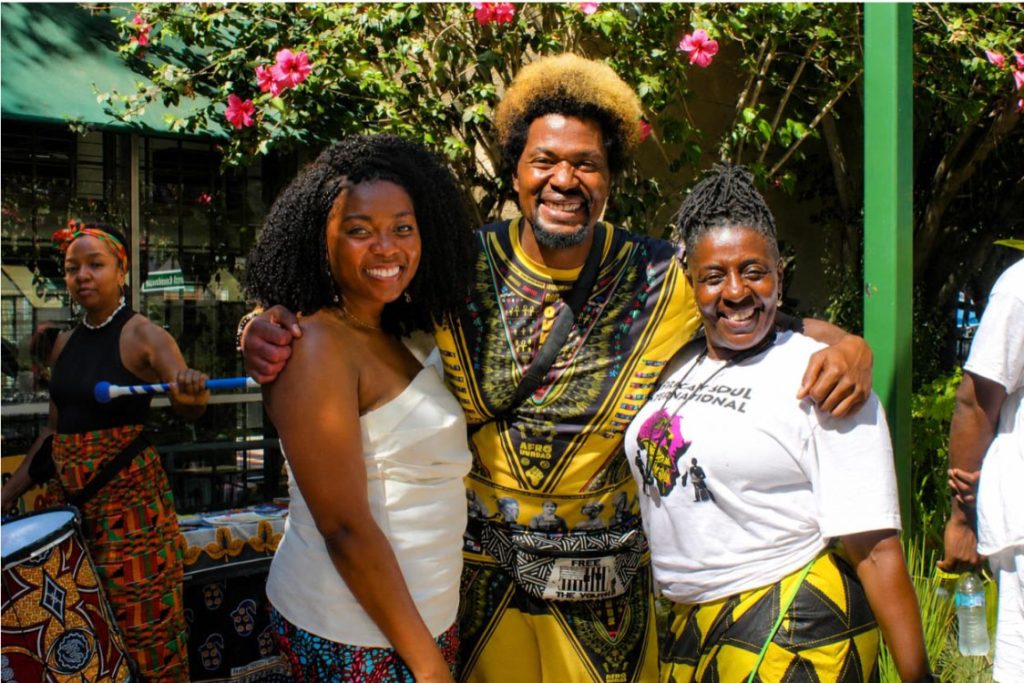
“They come from all over the world, and they have space here,” Whitaker said. Whitaker noted that creating dedicated space in Leimert Park provides a necessary counterweight to the systemic pressures faced by Black women globally across national borders.
“Today’s event means unity and healing,” Whitaker said. “It’s Black women all over the world, and they’re facing discrimination, sexism everywhere. And we bring them here to center them, to honor them, and just lift them up and enjoy these beautiful performances.”
Throughout the afternoon, performance served as both cultural preservation and active social remembrance, featuring artists representing distinct traditions across the African diaspora.
Tula B. Strong, a Liberian American choreographer, California State University, Fullerton lecturer, and clawhammer banjoist, took the stage to highlight the historic Black legacy within American folk and banjo music.
Integrating movement forms such as Dunham technique, Afro-Cuban Rumba, Jamaican Dancehall, and Hawaiian Hula, Strong taught the audience traditional vocal refrains, leading the crowd in collective song alongside her performance.
The Kaje Movement Collective, founded and directed by Kara Janelle Wade, presented Inauguration, an original multidisciplinary performance adapted from Janelle’s dance film that integrated modern movement and spoken word.
For participating artists, the festival offered an essential haven to reinforce community bonds and celebrate shared lineage.
Performing artist Geminelle Rollins-Malone returned for her second consecutive year, leading the audience in an interactive chorus of her song “I Am Luminous” and speaking to the importance of the space.
“In a world where we have to fight for our presence, we have to fight to take up space, it’s really beautiful that there’s a space for us to pour into one another,” Rollins-Malone said. “It’s a space to celebrate our Blackness, to celebrate womanhood, creativity, and all that we are as Black women.”
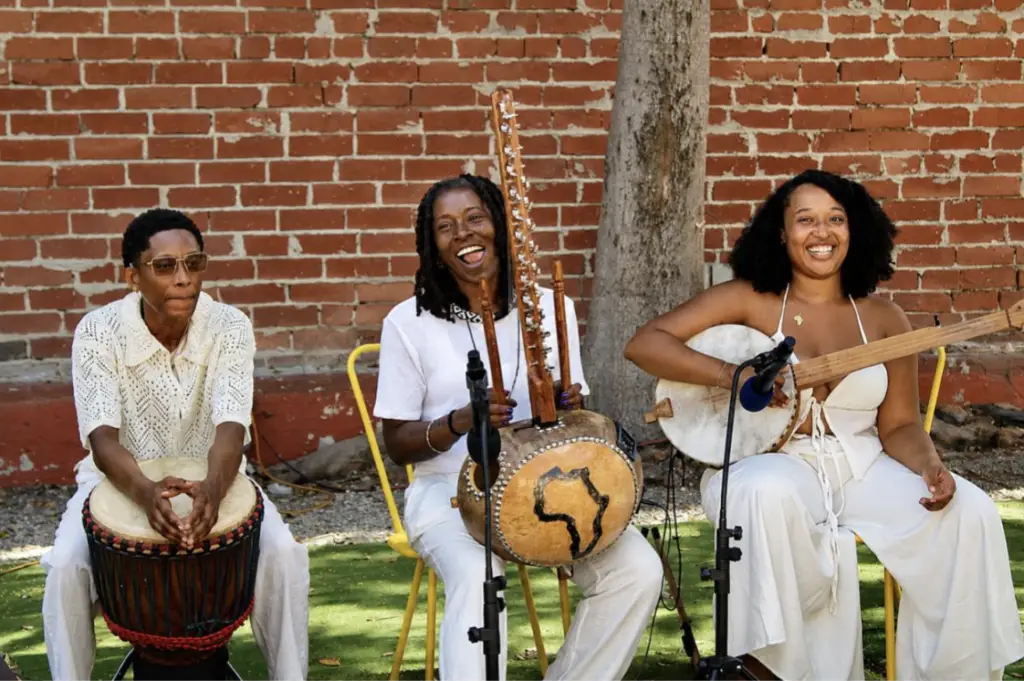
Rollins-Malone offered a direct message of affirmation to Black women in attendance and across the broader diaspora.
“You are more than enough,” Rollins-Malone said. “You are so luminous, and I’m so proud of who you are, and I hope that you’re proud of who you are too.”
The afternoon concluded with poetry readings by Cincinnati-born multidisciplinary artist Teresa “Poetress” Robinson, founder of Liberated Productions and author of From Seed to Spirit, followed by a closing poem delivered by Fant, leaving community members with a shared reaffirmation of resilience, identity, and diaspora unity.