By Cecil Egbele | Contributing Writer | California Local News Fellow
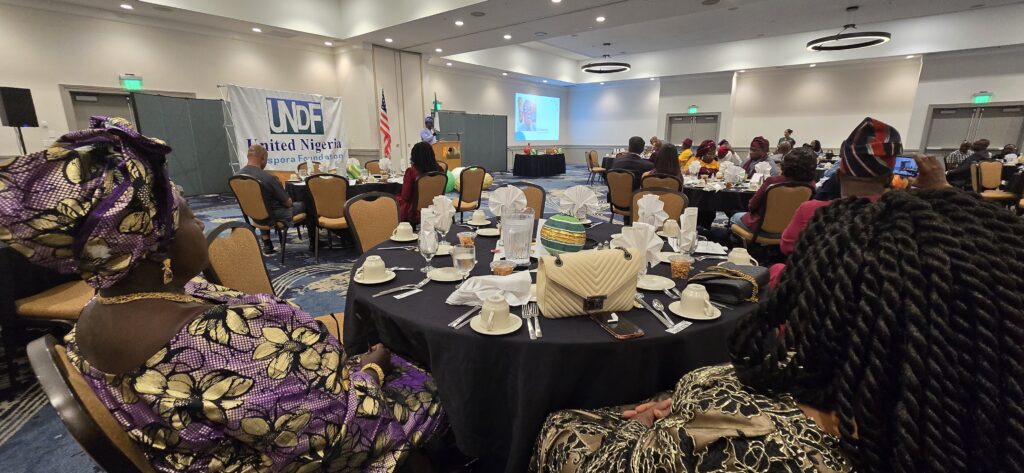
The relationship between California and Nigeria took center stage at the United Nigeria Diaspora Foundation’s (UNDF) 2026 annual dinner, where community leaders, elected officials and a senior California state official explored how the Nigerian diaspora could help deepen economic, cultural and diplomatic ties between the two countries.
Held under the theme “Partnering for Prosperity: Deepening the U.S.-Nigeria Strategic Alliance,” the gathering brought together Nigerian-American community leaders and public officials, including California Transportation Secretary Toks Omishakin, Georgia Assemblymember Segun Adeyina and Bakersfield Mayor Karen Goh.
The conversation went beyond celebrating the Nigerian community’s contributions in the United States to harnessing the diaspora as a bridge for investment, technology, workforce development, agriculture, healthcare and cultural exchange between Nigeria and the United States.
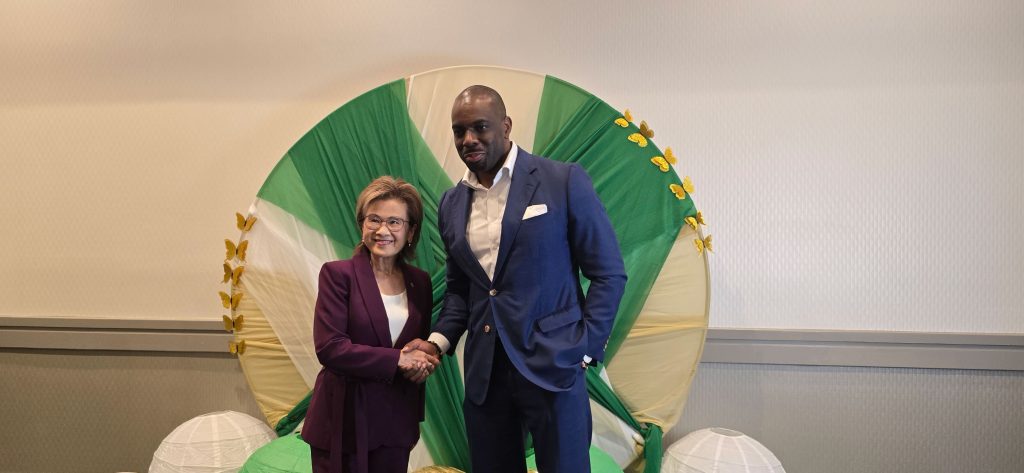
Omishakin, whose portfolio includes transportation and infrastructure, highlighted areas where California and Nigeria could learn from each other.
California, he said, has expertise in infrastructure, technology, artificial intelligence, agriculture and clean energy that could offer lessons for Nigeria. But he stressed that the relationship should not be viewed as one in which California simply teaches Nigeria.
“There are so many things that we can learn from one another,” Omishakin said. “Vice versa, not a one-way aspect of this relationship.”
He pointed to developments across Africa, including Nigeria’s technology and entertainment industries, as examples of areas where California could also learn from the continent.
With Nigeria’s median age significantly lower than that of the United States, Omishakin also highlighted Nigeria’s large and youthful population as both an opportunity and a challenge.
“The challenge that’s in front of Nigeria is making sure that as these young people graduate, there’s employment opportunity for them,” he said.
Energy was another area he identified as a significant potential for cooperation. He said that California is experienced in renewable energy and that Nigeria could capitalize on its abundant solar, wind, hydropower, and other resources to diversify its energy system.
Omishakin also outlined steps California has taken to strengthen its relationship with Africa, including the California Africa Climate and Economic Forum, which brings together African government and business leaders with California officials to discuss trade, economic development, and climate issues.
For Bakersfield, the discussion carries a potentially local economic dimension.
Adeyina, who represents Georgia in the state legislature, specifically pointed to agriculture as an area where California and Nigeria could find common ground.
“I know Bakersfield is very big on agriculture,” he said, identifying the region’s agricultural strength as a potential avenue for trade and cooperation.
Bakersfield’s Nigerian community is moving to act on the momentum of that partnership. Dr. Joseph Ohens, president of the Nigerian American Association of Bakersfield, said the group is encouraging its members to attend the California-Lagos Business & Investment Summit on Sept. 17 in Sacramento and hopes to be a major player in this strategic alliance.
“The Nigerian diaspora here in Bakersfield can help turn that relationship into practical economic opportunities through the skills, businesses and expertise we already contribute to California.”
UNDF president Francis Uwagie-Ero said the Nigerian-American diaspora can and should serve as a bridge between Nigeria and the communities where we live and work.
“I believe the Nigerian diaspora should be viewed not simply as a bridge between two countries, but as an important economic and intellectual asset in the relationship between them.”
Bakersfield Mayor Goh said she felt the “palpable determination” of Bakersfield’s Nigerian community to create opportunities and mentor young Nigerians to contribute to community development in both the United States and Nigeria.
“Thank you to UNDF for building bridges, empowering communities, and creating opportunities,” Goh said.
The UNDF dinner offered a reminder that the Nigerian contribution to healthcare is not limited to providing care– it also includes research and innovation.
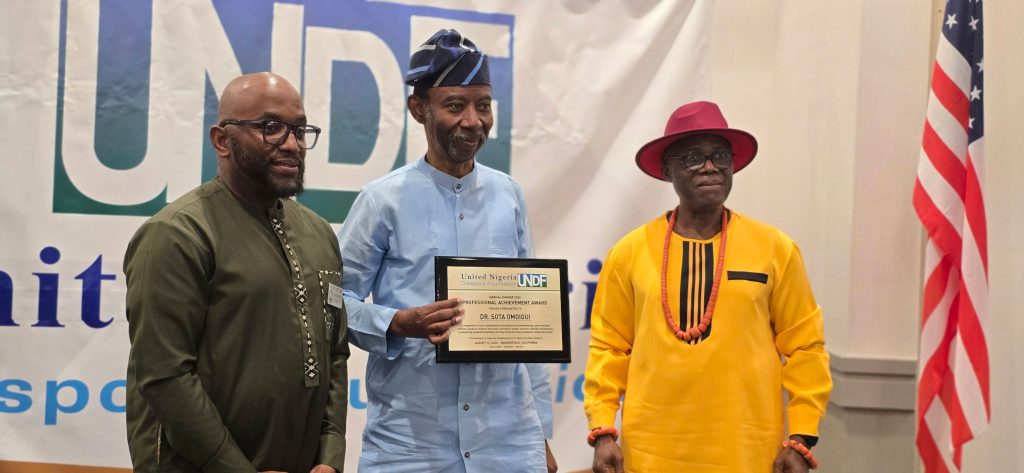
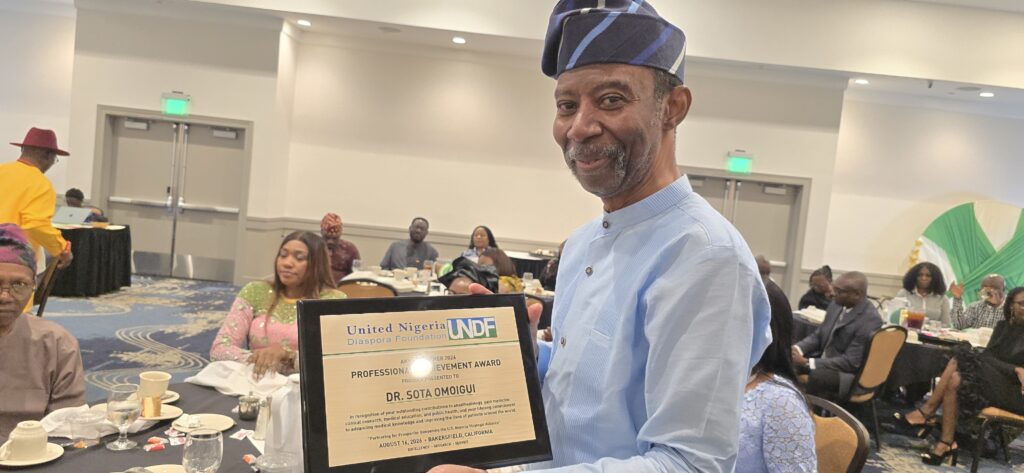
Among those honored was Dr. Sota Omoigui, a researcher and pain medicine specialist based in Los Angeles whose work includes research into sickle cell disease and pain management. He described his recent discovery as an effort to identify interventions that could help prevent sickle-cell crises from becoming life-threatening emergencies.
He has called the early intervention period the “Golden Half Hour” – the first half hour of a crisis, arguing that timely access to oxygen at home could help prevent a crisis from progressing and avert hospitalization. For him, the stakes extend beyond medicine.
“Every time a child or a person uses home oxygen and prevents a crisis, we are saving a family,” he said.
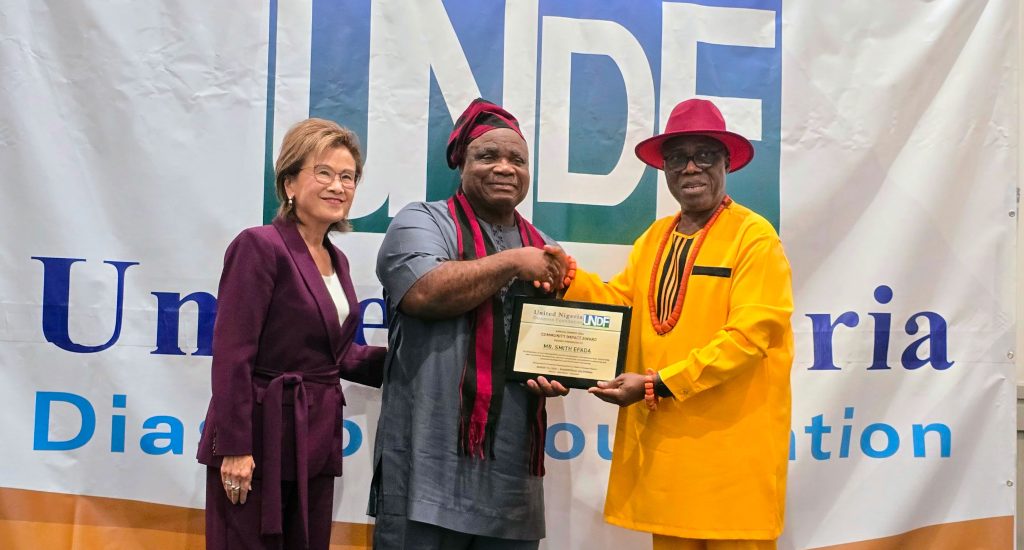
The evening also honored Smith Efada, a longtime California resident whose decades in Bakersfield have given him a front-row view of the growth and evolution of the Nigerian community. His almost 40-year perspective shows how dramatically the community has diversified.
“The Nigerian community has evolved; today we contribute immensely to healthcare provision for the county.”
For Omishakin, another sector of exchange is already visible globally through Nigeria’s entertainment industry. He cited the international growth of Afrobeats and Nollywood as examples of Nigerian influence reaching far beyond the country’s borders.
For the United Nigeria Diaspora Foundation, the challenge now is turning the conversations at this dinner into measurable partnerships.