For some older adults, homelessness comes after decades of low-wage, physically demanding work, while others carry years of trauma that can complicate their path back to stable housing.
Marion Apio reported this story while participating in the USC Annenberg Center for Health Journalism’s 2026 California Health Equity Fellowship.
By Marion Apio | California Local News Fellow
For 70-year-old Gilbert Ramirez, the intersection of medical care and supportive housing proved lifesaving.
First sent to prison at 25, Ramirez spent decades cycling through nine separate sentences and three decades of parole supervision before finally completing parole seven years ago.
“I’ve been told what to do, man, for all my adult life,” Ramirez said. “I had nine turns on one number, and finally they gave my life back. So now I’m a free citizen.”
While incarcerated, he and his wife separated. After returning to society, he lost his daughter to cancer, was shot, and was left partially paralyzed and unhoused.
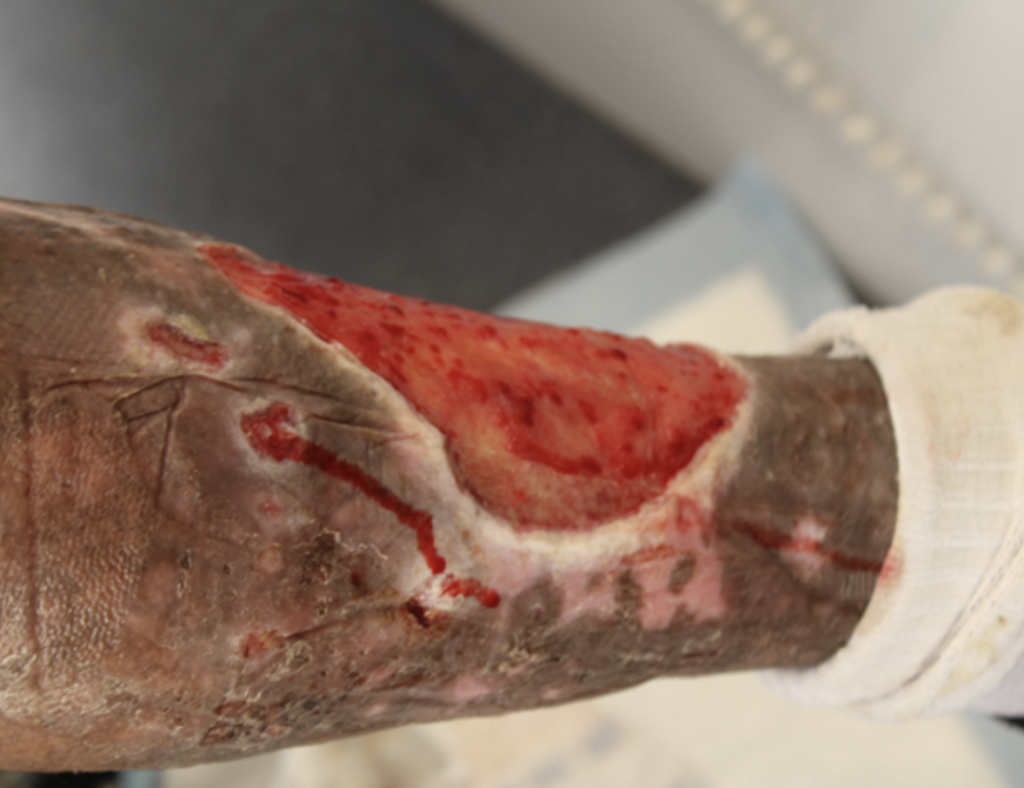
Surviving on the street, Ramirez fell into a heavy fentanyl addiction. For seven years, severe, open wounds flared on both of his legs—wounds he had no way of healing while living unhoused.
As the infections worsened, his weight plummeted to 95 pounds.
Compounding challenges for seniors who are unhoused
For people like Ramirez, the dangers of living on the street compound with age. Chronic illnesses become harder to manage, mobility declines and minor health problems can quickly escalate into medical emergencies without a stable place to recover or store medications. Increasingly, this vulnerable population includes seniors falling into homelessness for the first time after a lifetime of low-wage, physically demanding work.
“We have a large proportion of seniors experiencing homelessness—about 43 percent who had never been homeless before after the age of 50,” said Margot Kushel, professor of medicine, UCSFDirector of UCSF Benioff Homelessness and Housing Initiative
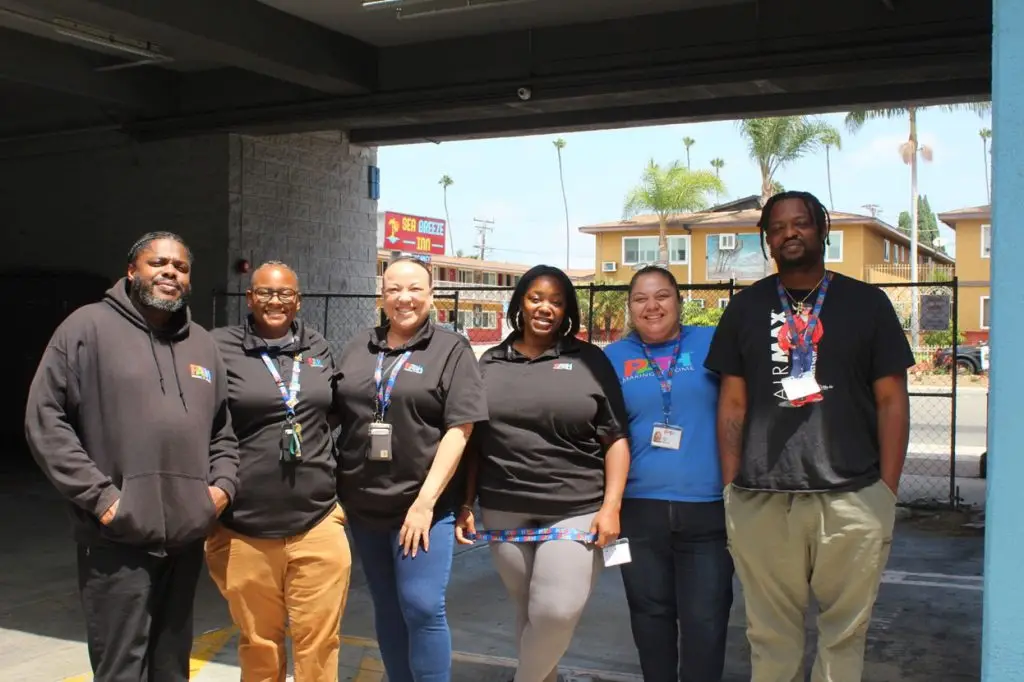
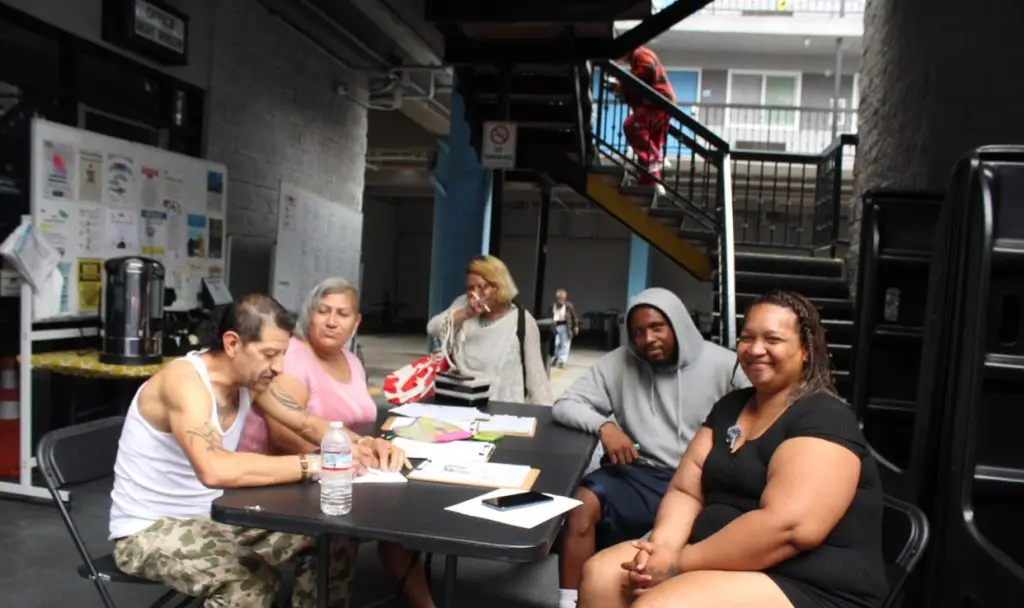
Eight months ago, outreach workers with People Assisting The Homeless—a nonprofit housing and social services agency—moved Ramirez into the Los Angeles Inn in Inglewood. They did so under an L.A. County-led initiative that brings unsheltered residents indoors by placing them in motels converted into interim housing. It also connects clients with wraparound healthcare and case management. The effort primarily receives funding through L.A. County’s Measure A sales tax, which aims to create a direct pipeline from street encampments to permanent housing.
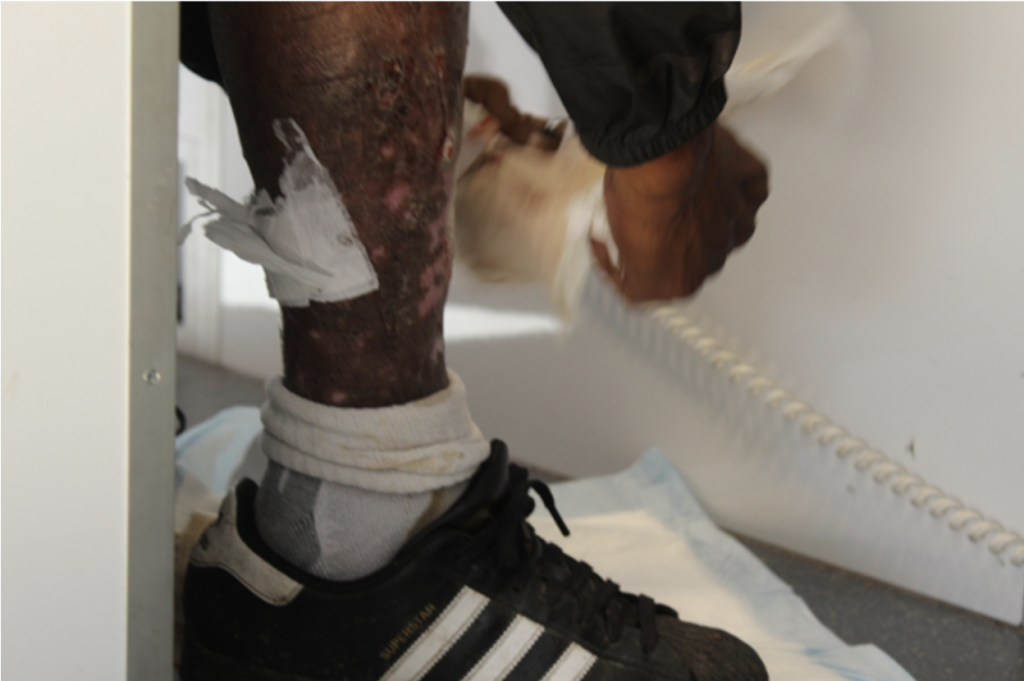
By the time Ramirez connected with Carrie Kowalski last November, a senior physician assistant with Venice Family Clinic, the wounds on both of his legs were deep, painful, and itchy. Kowalski cleaned and wrapped the wounds and provided Ramirez with naloxone nasal spray—an emergency overdose reversal drug – along with fentanyl test strips and buprenorphine starter supplies, a medication used to treat opioid addiction.
“It’s good, I ain’t now underweight,” Ramirez said about the services he receives under Pathway Home. “They offer me medicine. They come and, you know, give you everything. Whatever I need—a doctor, food, a bed, water, and everything I never had before.”
From August 2023 to August 5, 2026, Pathway Home had moved 2,361 people into interim housing, while 892 had moved into permanent housing, according to Los Angeles County. The county said the biggest barrier to moving people from interim to permanent housing is the shortage of affordable permanent homes.
Pathway Home’s mission is to reach encampments throughout L.A. County and link people to permanent housing, said Courtney Reed, associate director at PATH.
“We operate in what we call a trauma-informed care model,” Reed said.
The Los Angeles County’s Pathway Home budget for fiscal year 2026-27 is $59.5 million. The funding includes $24.4 million from Measure A, $19.8 million in Measure H carryover, $13.8 million in state Encampment Resolution Fund carryover and $1.5 million from the county Department of Mental Health, according to information provided by the county in an email. In April 2024, the county also received a $51 million grant from the state of California to expand the Pathway Home program.
Countywide, the number of unhoused adults ages 55 and older rose nearly 5 percent, from 18,212 in 2025 to 19,104 in 2026, accounting for about 26% of the county’s 73,040 unhoused residents. Black residents continue to be disproportionately represented among the people experiencing homelessness, accounting for 21,822 people of the unhoused population within the Los Angeles Continuum of Care, according to the 2026 Greater Los Angeles Homeless Count.
A shortage of affordable housing has limited options for the unhoused in Inglewood
In Inglewood, Pathway Home teams have moved 54 people into temporary housing in motels, according to the mayor’s office. While experts call this placement critical for vulnerable seniors, city officials clarified Inglewood is strictly a logistical partner.
“We have no funding obligation, Pathway Home Initiative is funded by the County of Los Angeles,” said Roberto Chavez, Inglewood’s HUD programs manager. “The city is a partner.”
However, transitioning people into permanent housing has also become more difficult in Inglewood, where the city’s housing voucher program is frozen under a “designated shortfall” from the U.S. Department of Housing and Urban Development because federal funding failed to match local rent increases.
“The housing authority has spent its annual allocation, and HUD is monitoring our finances,” Chavez said. “The result is we’re not able to issue more vouchers to families to get housing.”
While homelessness continues to trend downward in Inglewood—where the unsheltered population dropped from a peak of 751 individuals in 2022 to 290 in 2026—countywide data masks a growing crisis among older and Black residents.
Challenges for seniors who are unhoused
By the time outreach workers connected with Jacqueline Thomas last November, the 67-year-old was hauling an oxygen tank across La Brea Avenue while managing a heart condition, chronic obstructive pulmonary disease, diabetes, and a daily regimen of 13 prescription pills—all while living out of her car.
A 1976 graduate of Inglewood High School, Thomas’s life unraveled a decade ago after she lost her job. Faced with fixed income limits and rising housing costs across L.A. County, strain over rent money eventually frayed family ties, leading her to choose the streets over an unstable living situation.
For 10 years, Thomas parked her car outside businesses along La Brea Avenue to sleep. She let other unhoused neighbors stay inside with her for protection, but she could not avoid constant street harassment and theft. During one incident, someone stole $1,000 from her on the sidewalk.
A decade of exposure took a permanent toll on her body.
“All these health issues I have now, I didn’t have,” Thomas said. “I got them all out here in the streets.”
Six months after moving into a private room through Pathway Home, Thomas finally has reliable electricity to power her oxygen machine and blood pressure monitor, store her heart medication in a refrigerator, and manage her health.
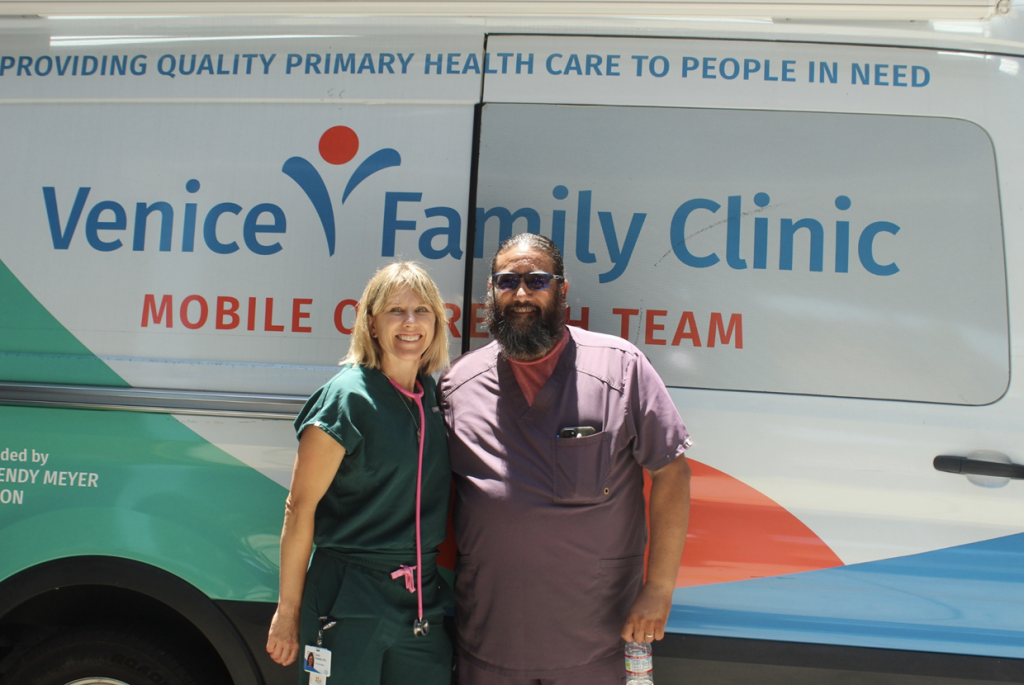
“Housing is an intervention to help with vascular problems—like leg swelling and open wounds from sleeping sitting up—because now our patients have a bed to elevate their legs and sleep,” said Kowalski, who has operated a mobile clinic van since December 2020. “From a medical standpoint, we can provide care, but housing is the key intervention to actually get people better.”
Homelessness advocates point to L.A. County’s high cost of living and the severe gap between fixed disability payments and local rents as key drivers fueling the region’s homelessness crisis.
In an emailed statement, the Inglewood Mayor’s Office cited the shelter operation at Hollywood Inn Suites, a converted motel on Century Boulevard, as a key local success in resolving encampments.
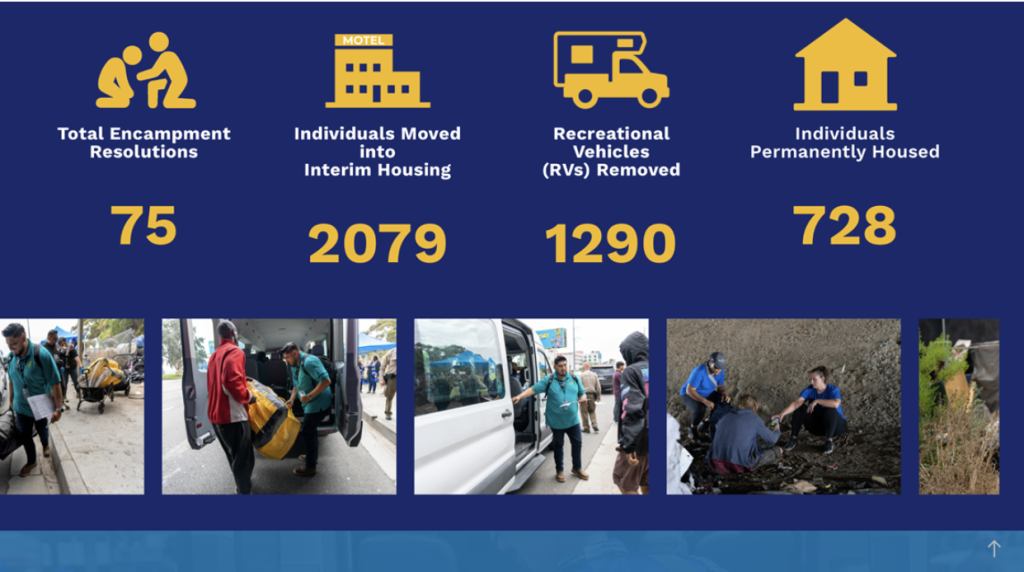
The city said its Pathway Home partnership with Los Angeles County housed 54 people who had been living on the streets. It is also exploring motel master leasing and said it would consider adding a homeless services coordinator, funded through Los Angeles County’s Measure A, in June 2026.
When discussing the types of housing initiatives like Pathway Home that place seniors into interim housing, Kushel emphasizes that a standard apartment is not enough since older adults need specific physical adaptations.
“A lot of the issues we’re having is just the physical design of whether there’s infrastructure for people who can’t climb stairs,” Kushel said. “There’s a physical design aspect like, are there grab bars, non-slip surfaces and night lights.”
For Ramirez and Thomas, moving off the streets into stable housing has allowed them to focus on long-term recovery, healthcare, and personal goals.
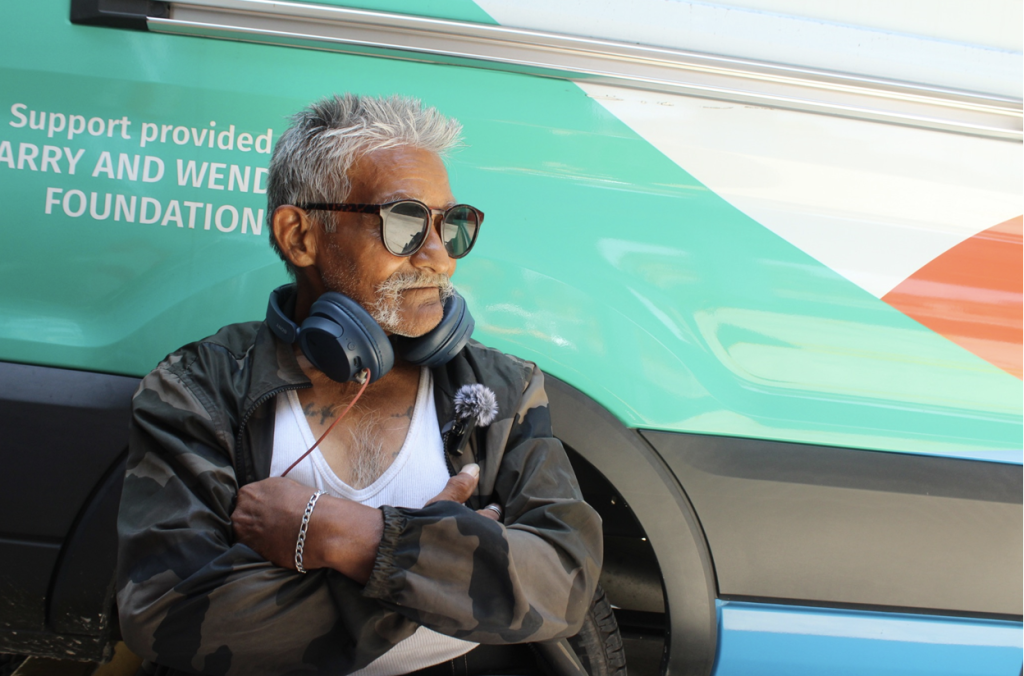
Ramirez, who rides his bicycle up to 100 miles a week, said he is rebuilding his strength while gathering the medical records needed to secure a housing voucher for a local senior complex through Pathway.
His dream is to one day reunite with his 23 grandchildren and 12 great-grandchildren.
“I just want to be with my grandkids, raise my great-grandkids, and jam with them, you know what I mean?” Ramirez said. “Being out on the street was rough, just fighting all the time. But since I’ve been here, you know, it’s been all right. I’m home.”
For Thomas, months inside interim housing under Pathway Home have provided a secure environment to manage her health. With her medical needs finally managed and her daily living environment secure, she is now looking toward the future—hoping to acquire a computer and take tax preparation courses to build new job skills.
It is a sharp departure from her years spent struggling just to survive on the streets.
“I’m not a hopeless case,” Thomas said. “This is just my new way of living, and I’m adjusting to it.”