
By Cecil Egbele | Contributing Writer | California Local News Fellow
What began as years of connections between California and Lagos has moved into a formal new chapter as the two governments established a sister-state relationship aimed at expanding trade, investment, technology, creative industries, and other areas of cooperation.
Lagos is California’s first official sister-state relationship in West Africa, joining the Golden State’s existing relationships elsewhere in Africa and around the world. California currently has 37 official Sister State, Friendship State, and Cooperation Agreement relationships.
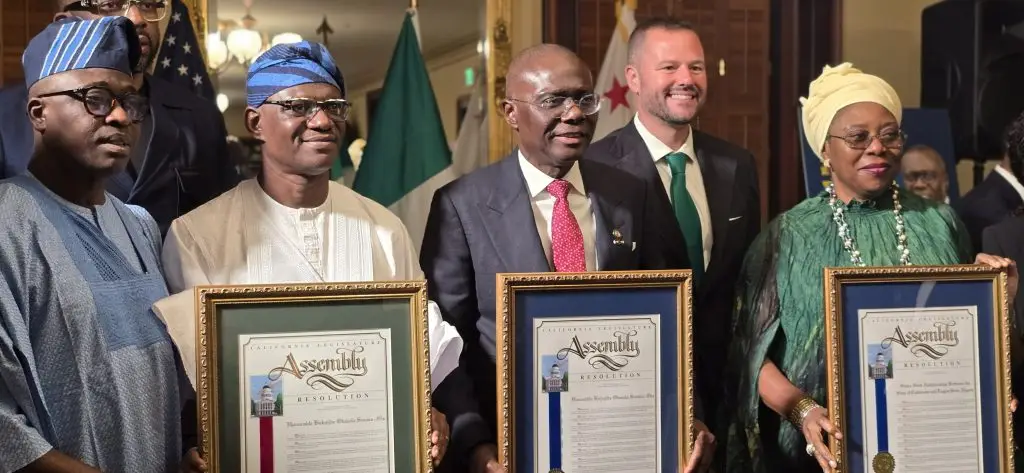
The signing, formalized through Assembly Concurrent Resolution 129, was authored by Assemblymember Matt Haney (D-San Francisco), and co-authored by Assemblymember Isaac Bryan (D-Ladera Heights).
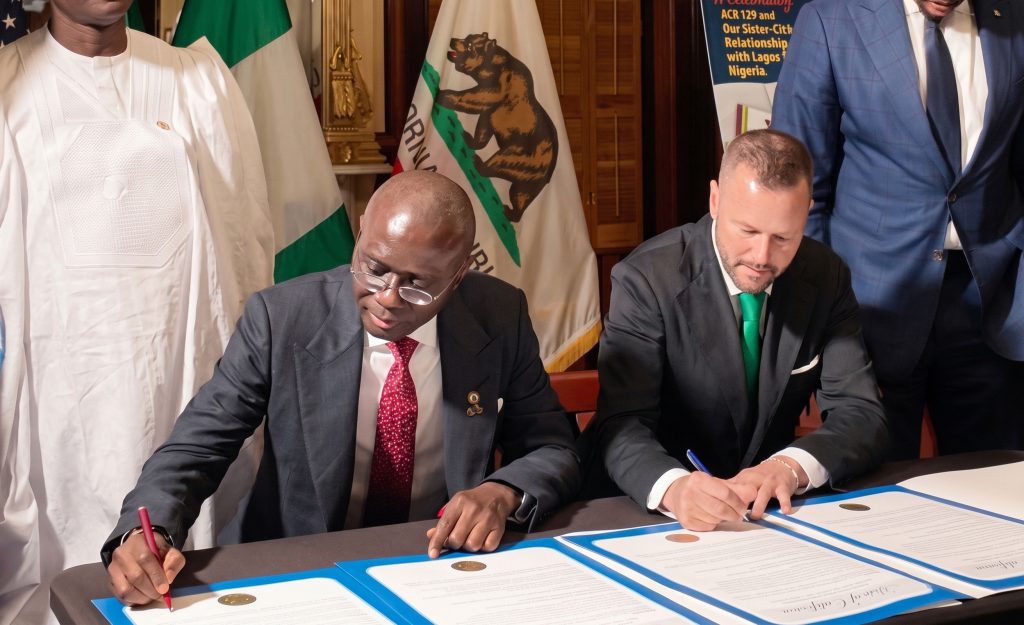
Governor Babajide Sanwo-Olu traveled from Lagos to sign the agreement in person, calling it a document he intends to “frame and keep for a very long time.”
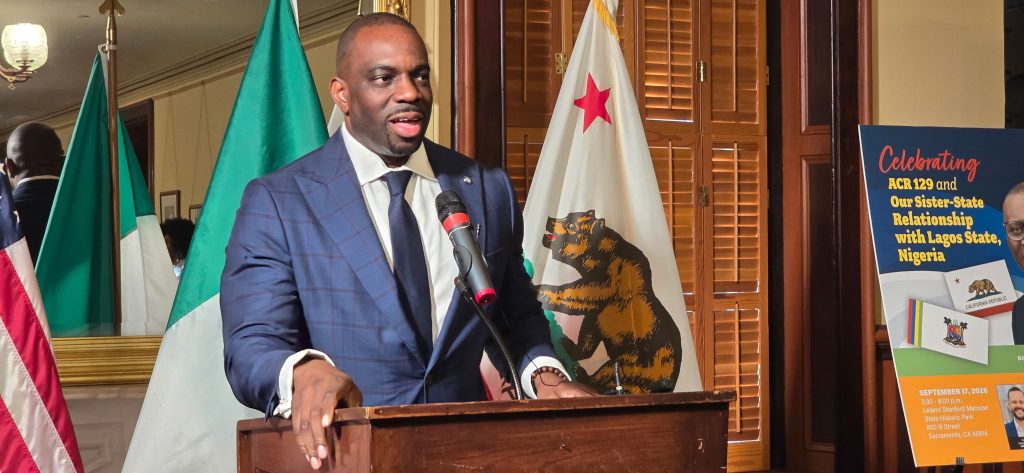
Toks Omishakin, California Secretary of Transportation, who opened the evening, framed the moment against a broader geopolitical backdrop.
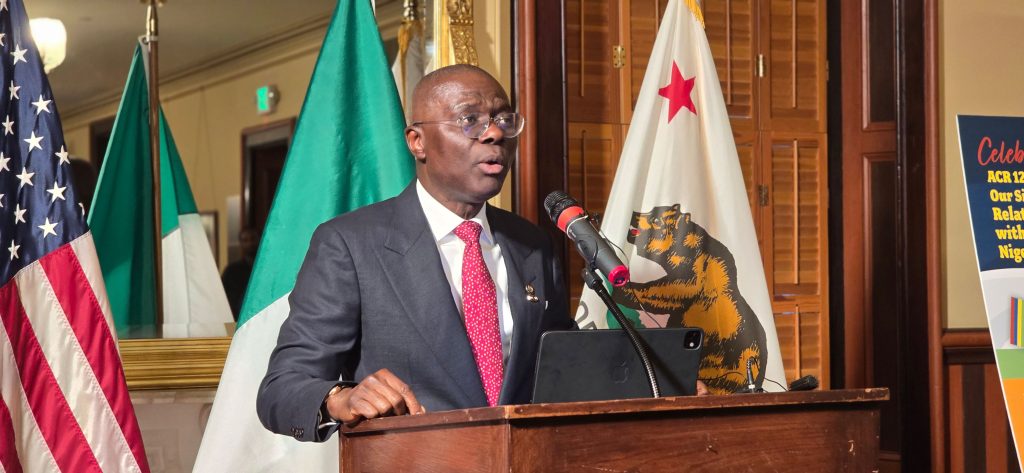
“We’re living in a very challenging time,” he said, “increasingly focused on fences and walls being built between us, rather than bridges.”
Omishakin stressed the partnership runs in both directions. He pointed to potential connections between California’s entertainment industry and Lagos’s Afrobeats scene, as well as between Silicon Valley and Lagos’s Yaba technology cluster.
Omishakin also pointed to a less-publicized thread connecting the two regions: California’s National Guard has partnered with the Nigerian military since 2006– a relationship he described as mutual rather than one-directional.
Assemblymember Haney said he discovered Nigerian musician Fireboy DML during the pandemic.
A lyric referencing San Francisco was included in a song the musician recorded at Empire, an independent label with deep Nigerian music ties blocks from Haney’s home.
That inspired Haney to visit Lagos to learn more about the state’s entertainment industry and to advocate for touring visas for Nigerian artists.
“Imagine the opportunities we can create,” Haney said, “from Hollywood to Nollywood.”
Sanwo-Olu said Lagos will bring a working team to California to build a roadmap toward increased trade, investment, and creative-industry cooperation.
Tubosun Alake, Lagos’s Honorable Commissioner for Innovation, Science and Technology, said roughly 80 percent of Lagos’s GDP comes from its private sector.
He pointed to the recent commissioning of a 40-megawatt data center in Lagos– described as the state’s first hyperscale facility– as a step toward Lagos processing its own AI workloads locally rather than relying on data centers in California or Virginia.
The goal, he said, is “localizing the technology” and reducing dependence on AI models trained without African context in mind.
Those possibilities formed the springboard for the California–Lagos Business & Investment Summit, hosted by Afretrade, a California-based platform connecting African businesses to global markets.
The summit brought business owners, entrepreneurs, investors, funders and other stakeholders together for sector-focused discussions, business matchmaking and investor introductions.
“This particular agreement, I’ve been dreaming of it for so long before today,” said Lekan Salaam, Afretrade CEO.
The relationship also has implications beyond government and large institutional investors.
Dr. Veronica Ufuegbune, a community leader involved in efforts to strengthen the Nigerian diaspora, said the agreement could create opportunities for Nigerian-owned small businesses in California, including restaurants, catering and fashion, once “real funding channels open up.” She also highlighted opportunities in technology, real estate, training and mentorship.
As California and Lagos begin working out what their sister-state relationship will look like in practice, the central question is no longer whether the two regions have complementary strengths.
Officials and business leaders now have to determine how to connect those strengths through capital, partnerships, technology, and people– long after administration changes.
“Governors come and go in Sacramento and in Lagos,” Sanwo-Olu said, “but sisters, they do remain long after those of us in this room have handed our offices to other hands.”
