By Cecil Egbele | Contributing Writer | California Local News Fellow
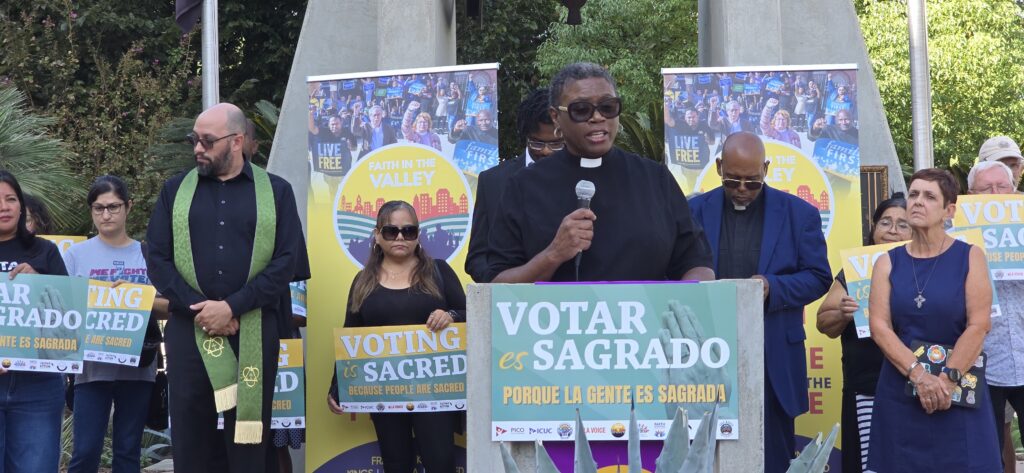
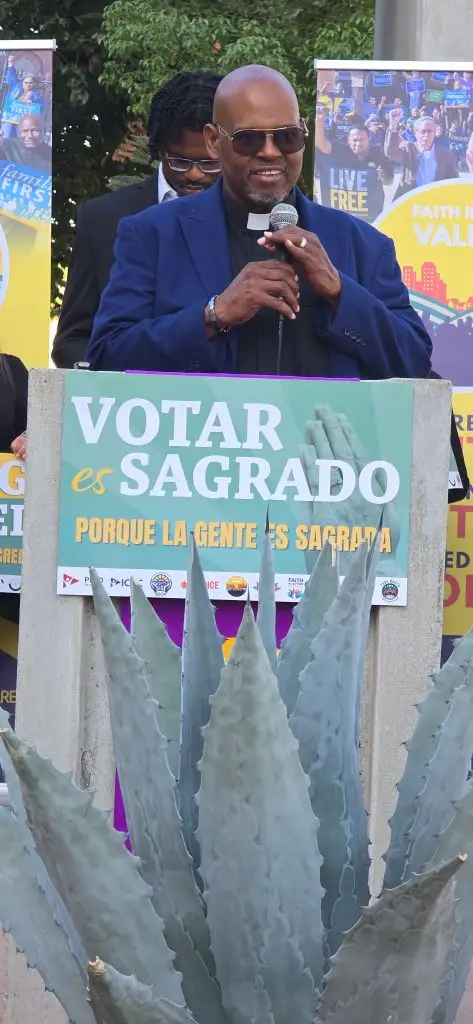
Standing outside the Kern County Courthouse on Oct. 7, Pastor Curtis Smith spoke about the violent struggle Black Americans have endured simply to exercise their right to vote.
He recalled meeting a man who still bears the scars after he was beaten decades ago during a march on a bridge in Selma, Alabama. And a woman who was subjected to a literacy test before she could cast her vote.
“The people that came before us, they fought, they bled, they died for this right,” Smith, executive director of Stockton’s Faith in the Valley, said. For him, those stories underscore what is at stake when people choose not to participate.
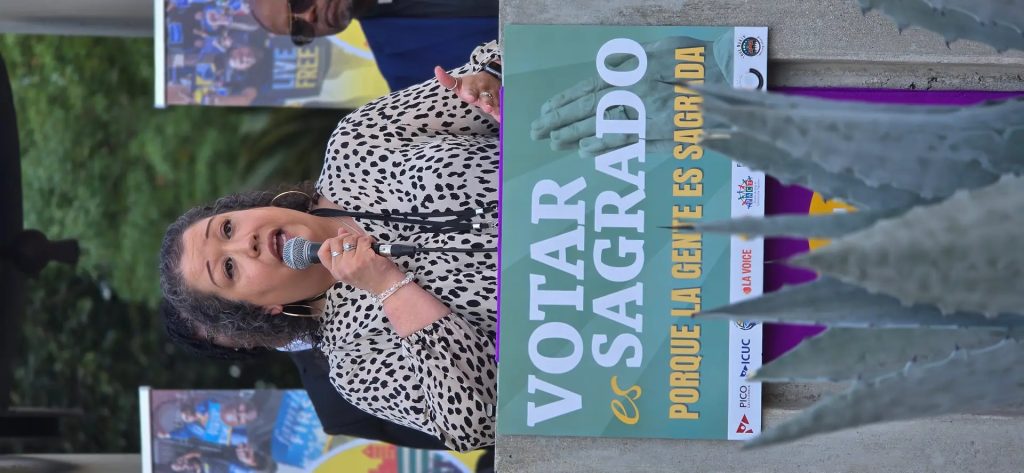
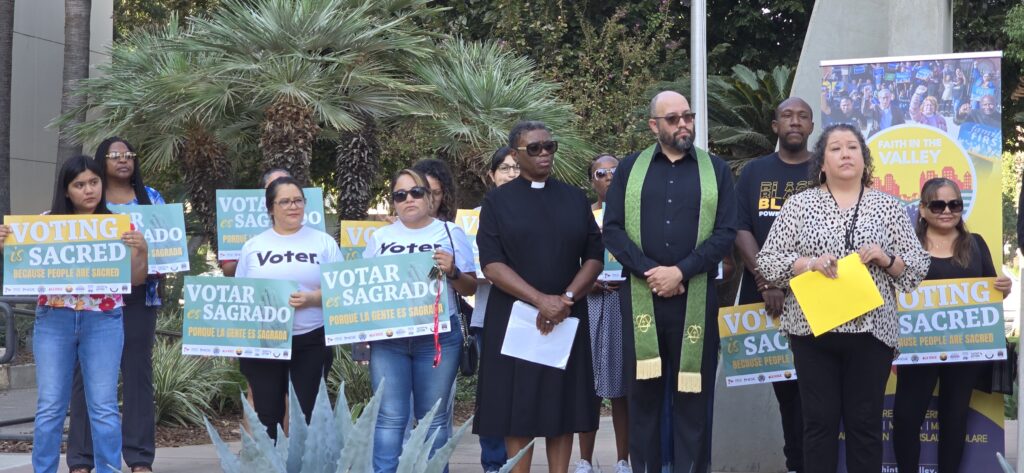
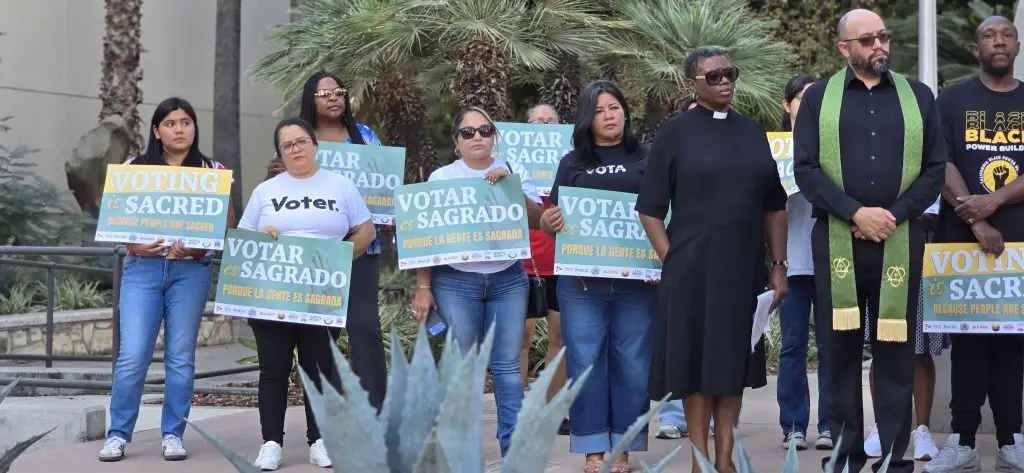
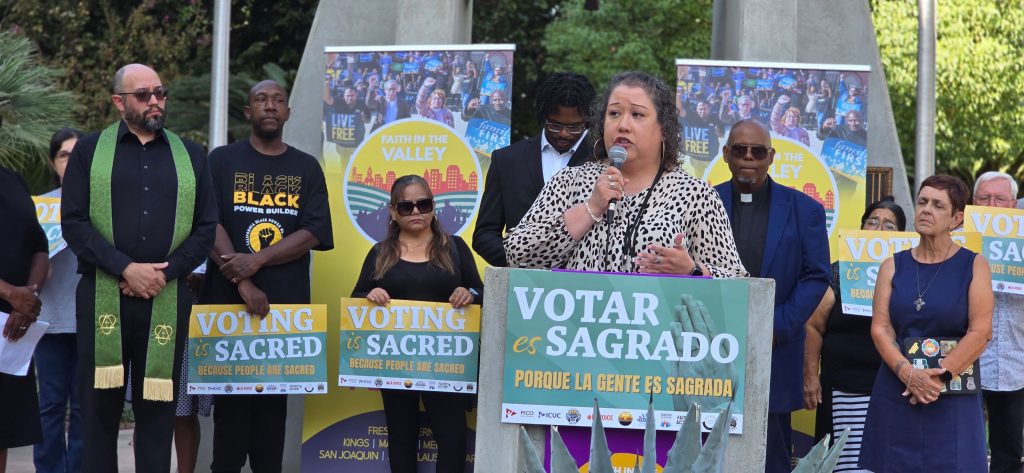
Smith was among several faith leaders, election officials and community advocates who assembled outside the courthouse to urge people to vote on Nov. 3.
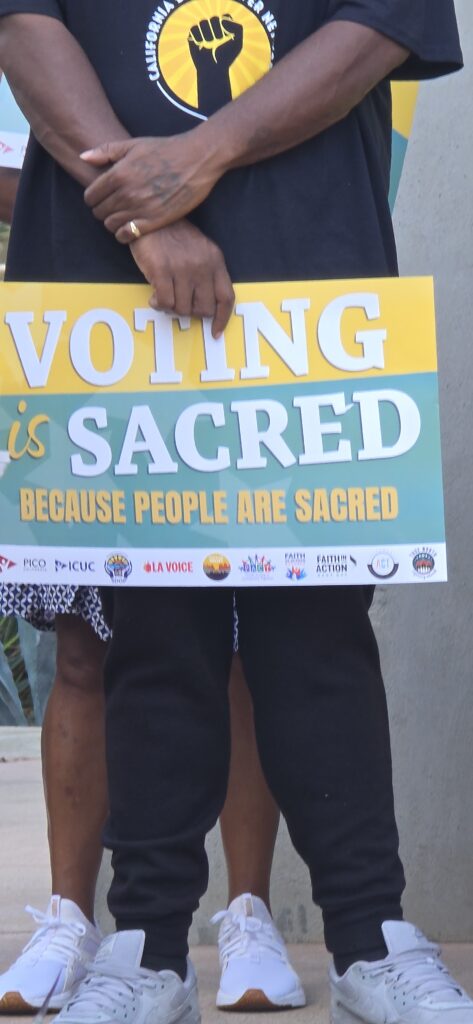
The gathering was part of “Voting is Sacred,” a series of actions taking place across five Central Valley counties and organized in part by Faith in the Valley, a multiracial, multi-faith community organizing network.
Smith said the word “sacred” was not meant to suggest that elections, candidates, or political parties are religious.
“Voting is sacred because voice is sacred. Voting is sacred because human dignity is sacred. Voting is sacred because community is sacred,” Smith said.
He said one of the biggest misconceptions his organization encounters is that voting does not matter or that the electoral process does not work, particularly among young people who may not see immediate changes after an election.
But Smith said voting is only one part of civic engagement. He encouraged residents to continue paying attention to elected officials, legislation, commissions and policies after Election Day.
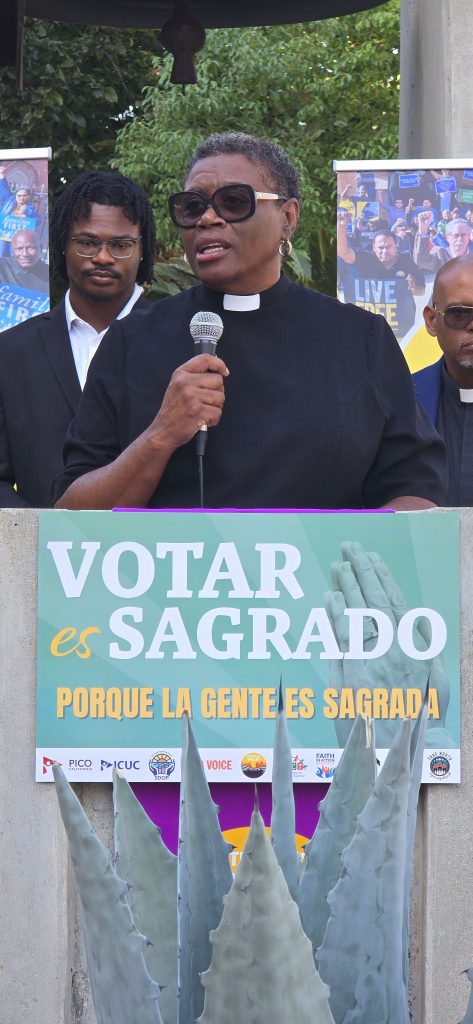
For Pastor Darlene Williams of Vibrant City Church, the importance of voting is rooted in her childhood.
Williams recalled watching her father, a diesel mechanic who later operated a lawn-care business, carefully study the voter information guide at the family dining table before going to the polls. He also shared stories with the family of his experiences under Jim Crow laws.
“As busy as he was, and certainly overworked and tired as well, I cannot ever remember a time when my dad did not go to the polls to vote,” Williams said.
She said she later understood that her father was not voting only for himself, but for his children, grandchildren and future generations.
Williams urged Black voters in particular not to dismiss the importance of participating.
“The black vote is really important,” she said in an interview. “It’s important for us Black people to really show up at the polls.”
Kern County Registrar of Voters Aimee Espinoza used the event to provide practical information to voters.
The voter registration deadline for the Nov. 3 election is Oct. 19, but California allows conditional voter registration for those who miss the deadline. Polls are open from 7 a.m. to 8 p.m. on election day. Anyone in line at 8 p.m. can still vote.
Espinoza said voters whose ballot is lost or damaged can call her office for a replacement. Those who forget to sign the envelope, or whose signature does not match, will receive a letter and a chance to correct it so their vote will be counted.
She said people who are incarcerated in Kern County can still vote, and the county works with the sheriff’s office to conduct voter outreach inside the jail.
Kern County has 20 official ballot drop boxes, and voters can also return ballots to a polling place, the elections office, or by mail. Voters can track their ballots through the county elections website or the California Secretary of State’s BallotTrax website.
Espinoza also reminded voters to research candidates and issues before casting their ballots.
She also encouraged Kern County residents to consider serving as poll workers, saying those interested can apply through the county’s Elections Division website.
Nso Ifemeje, Vice President of Associated Student Inc. at California State University, Bakersfield, also encouraged students and younger voters to participate, noting that elections affect issues including the cost of education, health care, housing, public safety and transportation.
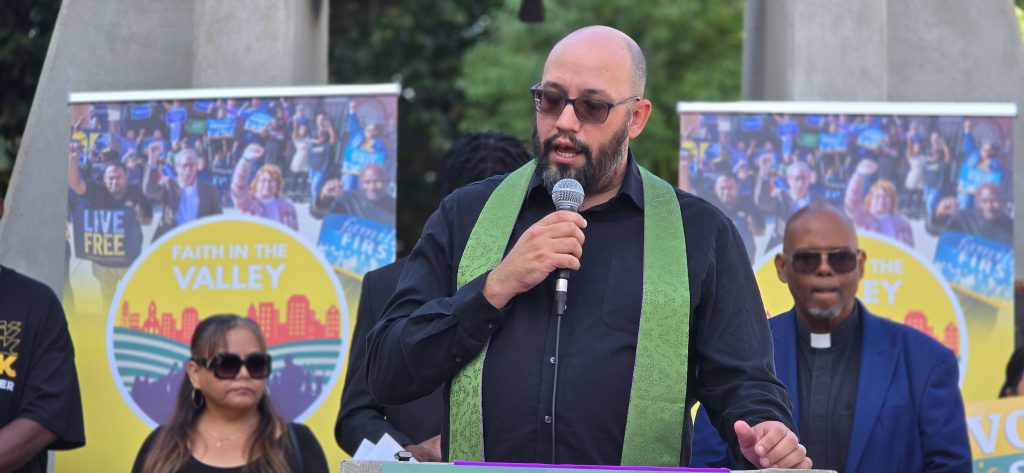
Rev. Marcos Ortega, senior pastor of First Presbyterian Church, acknowledged the fears some people have about voting in person.
“Do not believe those who tell you it’s not safe to vote. It is,” he said. “Do not believe those who tell you your vote doesn’t matter. It does.”
Ucedrah Osby, executive director of Community Interventions, said her organization works on nonpartisan voter education and is planning community “voting parties” leading up to election day.
For the organizers, the message was ultimately about participation, regardless of political affiliation.
“Voting is not about agreement,” Smith said. “It is about responsibility.