
By Bakersfield News Observer Editorial Board | OGNSC
In Kern County, getting medical care is often harder than it should be.
A patient may need to travel across town or across the county. A working parent may have to find time away from a job that offers little flexibility. A senior may need help arranging transportation. A family may need a provider who accepts Medi-Cal, an appointment that does not require months of waiting, or a clinic that can coordinate primary care with behavioral health, dental services, and referrals.
For thousands of residents, community health clinics are where those obstacles are addressed. Proposition 44 could make the work of operating those clinics more difficult at exactly the wrong time.
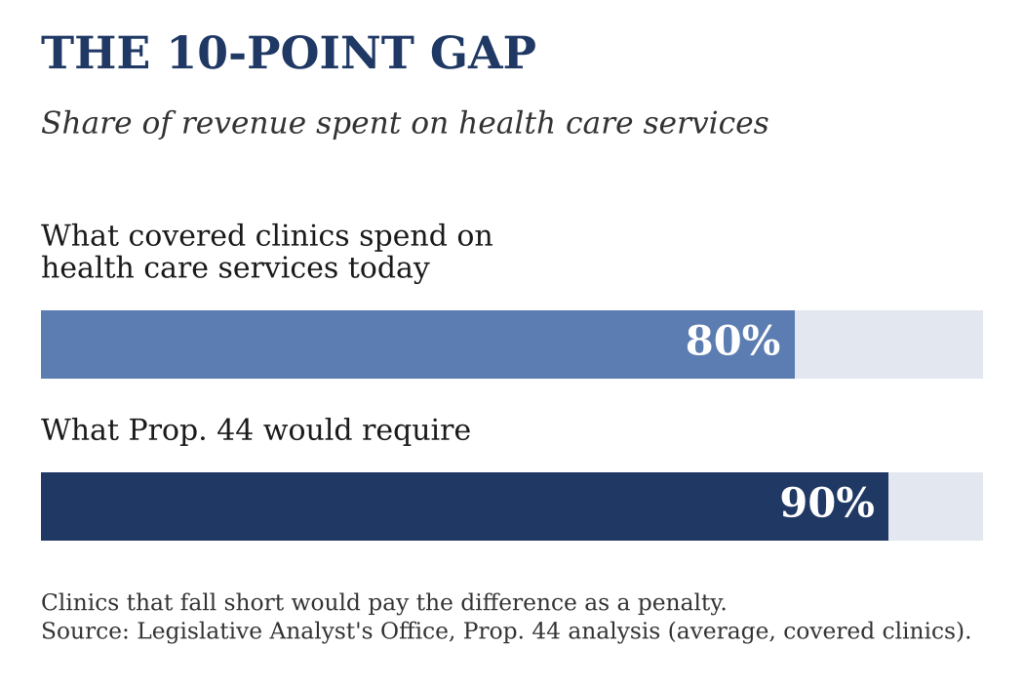
The measure would require certain nonprofit safety-net clinics to devote at least 90 percent of their revenue to health care and related program services. Clinics that spend less could be assessed a penalty equal to the difference. The initiative leaves the Attorney General to issue rules explaining which expenses qualify.
The instinct behind the proposal is understandable. Taxpayer-supported health organizations should use their resources responsibly. Patients should not see money wasted on excessive executive pay or needless bureaucracy.
But Proposition 44 does not distinguish between excess and the ordinary costs of keeping a clinic functioning. It imposes a uniform benchmark on providers whose work, patient populations, facilities, and service areas vary widely.
The state Legislative Analyst’s Office reports that the clinics covered by the initiative currently spend an average of approximately 80 percent of annual revenue on health care services. Reaching a 90 percent standard will not be easy for many clinics—not because they lack commitment to patients, but because safe, reliable care requires a working organization behind the medical visit.
Kern County residents should consider what that organization includes.
A clinic must compete for doctors, nurses, counselors, and medical assistants. It must maintain accurate records and protect private medical information. It must handle insurance claims, state and federal reporting requirements, prescription coordination, payroll, building maintenance, medical equipment, infection-control procedures, and referrals. It must remain open, staffed, licensed, and able to respond when patients need help.
That is not a diversion from patient care. It is the infrastructure of patient care.
In a region with large distances between communities and longstanding challenges in connecting residents to providers, clinics also need flexibility. They may need mobile outreach, appointment scheduling systems, transportation coordination, telehealth capacity, bilingual services, and staff who can help patients understand coverage or follow through on a referral. A narrow spending test may push clinics to reduce investments that prevent small problems from becoming costly emergencies.
Proposition 44’s uncertainty compounds the risk. The Attorney General would determine the details of the new spending categories after voters approve the measure. Clinics would then have to adjust budgets and operations under rules that are not yet fully defined.
The Legislative Analyst’s Office also says that clinics missing the 90 percent threshold could be required to pay the state the amount of the shortfall. Although a clinic might later seek to recover that money by showing it met the requirement within five years, a clinic cannot easily replace funds lost from its budget today. The analysis estimates that state enforcement would cost the low tens of millions of dollars annually, with the expense paid through fees.
That is a poor trade: more money devoted to enforcement and compliance while providers serving low-income and medically underserved residents confront new financial hazards.
Kern County needs clinics that are steady, staffed, and available—not clinics forced to restructure around a state formula with uncertain definitions and penalties attached.
The organizations opposing Proposition 44 include the California Primary Care Association, California Medical Association, California Hospital Association, Planned Parenthood Affiliates of California, California Teachers Association, and many local and statewide health care advocates. Their warning deserves attention.
Voters can support accountability without endorsing a mandate that may reduce a clinic’s ability to recruit personnel, maintain facilities, reach patients, and keep its doors open.
The Bakersfield Observer editorial board recommends a No vote on Proposition 44.