By Cecil Egbele | Contributing Writer | California Local News Fellow
After spending 32 years behind prison walls, Brian Keith Stafford was finally free. Someone took him shopping, and amid all the things he had to relearn about the outside world, he noticed something that most people would probably never give a second thought- the underwear came in different colors. In shock, he called his mother saying, “Mama, they got different colors underwear.”
For Stafford, it was more than a funny moment. After decades in an institution where even ordinary things were standardized, he was learning how to live in a world that had moved on without him.
Five years after his release, Stafford now works as a substance-use-disorder counselor, helping others work through addiction and trauma.
Bakersfield News Observer
Kern County news from the Black press.
Covering our community for generations. Get the Bakersfield News Observer free every Wednesday.
Free weekly newsletter. Unsubscribe anytime.
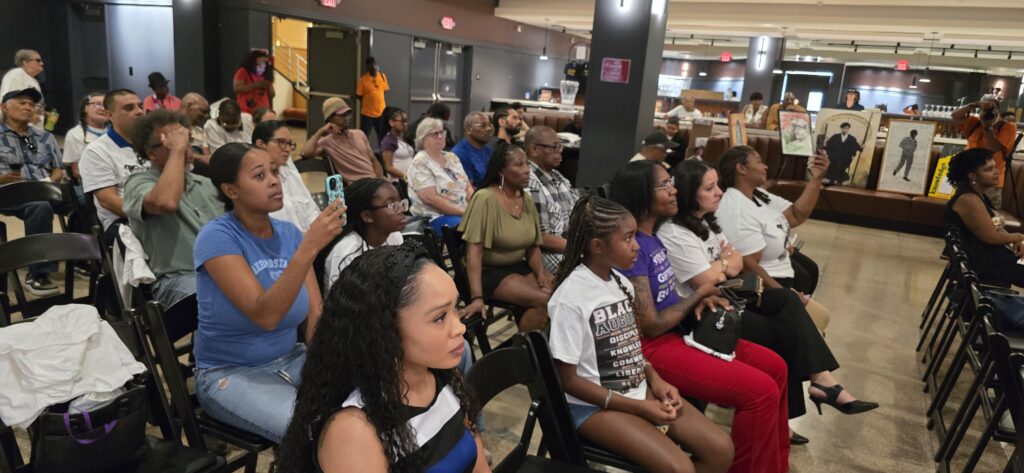
His story was one of many shared at Bakersfield’s second Black August gathering, where incarceration was discussed not simply as punishment, but as a life-changing experience that affects the person behind bars, their families, and the community waiting for them when they come home.
A family conversation
The discussion was especially personal for the event organizer Ucedrah Osby, founder and executive director of Community Interventions.
Three formerly incarcerated people made up the panel, which was the high point of the night: Brian Stafford, Sonya Grant, and Jack Osby, all her relatives. Stafford is her cousin on her mother’s side, Grant, her cousin on her father’s side, and Osby is her biological brother.
That family connection made the conversation about incarceration more than just a statistical discussion. “Many of us are born impacted,” Ucedrah Osby said, explaining that many families across Kern County have been touched by incarceration.
According to a Kern County strategic plan, the county has more prisons, community correctional facilities, and state inmates than any other county in California. It lists five CDCR prisons in the county.
Ucedrah calls it “incarceration nation.”
What does rehabilitation look like?
CDCR describes rehabilitation as a process that should begin inside prison and continue after release, with education, treatment, job training, and preparation for reentry.
But the panelists described a gap between that idea and their lived experience. Stafford said incarceration is supposed to help people change. “It says it’s rehabilitation, but it’s never done it,” he said. For him, rehabilitation should mean more than simply serving time. It should mean addressing the trauma, giving people opportunities to learn, and preparing them for the world they will eventually return to.
His own return showed how difficult that can be.
After three decades away, he was learning how to use a cellphone, computers, and even basic technology that others had come to take for granted. “Everything I’m doing for the first time in my life, from the driver’s license on down,” he said.
He eventually found work within two weeks of coming home. “I stood out on a street corner sweeping up trash,” Stafford said. “But it was a job.” Today, he uses what he learned from his own struggles to help others.
“I’ve been there before, and this is why I’m so passionate about what I do,” he said.
Grant’s story: behind the walls of a women’s prison
Grant’s 24 years in a women’s prison brought another dimension to the conversation.
She shared that rehabilitation should be separated from basic dignity, health, safety, and human connection. She described women trying to care for one another when they were sick or dying. She said that in an environment where people could become isolated from their families, incarcerated women sometimes became one another’s support system.
She told stories about the indignities of prison life.
“Everything we wear is used from the panties on down,” she said. “It’s really sad.”
The panelists agreed that everyone should be held accountable for their crimes, but that if rehabilitation is the goal, the institution must treat the person within it as a human being.
What should happen before the prison gate opens?
Stafford described the psychological toll of living for years in an environment where people remain constantly alert to danger.
“You become numb,” he said, describing the effect of seeing violence and living with the possibility of betrayal day after day.
That trauma does not disappear when someone is released. Stafford said people coming home need support because they can feel alone even when they are surrounded by people.
CDCR currently offers post-release programs that include housing, employment assistance, life skills, education, and family reunification.
But the panelists’ stories suggested that rehabilitation should not begin shortly before release. It should prepare people for release from the beginning.
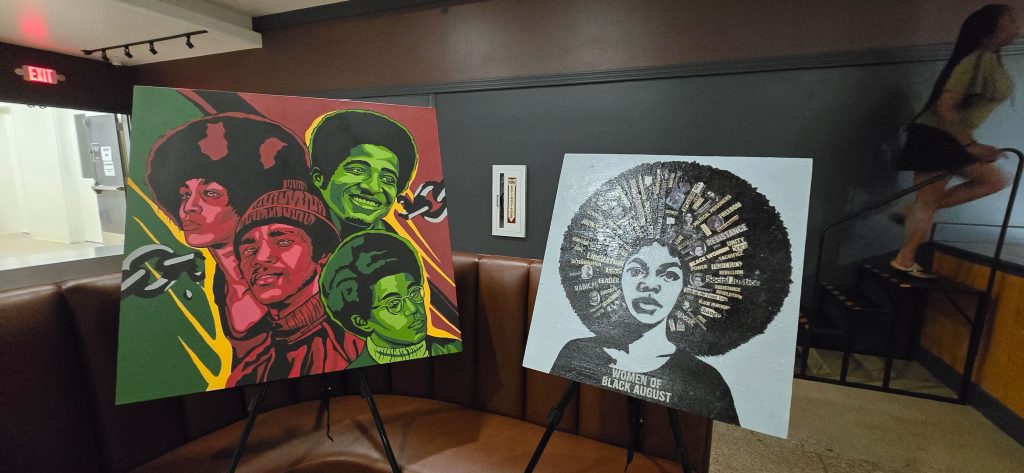
Photo Credit: Cecil Egbele
Art as another form of rehabilitation
The event’s art exhibition offered another dimension to the conversation.
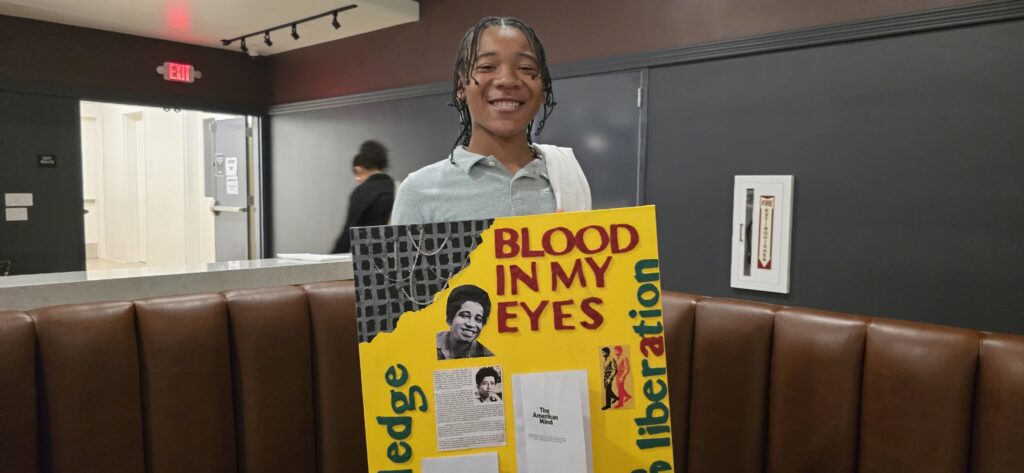
Teenage artist Alonzo Ray Miller Jr. created a brightly colored piece inspired by George Jackson and his book Blood in My Eyes. For him, the art was a way of connecting history, knowledge, and the present.
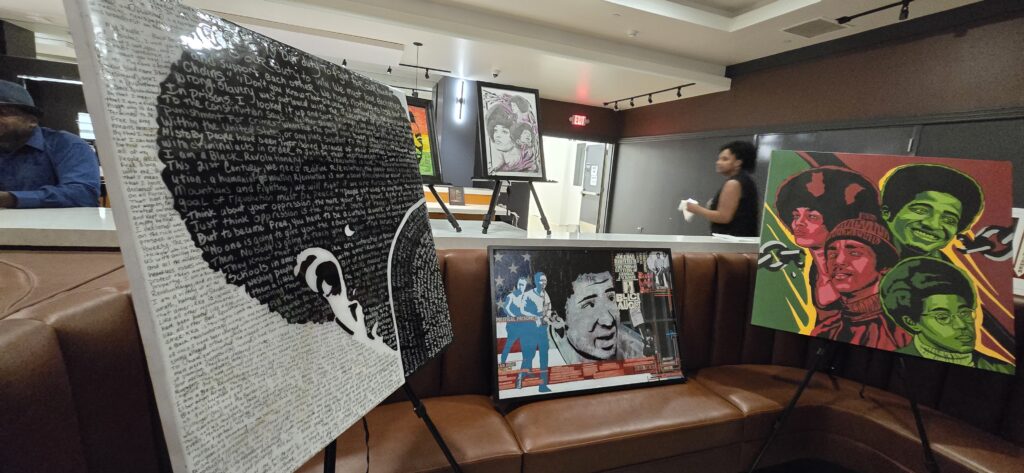
Artist Deidre Hathor’s portrait of Assata Shakur, a former Black Liberation Army member who died last year, centered on themes of resilience following her escape from prison to Cuba. Hathor said her work was about “art that tells the story” and emphasized the hope that can survive even through struggle.
“Basically, that no matter what the struggle is to still believe that there’s hope,” she said.
Muralist Brandon Thompson displayed paintings of author James Baldwin and Black Panther Party co-founder Huey Newton, describing his work as a continuation of storytelling meant to prevent history from being erased.
“It’s important for us to continue to tell these stories through art, and so that the younger generations can learn,” Thompson said.
Osby believes that young people need more than one story about incarceration.
“If they are only hearing one narrative, that’s the one they’re going to believe,” she said.
Poet Kashaunti Williams also added her voice to the gathering, using poetry to reflect on Black history, struggle, and resilience.
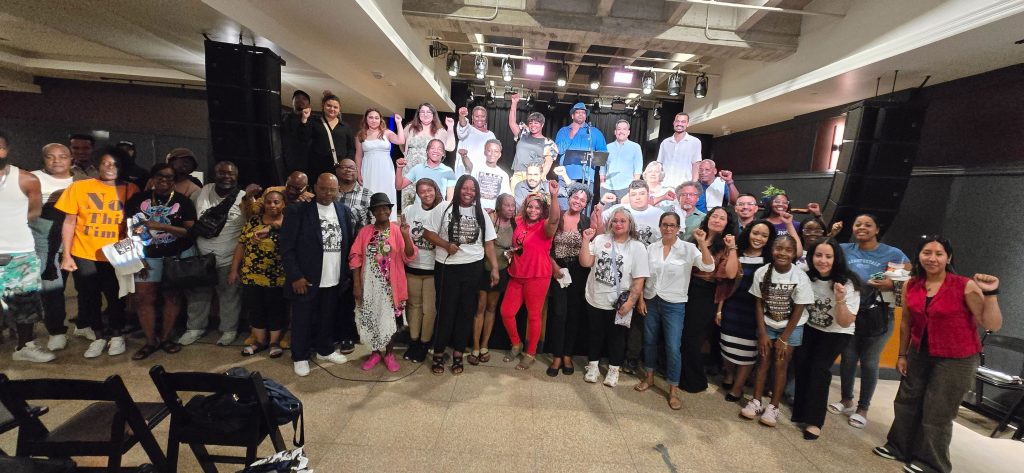
Photo Credit: Cecil Egbele
Rehabilitation cannot happen alone
The strongest message from the evening was not that communities should simply feel sorry for formerly incarcerated people. It was that people need a support system.
Pastor Curtis Smith of Faith in the Valley offered a reflection on the need for faith and community to support people beyond the prison walls.
Families need to remain connected to people while they are incarcerated. Communities need to help people when they return. And institutions need to do more to prepare people for that return.
Stafford knows the difference that support can make. “There are people that love us. People that stuck with me through thick and thin,” he said.
His wife, Tamika Stafford, said society should look beyond the crimes incarcerated people commit and appreciate who they are after release.
“A lot of people still have a stigma and treat him as though he’s the person that he was when he went in,” she said.
For audience members, the message of the night was heavy. Bryan Osorio of Building Healthy Communities said support must become action. “We need to show solidarity for one another, not just say it, but actually show up,” he said.
Bakersfield resident Melissa Thompson said the event underscored the need for continued community support for people leaving incarceration.
Rehabilitation, the speakers unanimously suggested, should not mean simply surviving a prison sentence and then being expected to figure out freedom on one’s own. It should mean education inside, dignity inside, preparation before release, opportunity after release, and a community willing to stand beside people as they rebuild their lives.
Osby closed the evening by describing the panelists not simply as survivors, but as educators, organizers, and leaders, urging attendees to continue conversations about incarceration long after the event ended.