
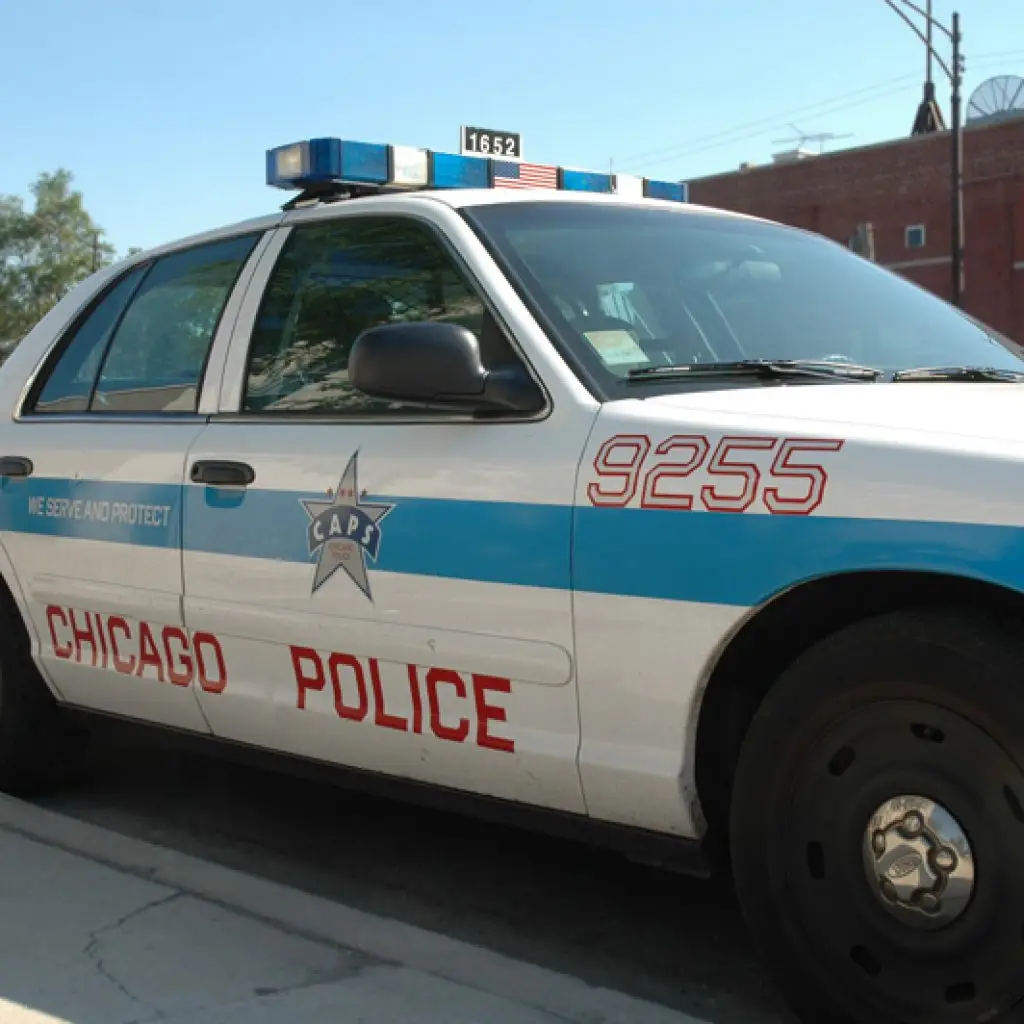
Chicago police made dramatically fewer traffic stops in 2025 than in years past. What did not change is who gets pulled over.
The Chicago Police Department reported 224,851 traffic stops in 2025 to the state of Illinois, according to the Chicago Sun-Times — a drop of roughly 23 percent from 2024 and about 58 percent below 2023 levels. Data CPD released separately under a public records request showed a nearly identical count, 224,846 stops, a 24 percent decline from the prior year. Yet despite the falling volume, Black and Latino drivers continued to be stopped at far higher rates than white drivers.
The disparity has numbers behind it. Analyzing the state’s 2024 traffic stop data, the ACLU of Illinois found Black motorists in Chicago were 3.2 times more likely than white motorists to be stopped when measured against the city’s driving population, and 4.11 times more likely when measured by miles driven; Latino drivers were 2.74 and 4.86 times more likely under the same benchmarks. In a separate analysis presented in federal court, an expert for civil rights plaintiffs found Black and Latino drivers were twice as likely as white drivers to be stopped for similarly dangerous moving violations.
The courts are now involved on a mass scale. On July 27, 2026, U.S. District Judge Mary M. Rowland granted class-action status to a civil rights lawsuit challenging CPD’s traffic stop practices, certifying a class of every Black and Latino driver stopped by Chicago police since June 26, 2021 — plus those who may be stopped in the future. Rowland called the class “undoubtedly massive”. The suit alleges violations of the Fourteenth Amendment and the Illinois Civil Rights Act and seeks injunctive relief rather than damages. The City of Chicago denies operating an unlawful mass traffic-stop program, and certification does not decide the merits of the case. Rowland has also ordered former Superintendent Larry Snelling — who retired in mid-2026 after publicly vowing to reduce overall stops while targeting dangerous drivers — to testify in the case.
There is a second problem: the official numbers may capture less than half the picture. Illinois law — the Illinois Traffic Stop Statistical Study Act — requires police departments to report every traffic stop to the state, one of the few such mandates in the country. But CPD failed to document roughly 267,000 stops in 2025, 27 percent more than the year before, according to data first reported by WTTW. Measured against the roughly 225,000 stops CPD did report, that means more than half of all stops went off the books. An Injustice Watch and Bolts investigation reached the same conclusion, finding the unreported-stop problem worsened even after CPD acknowledged it before the City Council in June 2025 and promised a fix. The gap was measured by comparing dispatch records — the moments officers radioed in traffic stops — against stops reported to the state. “There were over 250,000 stops that they did not report,” ACLU of Illinois attorney Alexandra Block told the Sun-Times.
City officials point to results: homicides in Chicago fell about 33 percent and shootings about 37 percent between 2023 and 2025, a period that coincides with the pullback in stops. CPD and the mayor’s office have not publicly responded to the 2025 disparity figures specifically.
The Chicago numbers exist at all because Illinois mandates their collection — most states publish nothing comparable. That makes Chicago a rare, measurable test of a question communities across the country are asking: when police stop fewer people, does the racial gap close? In Chicago, so far, the answer is no.
Drafted by News Observed Editorial AI, human reviewed and published.