By Marion Apio | California Local News Fellow
More than one in four adults 65 and older reports falling each year, and a fall-prevention pilot in Inglewood found a potentially modifiable problem hiding in plain sight: Nearly seven in 10 participating seniors were wearing a shoe size that did not match measurements of their feet.
The interim report from the Blue Zone Access Model, or Blue ZAM, pilot found that 68.9% of participants had a mismatch between their reported shoe size and measured foot length and width.
At the same time, the pilot found a high level of measured fall risk among participants. Of the 136 people with a valid overall fall-risk classification, 128, or 94.1%, were classified as having moderate or high risk. Seventy-six participants, or 55.9%, were classified as high risk.
The findings do not establish that ill-fitting shoes caused participants to fall or that correcting shoe size would prevent falls. Instead, the pilot identified footwear fit as one potentially modifiable factor within a broader assessment that examined walking, balance, strength, muscle mass and other physical functions.
That distinction is important because falls among older adults are multifactorial. The Centers for Disease Control and Prevention says more than one in four adults 65 and older reports falling each year, making falls the leading cause of injury for that age group.
The pilot began with approximately 300 Inglewood Senior Center members expressing interest. Because the first-year capacity was 160 participants, available spots were allocated through a raffle.
Eighteen selected participants did not attend the required baseline assessment. Another 142 entered the baseline cohort, but six did not have a valid overall fall-risk classification. As a result, the 94.1% moderate/high-risk figure is based on 136 participants, not all 142 people in the baseline cohort.
The risk classification was not based simply on whether someone had fallen before, nor on a single balance or walking test. Researchers assessed 15 objective areas, including the Five Times Sit-to-Stand test, 10-meter walk, Timed Up and Go, functional reach, balance, lower-body strength, grip strength, muscle mass and left-to-right differences in strength and muscle mass.
That makes the footwear finding notable while also limiting what can be concluded from it. The participants were a selected group of senior-center members, not a representative sample of all older adults in Inglewood.
The Inglewood result is consistent with earlier research showing that footwear fit can be associated with mobility among older adults.
A 2020 study of 111 older adults receiving geriatric services found that 72% were wearing footwear that did not fit correctly on both feet. The study did not establish that ill-fitting footwear caused falls and emphasized that falls have multiple causes.
Another study involving 85 community-dwelling older adults found that poorly fitting shoes were associated with slower walking, shorter strides and less regular gait. Participants who received newly fitted shoes showed improvements in several gait measures.
The four-year MOBILIZE Boston Study provides another piece of context. Researchers followed 765 community-dwelling older adults and recorded 1,829 falls. In 444 cases, or 24.3%, participants reported inappropriate footwear as one circumstance surrounding the fall. That finding describes what participants reported about their falls; it does not establish that footwear caused them.
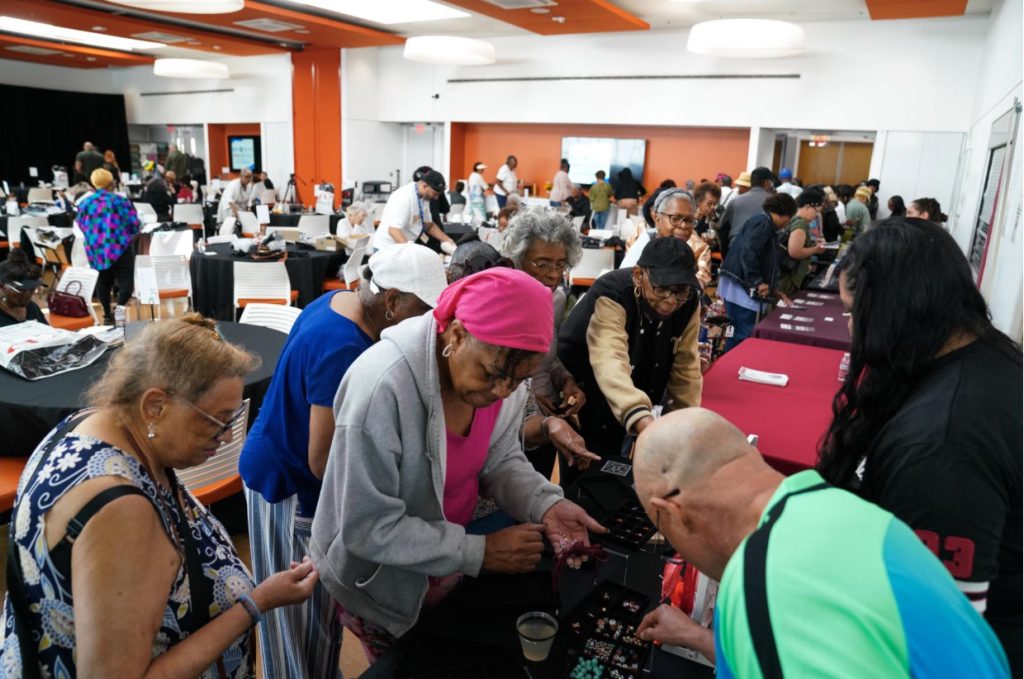
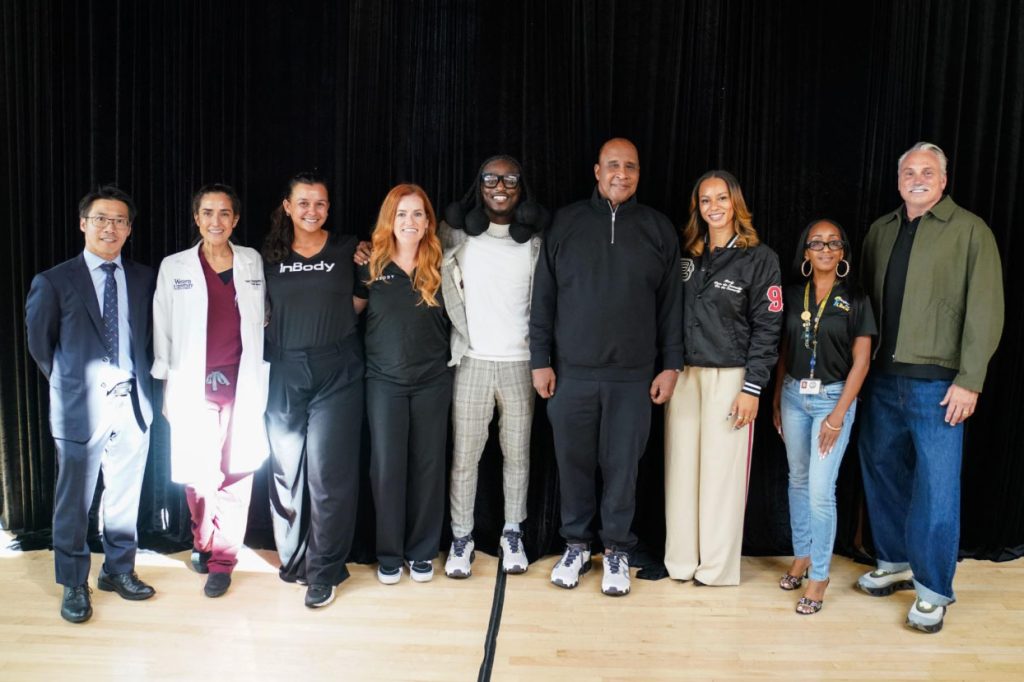
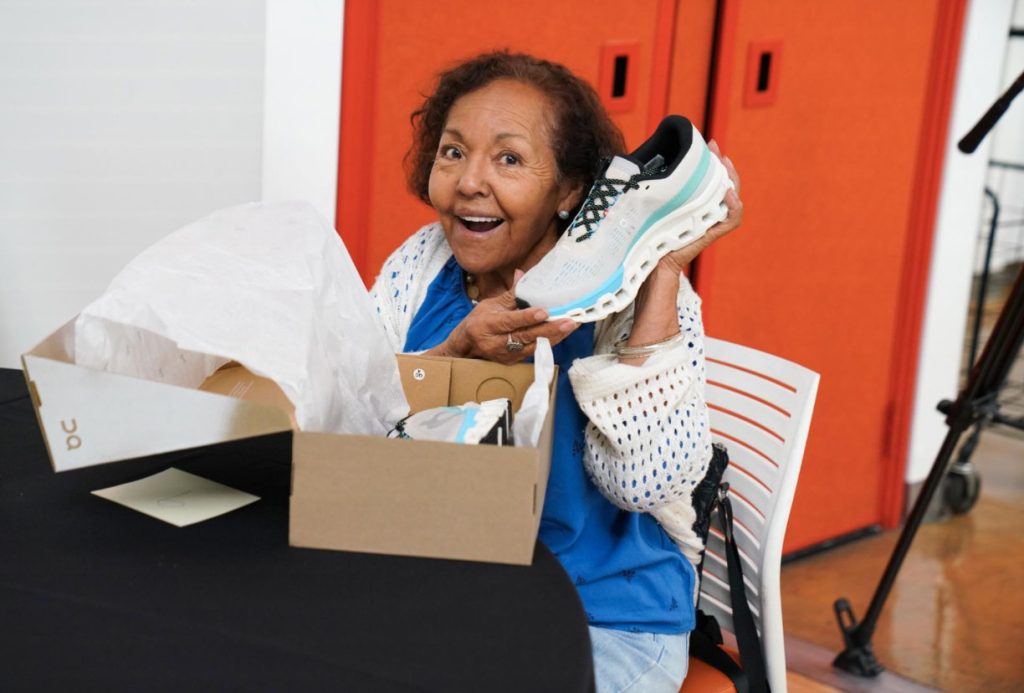
The footwear finding became the focus of an Oct. 15 event at the Inglewood Senior Center called Inglewood Steps Forward.
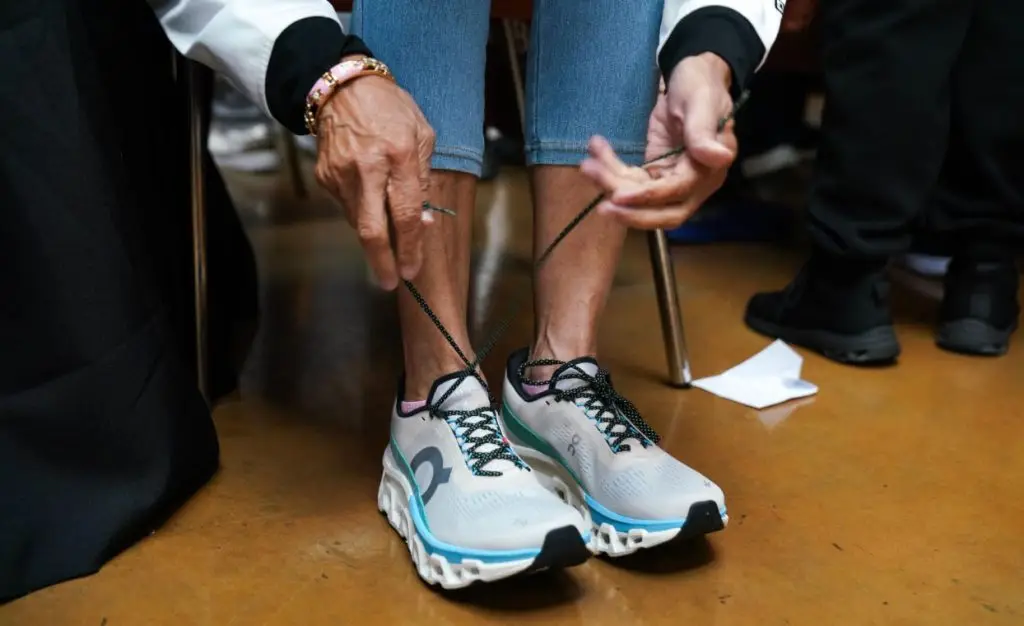
According to organizers, the event offered 150 seniors donated athletic shoes, foot measurements and professional fittings. Participants had both feet measured for length and width, received information about shoe fit and foot health, and could customize their shoes.
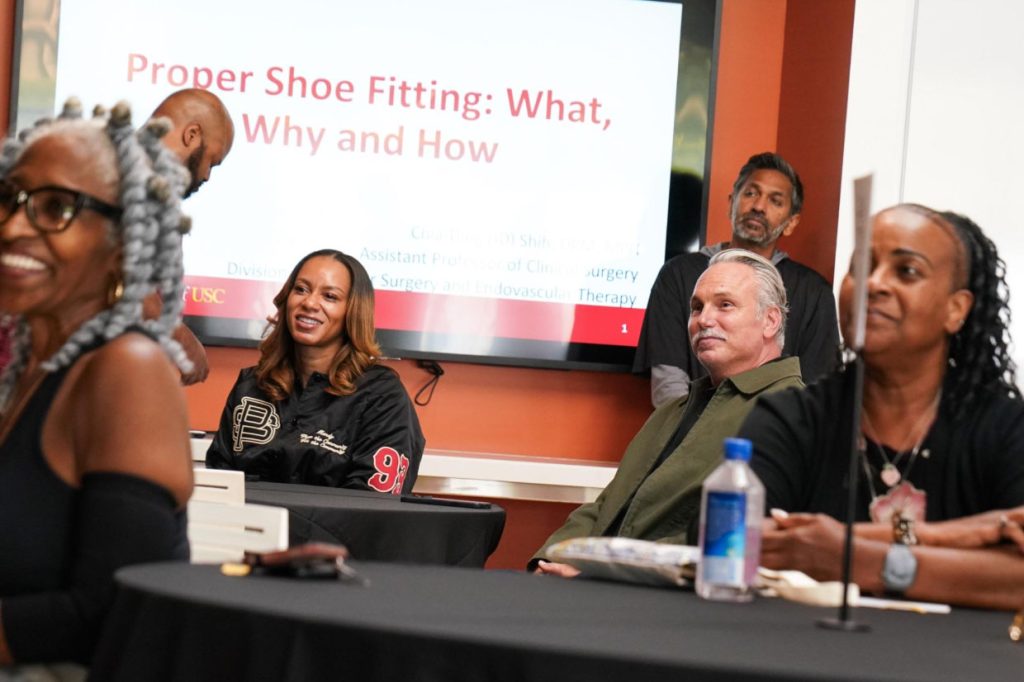
Chia-Ding Shih of Keck Medicine of USC provided education on foot and ankle health and preventive care. The event materials said the program was intended to provide education and sizing support rather than individual medical diagnoses.
The event was part of the Blue ZAM pilot, which organizers describe as a six-step framework — Identify, Assess, Intervene, Access, Equip and Engage — for addressing health risks at the community level. Fall prevention is the framework’s first application, according to the project materials.
The most striking number from the pilot may not be the percentage classified as high risk. It is the 68.9% footwear mismatch, because it points to a problem that can be measured directly.
The finding raises a straightforward question for older adults: Does the shoe size used for years still correspond to the actual length and width of the feet?
Research suggests footwear fit can affect gait, while the CDC’s STEADI fall-prevention guidance recommends properly fitted shoes and having feet measured for appropriate length and width. The guidance also recommends sturdy shoes with low heels, traction and adequate arch and heel support.
But footwear is only one piece of fall prevention.
Older adults and caregivers can start with a simple footwear check without assuming shoes are the sole explanation for a fall.
The CDC recommends discussing fall risk with a health care provider, having feet checked regularly and seeking professional evaluation for foot pain or deformities. Its STEADI program also addresses other risk factors, including strength, balance, medications, vision and hazards in the home.
For Inglewood, the pilot’s interim findings offer a practical takeaway: Measure both feet, check that shoes fit in length and width, and treat footwear as one part of a broader fall-prevention strategy.