
Nearly two weeks after hurricane-force winds tore through Northwest Indiana, most of the region’s power is back on — and a claim circulating alongside the story, that the outage signals an 18-month nationwide blackout, is false. The two have nothing to do with each other.
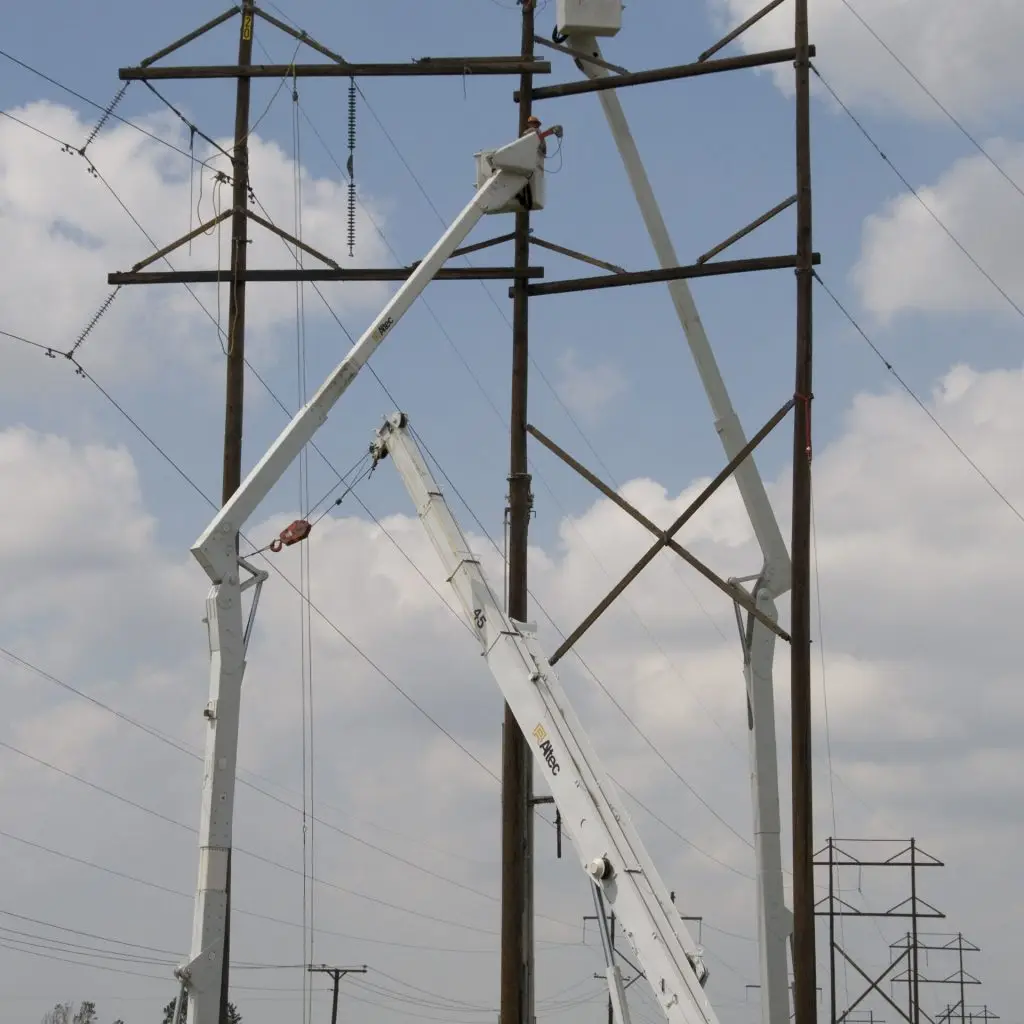
Here is what actually happened. On Monday, Aug. 11, 2026, a derecho — a fast-moving line of severe windstorms — swept across Northwest Indiana, with a measured gust of 99 mph, comparable to a Category 2 hurricane. Trees, poles and lines came down across the region. NIPSCO, the utility serving the area, called it the largest outage event in company history, affecting more than 60% of its system.
The restoration was long and uneven. Eight days after the storm, more than 83,000 customers were still dark region-wide, including more than 27,000 in Gary. By Aug. 20 the number had fallen to roughly 63,500, with Gary accounting for about 25,000 of those. NIPSCO’s storm restoration page reported on the morning of Aug. 24 that about 364,400 customers had been restored, with roughly 4,300 still out from the Aug. 11 storm and later weather.
NIPSCO CEO Vince Parisi missed his own target. “I feel really good about getting 90% of our customers by the end of tomorrow,” he said early in the restoration — a goal that did not pan out. An equipment fire in East Chicago knocked power out again to homes that had just gotten it back. Gary’s public schools, serving about 4,300 students, were closed starting Aug. 13. Gov. Mike Braun publicly criticized NIPSCO’s response on Aug. 23, and federal disaster assistance was approved that weekend. Gary is a majority-Black city of roughly 76–78% Black residents.
The restoration was also briefly interrupted by gunfire. Overnight Friday into early Saturday, Aug. 15, someone fired on a NIPSCO crew vehicle in the 200 block of Rutledge Street in Gary, striking the Jeep twice; one round lodged in a headrest. No one was injured. NIPSCO said work in Gary was temporarily paused; Mayor Eddie Melton posted a video disputing that restoration was ever halted. Work resumed Saturday afternoon with Gary police, Indiana State Police and National Guard members escorting crews, an arrangement Melton confirmed.
Now, the claim being attached to all of this. The “18-month blackout” figure is real — but it describes something else entirely. It comes from a 2014 internal memo at the Federal Energy Regulatory Commission, written by FERC’s then-director of external affairs, which concluded that if saboteurs destroyed nine critical interconnection substations and a transformer manufacturer, the U.S. grid could be down “for at least 18 months, probably longer”. The analysis was commissioned after the 2013 sniper attack on PG&E’s Metcalf substation near San Jose, and championed publicly by former FERC chairman Jon Wellinghoff. It is a worst-case model of a coordinated, simultaneous armed attack on nine specific facilities. It is not a weather forecast, and it is not a prediction.
The Metcalf attack itself is instructive: gunmen fired roughly 100–120 shots and knocked out 17 transformers, yet PG&E rerouted power and no major blackout resulted; repairs took 27 days, and no arrests were ever made. Even the real attack that inspired the memo did not turn anyone’s lights off for 18 months.
The memo resurfaced in aggregator coverage in mid-August 2026, and several outlets and syndicated headlines have explicitly welded it to Gary — “US power grid at risk of 18-month blackout as 1 city has been in dark for more than a week”. That framing is wrong. A storm knocked down poles and wires in Northwest Indiana. That is a repair job with a number attached, and NIPSCO has restored more than 364,000 customers. The 18-month figure describes an attack that has not happened, on nine substations nobody has touched. Nothing about Gary is evidence for it, and it is not why anyone in Gary was still dark.
The conflation is not harmless. It converts a real, fixable, accountable failure into an unfalsifiable rumor. If your lights are off because a national collapse is coming, there is nobody to call. If they are off because of a utility’s storm response, there is: a utility with a CEO, a governor who has already criticized it, and state regulators. The underlying concern about substation security and long transformer lead times is legitimate and separately documented — the error is attaching it to a windstorm.
If you need help: current outage numbers are at nipsco.com/outages/power-outages. Indiana’s State Disaster Relief Fund offers grants of up to $5,000 for shelter, food and clothing needs — apply by calling 211 or through in.gov. Households that lost food can request SNAP replacement benefits by filing an affidavit within 10 days of the loss, and federal disaster assistance is now available for the Aug. 11 storms.
Drafted by News Observed Editorial AI, human reviewed and published.