By Marion Apio | California Local News Fellow
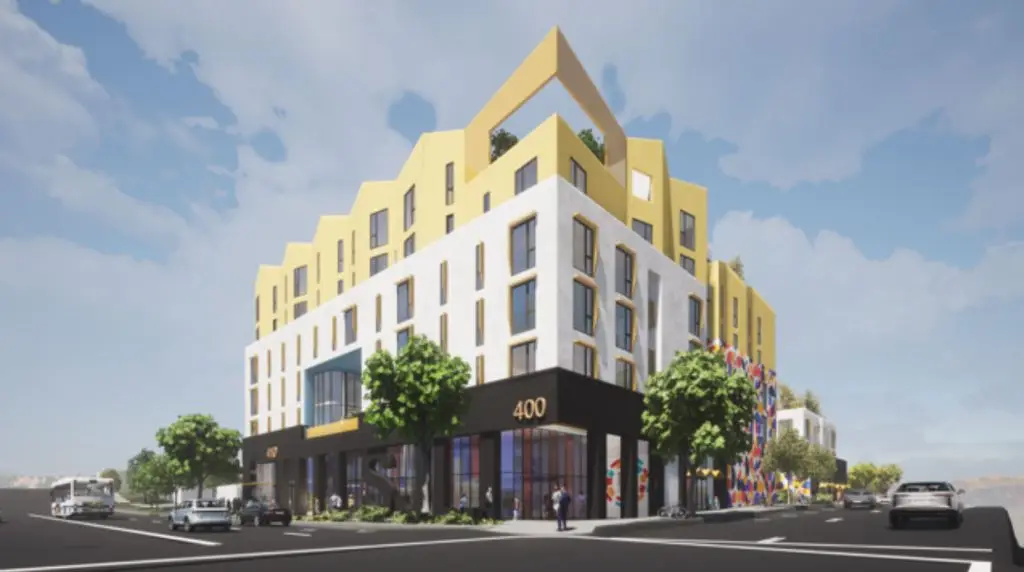
Inglewood is putting $2.8 million of its approximately $3.1 million in federal HOME-ARP funds toward Sankofa Place, a $105 million affordable housing development that will bring 120 units to two parcels on Centinela Avenue and Warren Lane.
The project will include 118 deed-restricted affordable rental units and two manager units. Fifty-nine units are planned as permanent supportive housing for people experiencing homelessness, according to Venice Community Housing, one of the project’s developers.
The city’s HOME-ARP allocation is the largest public funding commitment from Inglewood to the project. The money will cover part of the land acquisition, according to Ian Nevarez, senior director of development and communications for Venice Community Housing.
Los Angeles News Observer
LA news, from Inglewood to South LA.
Local stories, community events, and the voices other outlets miss. Free every Thursday.
Free weekly newsletter. Unsubscribe anytime.
The city originally allocated some of the HOME-ARP funds for affordable housing and some for administrative costs. Roberto Chavez, Inglewood’s HUD programs manager, said the city moved the remaining funds into the housing project to help close its financing gap.
“Part of it was already allocated to this purpose, but some of it was allocated to administrative dollars,” Chavez said. “So we reallocated whatever wasn’t there to the remainder, so that we could make sure that the developer had enough funding to close their gaps.”
The city conducted a 30-day public review of the amended HOME-ARP plan. Chavez said he did not recall receiving public comments during the review period.
The decision reflects the city’s preference for using the federal funds for permanent housing rather than shorter-term assistance, Chavez said. He said the city viewed a project with a 55-year affordability covenant as providing longer-term stability for low-income families.
“So basically, when the city was developing their strategy for spending,” Chavez said, “the city did a public hearing and requested comments from the public on the use of the funds.”
The project is being developed by Venice Community Housing, Linc Housing and the Social Justice Learning Institute through Sankofa Place LP.
The total development cost is $105 million, according to Venice Community Housing. The financing includes 4% low-income housing tax credits and tax-exempt bond financing, an Affordable Housing and Sustainable Communities permanent loan from the California Department of Housing and Community Development, a construction-to-permanent loan from the Los Angeles County Affordable Housing Solutions Agency, a No Place Like Home loan from the Los Angeles County Development Authority, an Infill Infrastructure Grant, financing from KeyBank, tax credit equity from Freddie Mac and a $1.7 million capital contribution from the Social Justice Learning Institute.
The project also has 59 project-based vouchers conditionally committed by the Inglewood Housing Authority. Chavez said those commitments were made before the housing authority entered a designated shortfall, meaning the city currently has limited ability to make new voucher commitments.
“We want to honor those obligations,” Chavez said. “But in the future, right? If I want to do any now, I’m limited until we’re out of the shortfall.”
Chavez said the shortfall is separate from the HOME-ARP reallocation.
The housing authority’s shortfall is tied to federal funding for its existing voucher program, he said. The authority has spent its annual allocation and is being monitored by the U.S. Department of Housing and Urban Development to prevent additional overspending.
The distinction matters because Inglewood’s existing commitment to Sankofa Place can move forward while the city faces limits on new project-based voucher commitments, Chavez said.
The project is intended to serve households earning between 30% and 80% of the area median income. The 59 permanent supportive housing units will serve people experiencing homelessness, with some units designated for transition-age youth and people with mental illness and a portion targeting American Indian and Alaska Native residents, according to Venice Community Housing.
Residents for the permanent supportive housing units will be referred through Los Angeles County’s Coordinated Entry System. Some affordable units will be referred from Inglewood waiting lists, while the remaining units will be filled through a lottery of eligible applicants, according to Venice Community Housing.
The project is designed to remain affordable for decades. It carries a 55-year affordability covenant, while funding from the Los Angeles County Affordable Housing Solutions Agency requires 99 years of affordability, according to the developer.
Construction was scheduled to begin in late September, with completion expected in fall 2028, according to Venice Community Housing.
The project also includes the future headquarters of the Social Justice Learning Institute, which will occupy about 17,000 square feet. The nonprofit plans to continue programs including job training, pre-apprenticeship training, anti-displacement work, financial assistance and active transportation programs from the site.
An additional Affordable Housing and Sustainable Communities grant will support infrastructure improvements around the development, including new and connecting bicycle paths and pedestrian improvements.
The project is subject to Section 3 requirements aimed at targeting local workers and a project labor agreement. Because it receives federal and state funding, workers will be paid the higher of applicable prevailing wage rates or Davis-Bacon rates, according to Venice Community Housing.
Derek Steele, executive director of the Social Justice Learning Institute, said the project is intended to respond to the displacement pressures accompanying development in Inglewood.
“Displacement has been a challenge with all the development that has happened in the city,” Steele said.
Steele said the project’s financing extends beyond the city’s contribution and the nonprofit’s investment.
“There’s a whole capital stack,” he said. “It’s not necessarily just built around the contributions that the city made or that we made.”
Steele said the development will provide housing across several income levels while including permanent supportive housing for people experiencing homelessness.
“It’s 30% to 80% AMI,” he said. “So this is an AMI spread that covers multiple aspects of our community at a time where these types of solutions are needed.”
For Inglewood, the project represents one of the city’s larger commitments to creating new affordable housing while its housing authority faces limits on new voucher commitments.
“When you ask what the city is doing to help the homeless, it’s partnering with Venice Community Housing to build affordable housing,” Chavez said.
The city’s HOME-ARP investment is one part of the larger financing package needed to bring the 120-unit project to construction.