
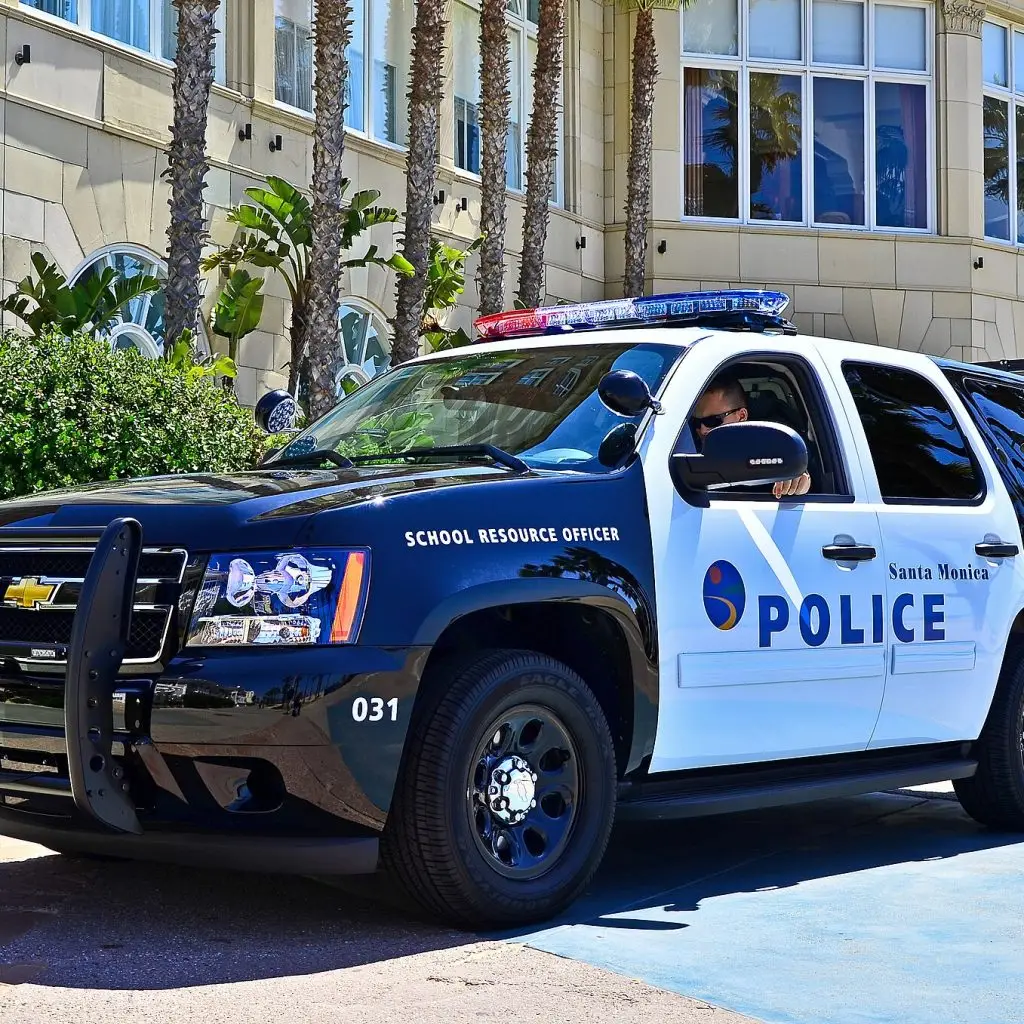
As students return to classrooms this fall, a new report out of Iowa puts hard numbers on a pattern Black parents across the country have long described: when police are stationed in schools, Black children are the ones most likely to end up in handcuffs.
The ACLU of Iowa released the 37-page report, “Rethinking School Safety in Iowa: The Harms of School Resource Officers (SROs),” on July 30. It found that Black students make up about 7 percent of Iowa’s public school population but account for roughly 13 percent of referrals to law enforcement by school resource officers and 21 percent of school-based arrests — meaning a Black student in Iowa is referred at twice the rate of other students and arrested at 3.7 times the rate, nearly four times.
Students with disabilities fare little better. They are about 13 percent of Iowa’s student population but account for roughly 27 percent of SRO referrals and 26 percent of arrests — 2.3 times the rate of their peers.
The report identified at least 130 full-time SROs across 78 districts — about a quarter of Iowa’s school systems, but ones enrolling more than half of the state’s students. Researchers sent open-records requests to 87 districts and 67 law enforcement agencies and combined the responses with federal civil rights data that every school is required to report.
The findings go beyond racial disparities. The report documents officers being called for incidents involving very young children — a 7-year-old running through a hallway and a 6-year-old disrupting a classroom in Perry, and a playground dispute between 9- and 10-year-olds in Pella. It found the average Iowa district spends at least $98,000 on an SRO, more than the average salary of a school counselor ($70,015) or classroom teacher ($66,655). None of the 78 districts studied had an SRO-specific complaint process, and 38 had no complaint process at all. The authors said they could not find a single national study clearly demonstrating that having an SRO makes a school safer, including during mass shootings.
“58% of the law enforcement agencies that we contact maintain no formal policy on special training for their SRO program,” said Jacob Sarasin, an ACLU of Iowa legal fellow. Rita Bettis Austen, the organization’s legal director, said, “The stigma associated with hostile police interactions, detentions, and arrests can result in an identity shift to being a ‘bad kid.’ That is the school-to-prison pipeline”.
The ACLU recommended Iowa districts end their SRO programs — as Des Moines and Ames have already done — or, if they keep them, adopt stricter training requirements, better data reporting, measurable goals, and clear rules for when an officer, rather than school staff, handles an incident.
The picture is not uniformly worsening. Data linked within the report shows the 2024-2025 school year saw a nearly 50 percent decrease in SROs charging students compared to the year before, including a 65 percent reduction in Black students being charged. The Cedar Rapids Community School District, responding to the report, said it valued its partnership with its SROs and would “carefully review” the findings. About a week later, the district released its own data showing criminal charges against students fell from 69 in 2023-2024 to 16 this past school year — a drop of more than 76 percent since it launched a safety initiative in fall 2023. As of publication, no response to the report from the Iowa Department of Education or state police associations has been reported.
Iowa’s numbers are steep, but the pattern is national — and the two datasets should not be blended. The most recent federal Civil Rights Data Collection, covering 2020-21, found Black students were 15 percent of K-12 enrollment nationwide but 18 percent of students referred to law enforcement and 22 percent of those arrested at school. Older federal data from 2013-14 showed a wider gap: Black students were 15.5 percent of enrollment but 33.4 percent of students arrested.
Closer to home, a UCLA Million Dollar Hoods analysis of Los Angeles School Police Department records from 2014 to 2017 — data now nearly a decade old — found Black students accounted for 25 percent of the department’s arrests, citations, and diversions while making up less than 9 percent of the district’s students. No comparable current dataset for LAUSD surfaced in Observed’s research. And in Kern County, where the Kern High School District operates its own police department, no published data on SRO arrest disparities could be found at all. That absence is itself part of the story: Iowa’s report exists because records were requested and released. What Black parents in Bakersfield or Los Angeles cannot yet see in numbers, Iowa has now put on paper.
Drafted by News Observed Editorial AI, human reviewed and published.