
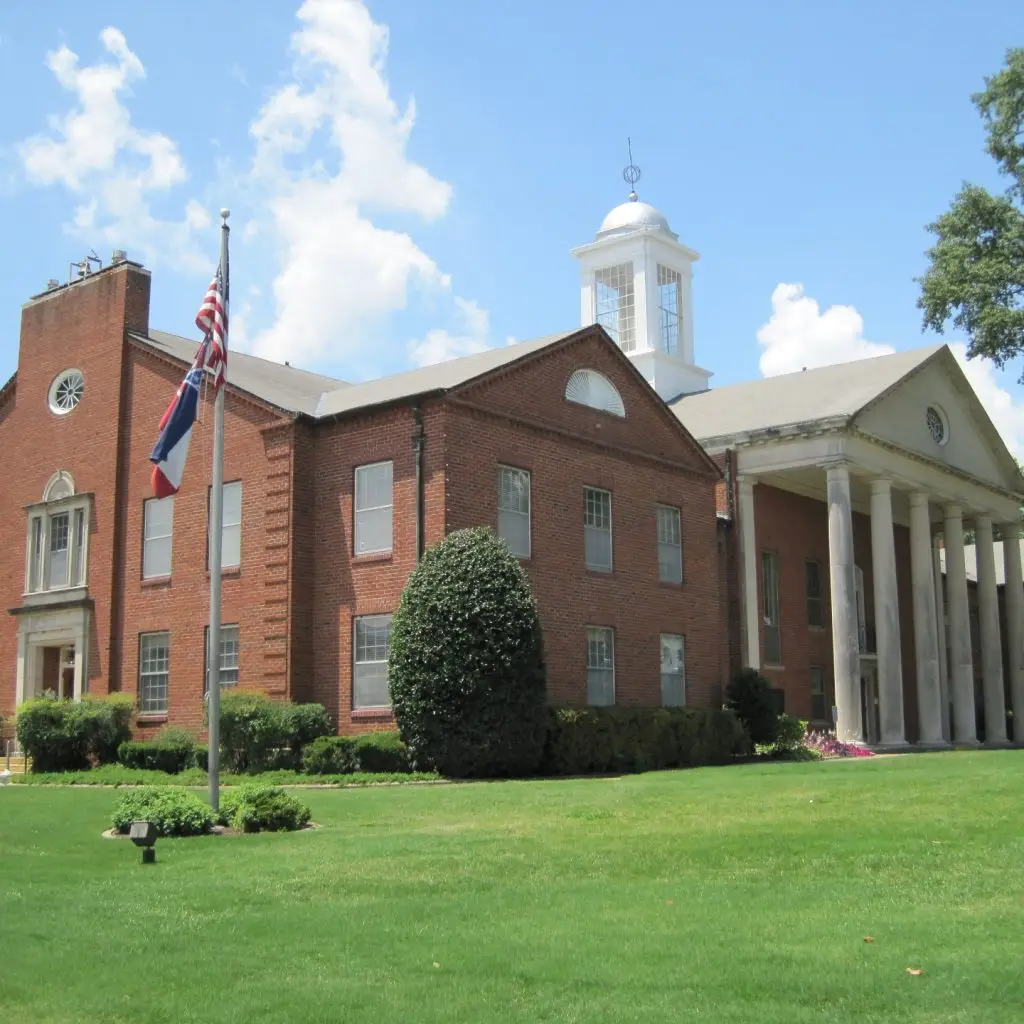
A federal judge on Thursday declined to block DeSoto County, Mississippi’s new majority-Black judicial subdistricts from taking effect before the November election — leaving intact, for now, what civil rights groups call the state’s only majority-Black judicial election district.
U.S. District Judge Sharion Aycock ruled Aug. 13 that “The Plaintiffs have not provided sufficient evidence to justify this Court’s involvement”. She reasoned that redrawing district lines this close to an election would run against U.S. Supreme Court guidance cautioning lower courts not to change election rules on the eve of voting.
The ruling is not a final decision. Aycock denied only the request to block the districts for this election; the litigation continues, and the court can order further briefing and rule on the merits later.
The lawsuit was filed July 2 in the U.S. District Court for the Northern District of Mississippi by Robert Foster — a former Republican candidate for governor who lost the 2019 GOP primary and now serves as a DeSoto County supervisor — along with other county residents. The plaintiffs argue that the Legislature’s creation of majority-Black judicial subdistricts itself violates the Voting Rights Act, the 1965 law enacted to protect Black voters’ access to the ballot. Their attorney has characterized the legislation as “designed to deny you the opportunity to vote” for judges who hold countywide authority.
Under legislation passed in 2025, Mississippi redistricted its circuit and chancery courts and created a majority-Black subdistrict in DeSoto County, the state’s third-most-populous county, in the Memphis suburbs. Residents inside the subdistrict vote for four circuit judges and three chancery judges; residents outside vote for three circuit judges and two chancellors — though all elected judges exercise authority countywide. Elections for the new seats are set for November. How many voters fall inside versus outside the subdistrict could not be established from published sources.
The suit followed the Supreme Court’s decision in Louisiana v. Callais, issued April 29, 2026]. In Callais, a 6-3 majority significantly narrowed when racial vote-dilution claims can be brought under Section 2 of the Voting Rights Act, requiring challengers to show a strong inference that a state intentionally disadvantaged minority voters because of race. In DeSoto County, that landscape has produced an inversion: plaintiffs led by a white former Republican gubernatorial candidate are invoking the Voting Rights Act — alongside equal-protection arguments — to try to dismantle a majority-Black district.
Civil rights groups — the ACLU, the ACLU of Mississippi, the NAACP Legal Defense Fund, and the NAACP — moved in July to intervene in the case on behalf of the DeSoto County NAACP and Delta Sigma Theta Sorority Inc.. The ACLU of Mississippi has described the subdistrict as the “only meaningful opportunity for Black voters to elect candidates of their choice” in a county it says has racially polarized voting. No public statement from Foster or his co-plaintiffs responding to Thursday’s ruling had been located as of this writing.
The case unfolds against a broader Mississippi backdrop. In a separate lawsuit, White v. Mississippi State Board of Election Commissioners, the same judge ruled in August 2025 that the state’s Supreme Court districts violated the Voting Rights Act and later ordered special elections for November 2026. The Callais decision erased that outcome, eliminating the planned special elections and sending the Legislature back to redraw the maps. That litigation is distinct from the DeSoto County case, but both trace the same fault line: what remains of the Voting Rights Act after Callais, and who gets to wield it.
Drafted by News Observed Editorial AI, human reviewed and published.