
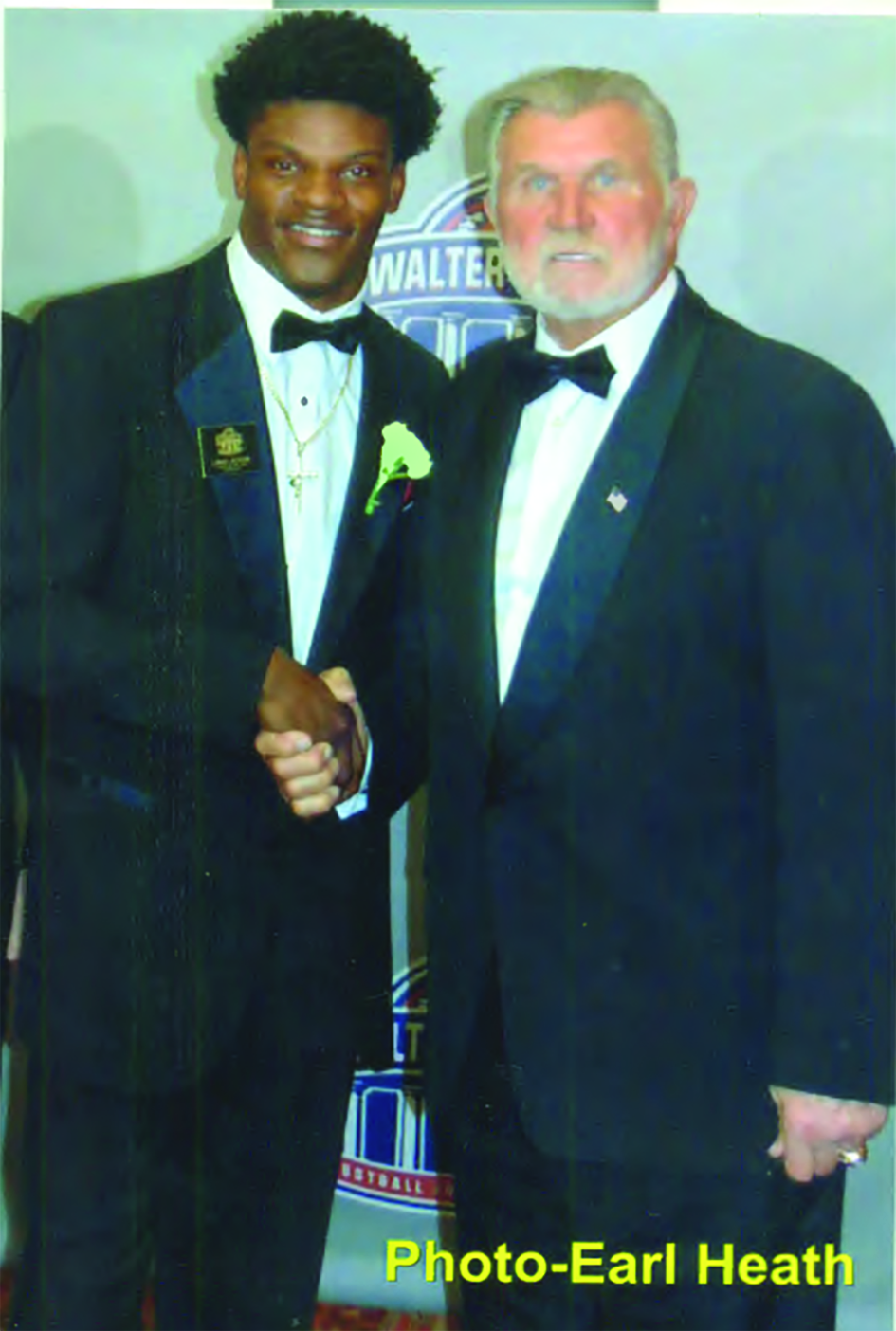
By Earl Heath | Contributing Sports Writer
Mike Ditka, one of the biggest personalities in NFL history and a defining figure in Chicago Bears football, died Oct. 9 at age 86, his family announced. His death was also confirmed by the Pro Football Hall of Fame.
Ditka rose to national prominence as head coach of the 1985 Chicago Bears, guiding a team known for its dominant defense to a Super Bowl XX championship. The victory remains the franchise’s only Super Bowl title.
“It is with profound sadness that we announce the passing of our beloved husband, father, grandfather, and friend, Mike Ditka,” his family said in a statement. “While the world knew Mike as a Hall of Fame football player, legendary coach, and leader of the Chicago Bears’ Super Bowl XX championship team, we knew him as the heart of our family.
“Mike will be missed beyond measure and remembered forever.”
Ditka’s football legacy stretched across generations. He was part of the Bears’ 1963 NFL Championship team and later won a Super Bowl as a player with the Dallas Cowboys in Super Bowl VI. He earned another championship as a Cowboys assistant coach in Super Bowl XII before leading Chicago to its historic victory in Super Bowl XX. He was selected to the NFL’s 75th- and 100th-anniversary all-time teams.
As Bears head coach from 1982 to 1992, Ditka compiled a 106-62 regular-season record and led Chicago to the playoffs seven times. He was named NFL Coach of the Year by the Associated Press in 1985 and 1988. He later coached the New Orleans Saints from 1997 to 1999.
A Pitt Panther Who Played With Fire
Before becoming an NFL icon, Ditka starred at the University of Pittsburgh from 1958 to 1960. He was a three-sport athlete, competing in football, baseball and basketball, and also earned recognition as an intramural wrestling champion.
Pitt’s current head football coach, Pat Narduzzi, reflected on the example Ditka left for future generations of Panthers.
“When our players see Mike Ditka’s name, I want them to know how he competed. He gave everything and expected the same from his teammates. His toughness will forever be part of this program!” Narduzzi said.
Ditka’s playing career helped redefine the tight end position. He became the first tight end inducted into the Pro Football Hall of Fame, entering in 1988. His combination of receiving ability, blocking and physical play helped establish a new standard for the position.
The Gold Standard in Chicago
The Bears organization also paid tribute to the coach whose intensity and leadership became synonymous with Chicago football.
Current Bears head coach Ben Johnson spoke about the responsibility of following a figure whose influence remains deeply rooted in the franchise.
“As far as I’m concerned, Coach Ditka is the gold standard in terms of this place. He’s a legend around here as a player, as a coach. His impact is still being felt to this day, and as the head coach of the Bears, I feel humbled to be in that same chair he was once in. It’s a sad day,” Johnson said.
Ditka’s teams were known for their physical style and fierce competitiveness, particularly in the rivalry with the Green Bay Packers. During his tenure as Chicago’s head coach, the Bears posted a 15-5 record against Green Bay, according to the figures provided for this story.
Former Bears linebacker Mike Singletary, one of the central figures on Chicago’s championship defense, recalled the immediate impression Ditka made.
“When I first heard him when he walked in the room, to me Coach Ditka had the opportunity to be the greatest coach of all time because he had the fire,” Singletary said.
That fire defined Ditka’s public persona and helped make him one of the most recognizable figures in professional football. Known as “Iron Mike” and “Da Coach,” he became a symbol of Chicago’s blue-collar identity.
His legacy extends beyond wins and championships. For generations of players and fans, Ditka represented toughness, accountability and an uncompromising commitment to the game.
The man who helped bring Chicago its most celebrated Super Bowl triumph leaves behind a lasting imprint on the Bears, the University of Pittsburgh and the NFL.