By Marion Apio | California Local News Fellow
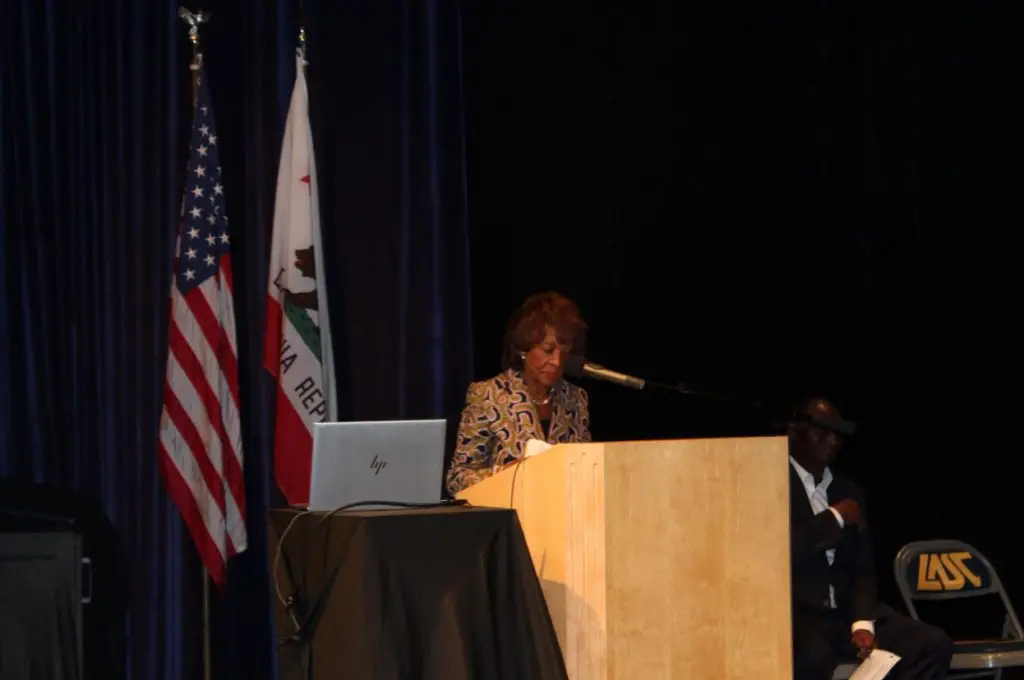
U.S. Rep. Maxine Waters called for a $1 trillion federal investment in housing during an Oct. 10 town hall at Los Angeles Southwest College, saying addressing homelessness, expanding homeownership and preserving affordable housing require sustained federal support.
Waters, the ranking Democrat on the House Financial Services Committee, cited more than 73,000 people experiencing homelessness in Los Angeles County on any given night and a shortage of nearly 486,000 affordable homes for lower-income renters. She said the figures show the crisis’s scale and the need for federal, state and local governments to work together.
“The crisis did not happen overnight, and there is no single program that is going to solve it overnight,” Waters said.
Los Angeles News Observer
LA news, from Inglewood to South LA.
Local stories, community events, and the voices other outlets miss. Free every Thursday.
Free weekly newsletter. Unsubscribe anytime.
She highlighted the 21st Century Road to Housing Act, which she said would increase housing supply, expand homeownership and preserve affordable homes. Waters said the legislation followed years of congressional hearings and bipartisan negotiations.
One provision would create a database of publicly owned land available for potential housing development. Waters said discussions with agencies, including Metro, helped identify how government-owned land could lower development costs.
The legislation also includes measures to help local governments plan housing projects and remove construction delays. Other provisions would support manufactured and modular housing, expand financing for accessory dwelling units and improve access to smaller mortgages.
Waters said lenders often favor larger mortgages that generate greater returns, making smaller loans harder to obtain. This can leave prospective buyers unable to finance less expensive properties, particularly in rural communities and small towns.
She also highlighted proposed assistance for lower-income homeowners who need essential repairs, which could help them remain in their homes rather than face the cost of moving.

Waters said smaller mortgages can be difficult to obtain because lenders often favor larger loans that generate greater returns. That can leave prospective buyers unable to finance less expensive properties, particularly in rural communities and smaller towns.
She also pointed to proposed assistance for lower-income homeowners who need essential repairs. Such assistance, she said, could allow residents to remain in their homes rather than face the expense of moving.
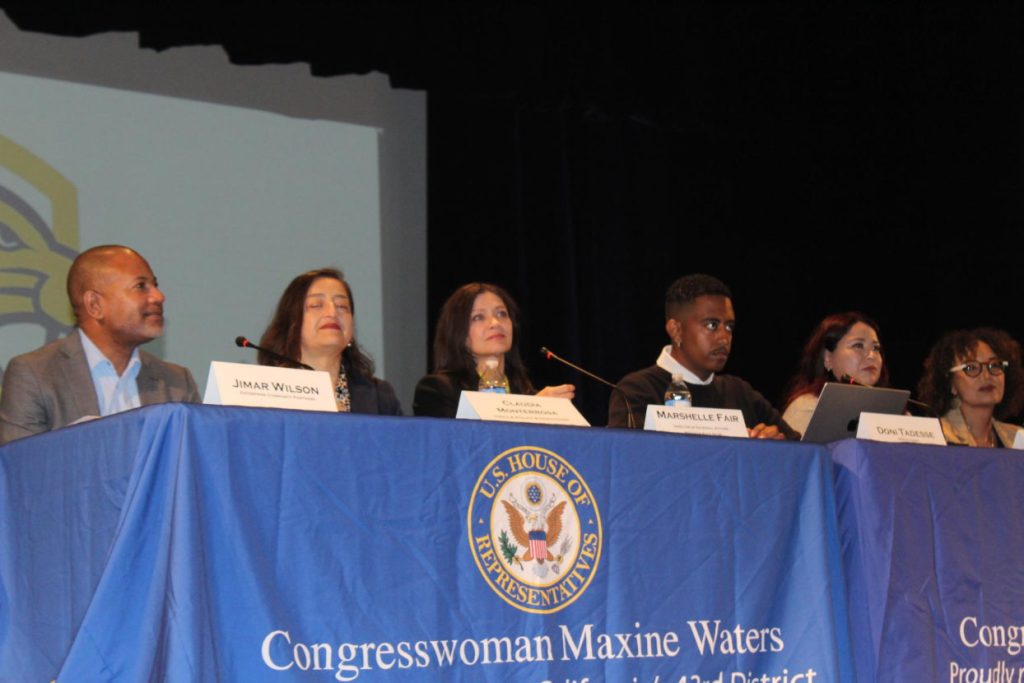
Jimar Wilson, vice president and Southern California market leader for Enterprise Community Partners, said addressing the housing crisis requires sustained investment and a range of housing options. A South Los Angeles native who continues to live in the neighborhood, Wilson also teaches affordable housing development at Los Angeles Trade-Technical College.
Wilson pointed to Measure ULA in Los Angeles and Measure A in Los Angeles County as local funding measures intended to support housing initiatives. He said federal investment could build on local efforts to increase the availability of affordable homes.
Households spending more than 30% of their income on housing are considered rent-burdened, while those spending more than 50% are severely rent-burdened, Wilson said. Increasing supply can ease pressure on rents, but construction alone is not enough, he said. Communities also need homeownership opportunities, public housing and multifamily development, as well as efforts to preserve existing homes and support owners of small apartment buildings.
Claudia Montarosa, director of policy and innovation at the Housing Authority of the City of Los Angeles (HACLA), said the agency serves more than 200,000 people across the Los Angeles region. About
She said approximately 60,000 people within city limits receive assistance through its housing choice voucher program, asset management and housing production.
Approximately 95% of HACLA’s funding comes from the U.S. Department of Housing and Urban Development (HUD), Montarosa said, leaving the agency heavily dependent on federal funding and regulations. She raised concerns about staffing reductions at HUD over the previous 18 months and delays in regulatory changes, saying those developments could complicate implementation of new federal housing policies.
Montarosa cited the redevelopment of Jordan Downs, a public housing development in Watts, as an example of efforts to expand housing while maintaining public housing. HACLA has redeveloped more than 700 units there and plans to increase the total from about 700 to more than 1,600 units, she said.
A recently opened phase added 75 units and a community room, with a Head Start program planned. The development also includes mixed-income housing, Montarosa said.
She also reported that HACLA had helped place 1,300 unhoused veterans experiencing homelessness since the previous year, as of Oct. 1, through collaboration with Los Angeles County, the Department of Veterans Affairs and the mayor’s office. Montarosa also discussed federal policy changes concerning how veterans’ disability income is counted when determining eligibility for housing assistance.
Waters also emphasized the need to preserve public housing for people who cannot afford market-rate rents. She said federal investment is needed to repair deteriorating developments and ensure residents have safe, decent housing.
“Building new housing is only part of the answer,” Waters said. “We also have to protect the affordable housing we already have.”
She said she had reintroduced legislation to fund public housing repairs, expand efforts to address homelessness and provide down payment assistance to first-generation homebuyers. Waters identified the upfront cost of buying a home as a major obstacle for working families and said she wants to reduce the amount first-generation buyers must save to qualify for assistance, although the proposed reduction had not been determined.
Waters said her proposed $1 trillion investment in housing infrastructure would represent the largest federal investment in affordable housing in U.S. history.
“I’m tired of us saying we don’t have enough money for everything,” she said.
She argued that the country has the resources to address the housing crisis if it becomes a national priority. The proposals discussed at the town hall addressed several parts of the problem, from making land available and reducing construction barriers to financing smaller mortgages, repairing existing homes and maintaining public housing.
Waters said federal legislation alone would not resolve local housing challenges. Her call for greater investment, alongside the concerns raised by housing practitioners, placed the focus on whether public funding and policy changes can translate into homes that residents can afford and housing programs that can serve those who need them.