
By Marion Apio | California Local News Fellow
When Maurice Brewster won a contract with Disneyland, the biggest challenge was not getting the work. It was about having enough money to do it.
Brewster, founder and CEO of Mosaic Global Transportation, said his company needed to spend about $10 million to acquire 30 vehicles in Anaheim within two months to fulfill the contract. Getting the financing was difficult, he said, but having the Disneyland contract and other business to show banks helped the company secure the money.
“It’s tough getting financing,” Brewster said.
His experience captured one of the challenges facing small businesses hoping to compete for contracts tied to the 2028 Olympic and Paralympic Games: winning the work is one thing; having the capital, people, equipment and systems to deliver it is another.
Los Angeles News Observer
LA news, from Inglewood to South LA.
Local stories, community events, and the voices other outlets miss. Free every Thursday.
Free weekly newsletter. Unsubscribe anytime.
That was the focus of the Third Annual Los Angeles Sports and Entertainment Procurement Summit, where Mayor Karen Bass and entrepreneur Earvin “Magic” Johnson spoke with business owners about preparing for opportunities connected to the Games and other major events.
Bass said the city began holding the summits three years ago because businesses often learn about government contracts too late to prepare.
“You find out about the RFP if you’re lucky the week before or the week after it’s due,” Bass said. “And you usually have no heads up, and then you’re scrambling, and then you’re not prepared.”
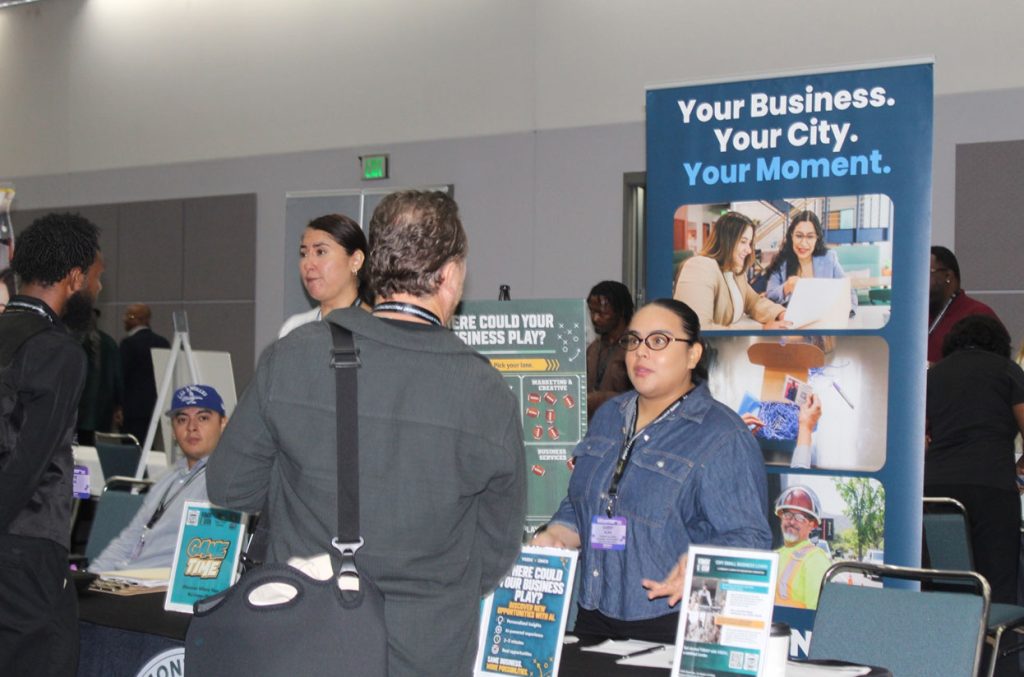
Bass said the city is providing technical assistance for proposal readiness and developing a more specialized program for businesses that have operated for more than three years. The goal, she said, is to help businesses prepare before LA28 releases its requests for proposals.
Johnson, however, put the emphasis on whether companies are actually equipped to take on the work.
“Are you capable?” he asked.
He advised business owners to conduct a SWOT analysis of their companies, looking at their strengths, weaknesses, opportunities and threats. That assessment, he said, can reveal gaps in staffing, technology, finances or other areas that need to be addressed before pursuing a contract.
Johnson used his own experience with Disney to illustrate the point. At a conference years ago, he heard a Disney representative explain the scale of an order and make clear that contractors would have to deliver the full amount when required.
Johnson said he realized his company was not ready.
“We’re not ready to go after a Disney contract,” he recalled telling Bass. “But I said three years from now I’ll be ready.”
He spent the next three years building his staff and strengthening the company financially. He eventually won the Disneyland contract and said his performance helped position the company for a larger Walt Disney World contract.
“Capacity,” Johnson said. “It’s not that you’re gonna get it. I want you to excel when you get it.”
His advice to businesses was simple: “Overdeliver.”
“If they say you have to meet these 10 things, do 15,” Johnson said.
A successful contract, he said, can also become a credential that helps a small business win its next opportunity.
“When I had Disney on my resume, the company started calling me,” Johnson said.
But he cautioned businesses not to assume they have to figure everything out themselves. He encouraged owners to find someone who can help them understand an RFP, its requirements and deliverables.
“I’m not even smart enough to read the RFP, so I get somebody to help me,” Johnson said.
Businesses should also submit their proposals early and seek information from their local council offices and the city’s sports and entertainment officials, he said.
The financial demands can begin before a contract does.
Brewster said his Disneyland deal required $10 million in spending on vehicles within two months. He said his company’s existing contracts gave banks confidence when it sought financing.
He also credited Tiffany, the owner of Motive, with helping his company grow. Although the two companies compete, Brewster described their relationship as collaborative.
“Although we’re competitive, we’re friendly competitors,” he said.
Bass said the city wants small businesses to benefit from the economic activity surrounding LA28 rather than seeing the Games as an opportunity limited to a few large companies.
“When I say games for all, that’s what we mean: games for all,” Bass said.
She pointed to the FIFA 2026 World Cup as a preview of that approach. Los Angeles hosted eight World Cup matches, Bass said, while events took place throughout the city during the tournament.
“A lot of businesses prospered,” she said.
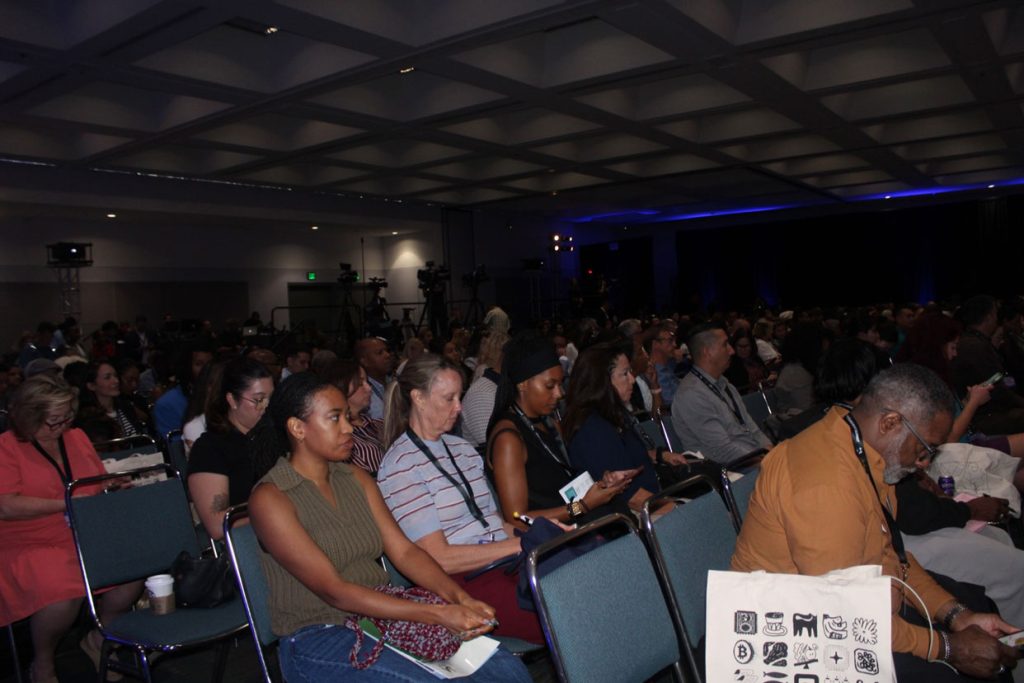
For the Olympics, Bass said she wants events, festivals and cultural programming to reach neighborhoods across Los Angeles. She described the city as a collection of communities with different cultures and businesses that she wants represented on the world stage.
She also tied the health of small businesses to one of Los Angeles’ most difficult issues: affordability.
“Los Angeles was a lot more affordable. It isn’t any longer,” Bass said. “What’s the key to affordability? You guys are the key to affordability. Because when the small business sector thrives, that lifts up everyone.”
Bass said the city is also looking at infrastructure, accessibility and sustainability as part of its preparations, arguing that the Games provide an opportunity to accelerate work the city has needed for years.
“We have a lot of things we want to accomplish,” she said, “but we have to take advantage of the Games coming to fast track a lot of things that we have needed to do in the city for a very, very long time.”
For Johnson, the opportunity extends beyond winning a single contract. He said his businesses have focused on creating jobs and opportunities for other people and urged entrepreneurs to think about what their companies can become after the Games.
That growth, he said, requires making difficult decisions about who works for the company.
“The quickest way for your business to fail is if you hire the wrong people,” Johnson said.
He acknowledged that family businesses can make those decisions particularly difficult. Johnson said his nine siblings do not work for him because he believes hiring should be based on expertise rather than emotion.
“I was smart enough to know what I know and what I don’t know,” he said.
He encouraged business owners to seek mentors and advice from experienced people in their communities.
“Take your ego out of it,” Johnson said.
Brewster offered another piece of advice from his own experience: Know the business from the inside out.
“You have to know every detail, every revenue stream of your business,” he said.
He recalled sitting outside one of his Starbucks locations and counting customers entering and leaving to understand the day-to-day numbers.
The message from the summit was ultimately less about simply getting an Olympic contract than being ready for what comes after the award.
For Bass, LA28 represents an opportunity to spread economic activity across Los Angeles. For Johnson and Brewster, the opportunity comes with a harder requirement: A contract can grow a business only if the business has the capacity, capital and people to deliver.
For small businesses hoping to compete, preparation starts before the RFP arrives.