By Marion Apio | California Local News Fellow
For 16-year-old Kalianna Paloma, an 11th-grade student at the SEED School of Los Angeles County, traveling by bus can mean spending extra time getting to a train station and reaching her destination. A planned bus rapid transit system along Vermont Avenue could make those trips easier for her and thousands of other riders.
“I encounter a lot, I guess like it takes a lot of time to go to the train station, and so, you know, the walking as well and the cost of it,” Paloma said.
The student said she regularly uses buses and welcomed improvements intended to make public transportation more efficient for people across the city.
“It means a lot to me since we’re helping out the community and making it more efficient for other people and individuals to travel around the city,” she said.
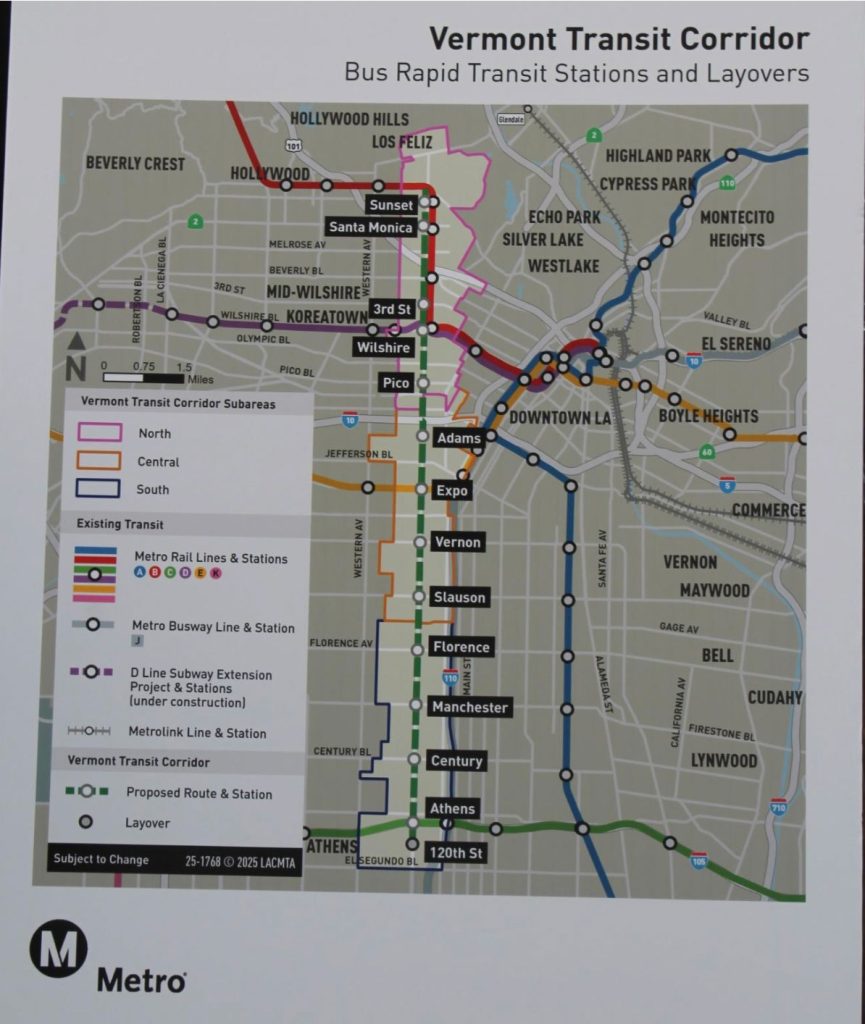
Los Angeles County Metropolitan Transportation Authority officials have begun construction on the $414 million Vermont Transit Corridor Bus Rapid Transit project, a 12.4-mile route between Sunset Boulevard in Hollywood and 120th Street in South Los Angeles. Metro aims to have the project operating in time for the 2028 Olympic and Paralympic Games.
The corridor currently records about 38,000 daily boardings. Metro projects that figure will increase to 66,200 daily boardings by 2045.
The project will introduce 26 stations, dedicated bus lanes, traffic signal improvements and all-door boarding. Stations will include real-time arrival information, seating and shade, while street improvements will focus on lighting, landscaping and safer pedestrian crossings.
Metro estimates the improvements could reduce travel time along the full corridor by as much as 17 minutes, or 24%.
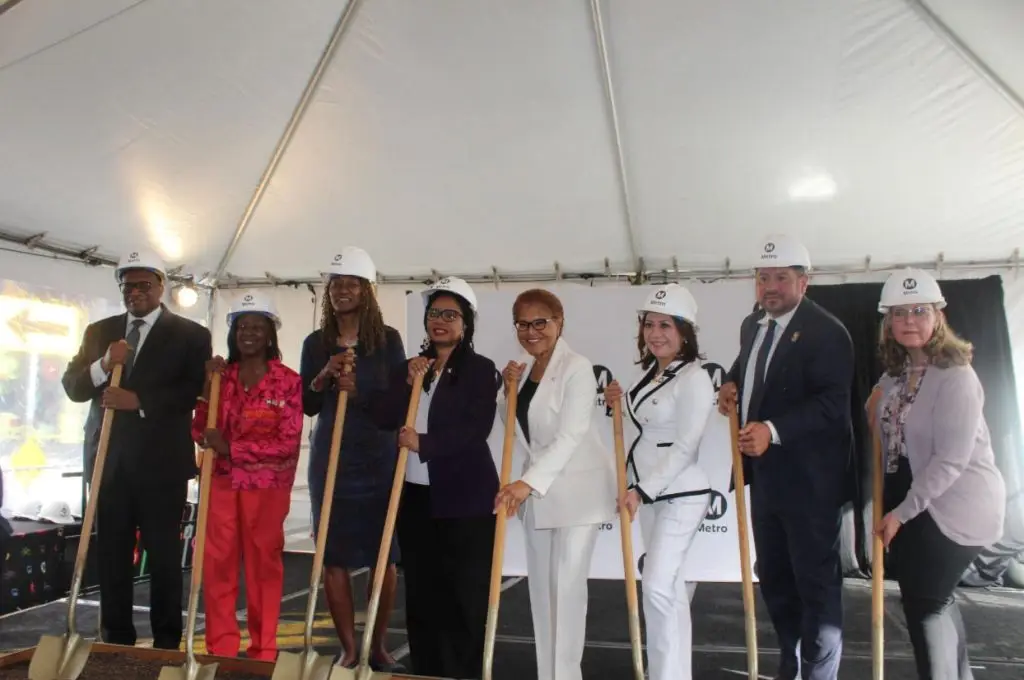
Los Angeles Mayor Karen Bass said the investment would improve daily life for residents who rely on public transportation to reach work, school, health care and other essential destinations.
“For so many Angelenos in this neighborhood, the Vermont bus isn’t a choice; it’s how life gets done,” Bass said at the groundbreaking.
“This project is about more than faster buses. It’s about giving people back time, connecting them to more opportunities, and making everyday life more affordable in South LA,” she said.
Bass said the project would also support the local economy, with more than 1,000 jobs expected each year during construction. Metro estimates the overall project could support more than 4,800 jobs and generate nearly $100 million in tax revenue.
Metro Board Director and Los Angeles County Supervisor Holly Mitchell said the project reflects years of work by transit officials, community organizations and residents to improve service along one of the county’s busiest bus corridors.
The project includes dedicated lanes and signal improvements intended to help buses move through traffic, as well as all-door boarding to reduce time spent at stops. Real-time arrival information will also help passengers know when to expect their buses.
“Faster trips are what we all want,” Mitchell said.
She credited local, state and federal partners with helping advance the project, including securing a $150 million federal grant. Mitchell also said community members and organizations helped shape the plans to reflect neighborhood needs.
Metro Director Jacqueline Dupont-Walker said she attended her first community meeting about the Vermont corridor 13 years ago. She described the groundbreaking as a milestone following years of advocacy for transit improvements connecting South Los Angeles and East Hollywood.
Dupont-Walker said residents had repeatedly attended meetings, town halls and surveys to share their priorities with Metro.
“Your dedication, feedback, and advocacy made it possible to design and to deliver a project that truly reflects what the community needs and deserves and wants,” she said.
Metro Executive Officer for Community Relations Anthony Crump said the agency had engaged more than 25,000 people during the planning process, with the most intensive community outreach taking place around 2021. Metro’s broader outreach efforts have included partnerships with more than 40 community-based organizations and dozens of community events.
Metro CEO Stephanie Wiggins said community feedback led to changes in the project’s design, including wider crosswalks and stations that extend toward the street to make stops easier to reach. Residents, including women traveling with children, had raised concerns about crossing safely near turning vehicles.
Feedback also led Metro to include more shade, shelter and other safety features, Wiggins said.
The construction will take place within the existing street corridor, according to Patrick Chandler, a Metro media relations representative. The project does not require the acquisition of homes or private property, although temporary lane closures and some temporary construction arrangements may be necessary.
“When we think of BRT, we’re thinking of light rail on wheels,” Chandler said. “In essence, we’re thinking about the speed and reliability of a light rail train. However, it’s running with the efficiency of a bus on city streets.”
Chandler said construction would involve installing bus lanes, reconfiguring and restriping some intersections, and building the stations and other amenities. Metro’s construction relations team will communicate with residents and businesses about disruptions, he said.
The corridor serves neighborhoods and destinations including the University of Southern California, Los Angeles City College, Children’s Hospital Los Angeles and Exposition Park. It also connects with Metro’s B and D rail lines in Hollywood and the E and C lines farther south, providing links to the wider transit network.
The route will also serve destinations associated with the 2028 Games, including the Los Angeles Memorial Coliseum, the California Science Center and the future Lucas Museum of Narrative Art.
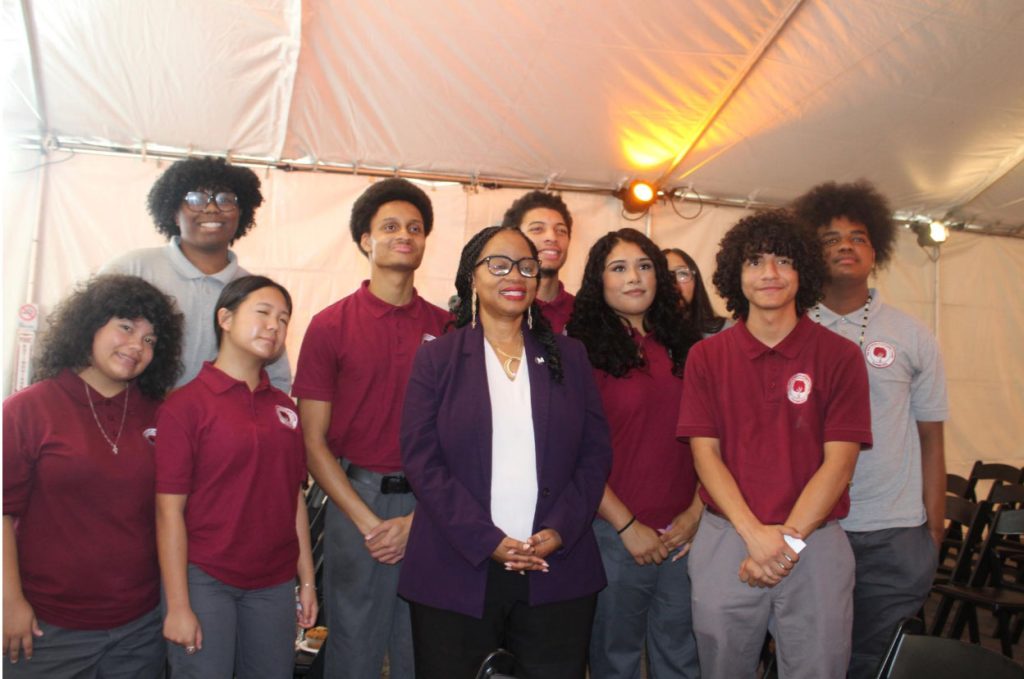
For the SEED School of Los Angeles County, located near Vermont Avenue and Manchester Boulevard, improvements could affect students who use the bus to travel to and from school.
“Our kids, our families and students use the bus,” said Cindy Vides, the school’s senior director of admissions and external affairs. She said the planned service improvements could mean shorter waits for the school’s approximately 400 students who travel along the corridor.
The tuition-free public boarding school opened at its current location in August 2022 and serves students from ninth grade through college graduation, with a focus on science, technology, engineering and mathematics.
The project also represents an employment opportunity for workers in the region. Eddie Esquivel Alvarez, representing the Los Angeles and Orange Counties Building and Construction Trades Council, said the construction would create opportunities for local workers, veterans and apprentices.
“This project means faster, more reliable trips to work, school, and care, passing through some of the city’s more densely populated and transit-dependent neighborhoods,” Alvarez said.
He said the project’s labor agreement would prioritize skilled and trained workers, including local apprentices, and argued that construction jobs could benefit nearby businesses as workers spend their earnings in the community.
Metro officials acknowledged that construction could disrupt travel and business along Vermont Avenue, but said they would work with residents and businesses to reduce those effects.
Wiggins said the agency was working toward the 2028 Games deadline, while emphasizing the importance of the corridor beyond the event.
For Paloma and other regular bus riders, the project’s success will ultimately depend on whether the new service makes everyday journeys safer, more reliable and less time-consuming.