By Cecil Egbele | Contributing Writer | California Local News Fellow
Bakersfield’s African and Black communities came together in a vibrant display of song, dance, and historical remembrance to commemorate Nigeria’s 66th anniversary of independence from British colonial rule.
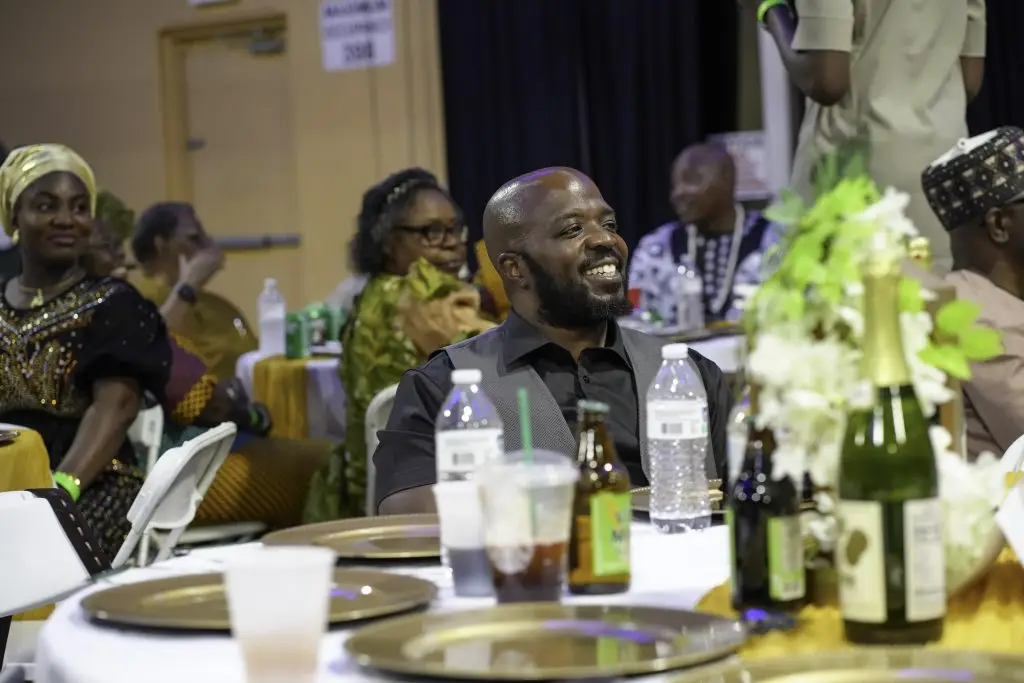
Held at A Royal Palace in Bakersfield, the Oct. 3 event brought several generations together under one roof to foster cross-cultural solidarity and pay tribute to the Nigerian diaspora’s unique identity in Kern County.
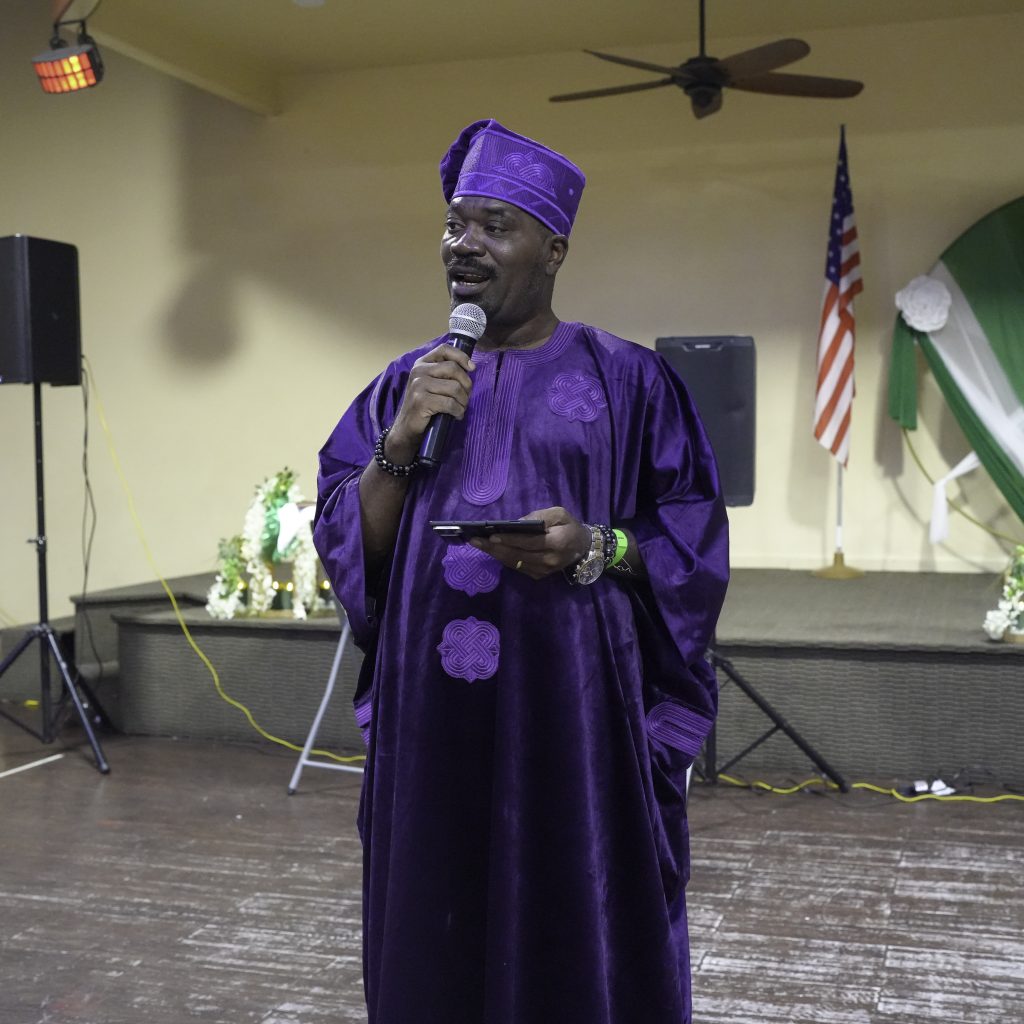
Dr. Joseph Ohens, president of the Nigerian-American Association of Bakersfield (NAAB), used his keynote address to recall the powerful moment when the British Union Jack came down, and Nigeria’s green-white-green flag went up for the first time.
“This was the prayer that filled the air,” he said.
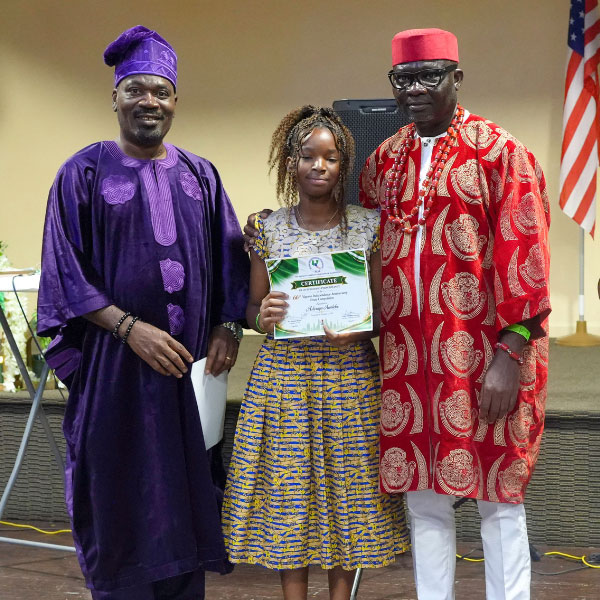
City and Civic Recognition
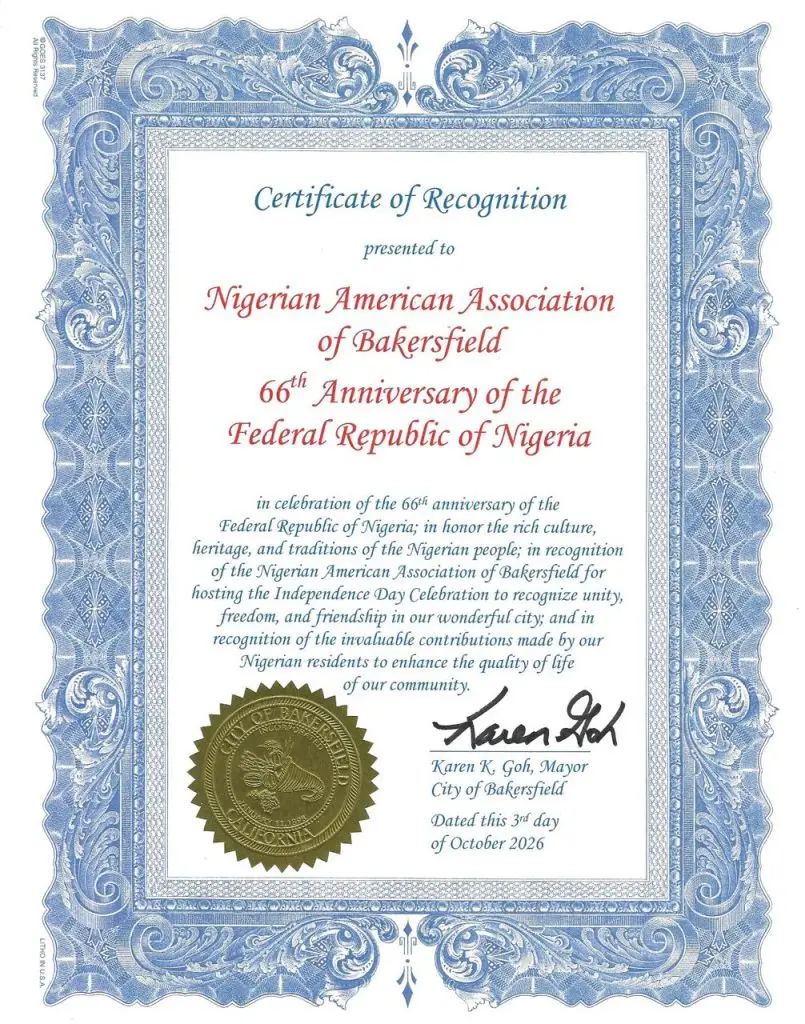
Bakersfield City Council Member Andrae Gonzales presented a proclamation honoring the NAAB and “the rich culture, heritage and traditions of the Nigerian people.”
The proclamation also thanked Nigerian residents for “the invaluable contributions” they make “to enhance the quality of life of our community.
“Population alone makes us a big city, but it doesn’t make us a great city,” Gonzales said “What makes Bakersfield a great city is our diversity. It’s our culture.”
Patrick Johnson, president of the National Association for the Advancement of Colored People Bakersfield, thanked the Nigerian community for including the wider Black community in its traditions.
He described the effort as connecting “the homeland with those that are here in America” and helping people “understand and connect with our roots.”
A History Lesson From the President
Ohens referenced Nigeria’s national anthem – “Nigeria, We Hail Thee”- being restored to its original form in 2024 by the country’s president, Bola Ahmed Tinubu.
Ohens called the anthem’s restoration “not merely a change of lyrics” but “a profound return to our roots.”
Ohens said the anthem reflects three modern-day core Nigerian values: an unapologetic declaration of unity over division, integrity and a prayer for justice and equity.
Ohens said the nation will be blessed with peace and plenty only when it protects the weak.
“An anthem is not just a song you stand up for. It is a code of conduct you live by,” he said.
Ademola Adenuga, chairman of the event’s planning committee, noted that more than 200 languages are spoken in Nigeria, a country of almost 250 million people in West Africa.
“But we are bound together by something very, very powerful, and that is the fact that we are Nigerians,” Adenuga said.
He said Nigerians are expressive, warm, and welcoming people with a “remarkable ability to keep moving forward.”
The Next Generation Finds Its Voice
While Ohens brought history to the evening, the children brought the future.
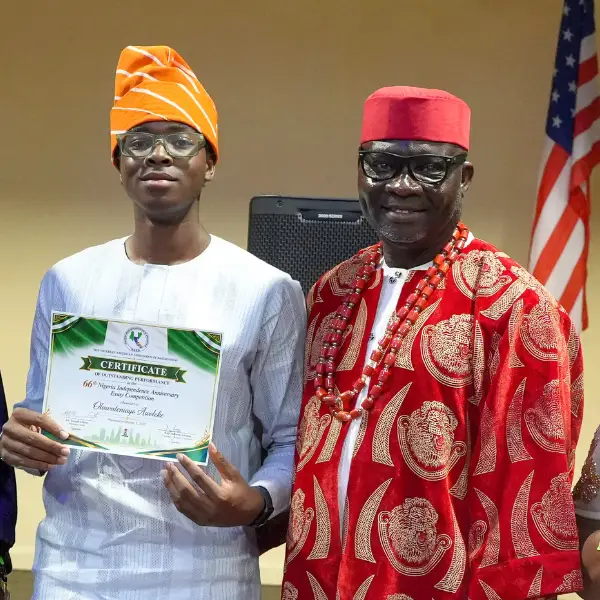
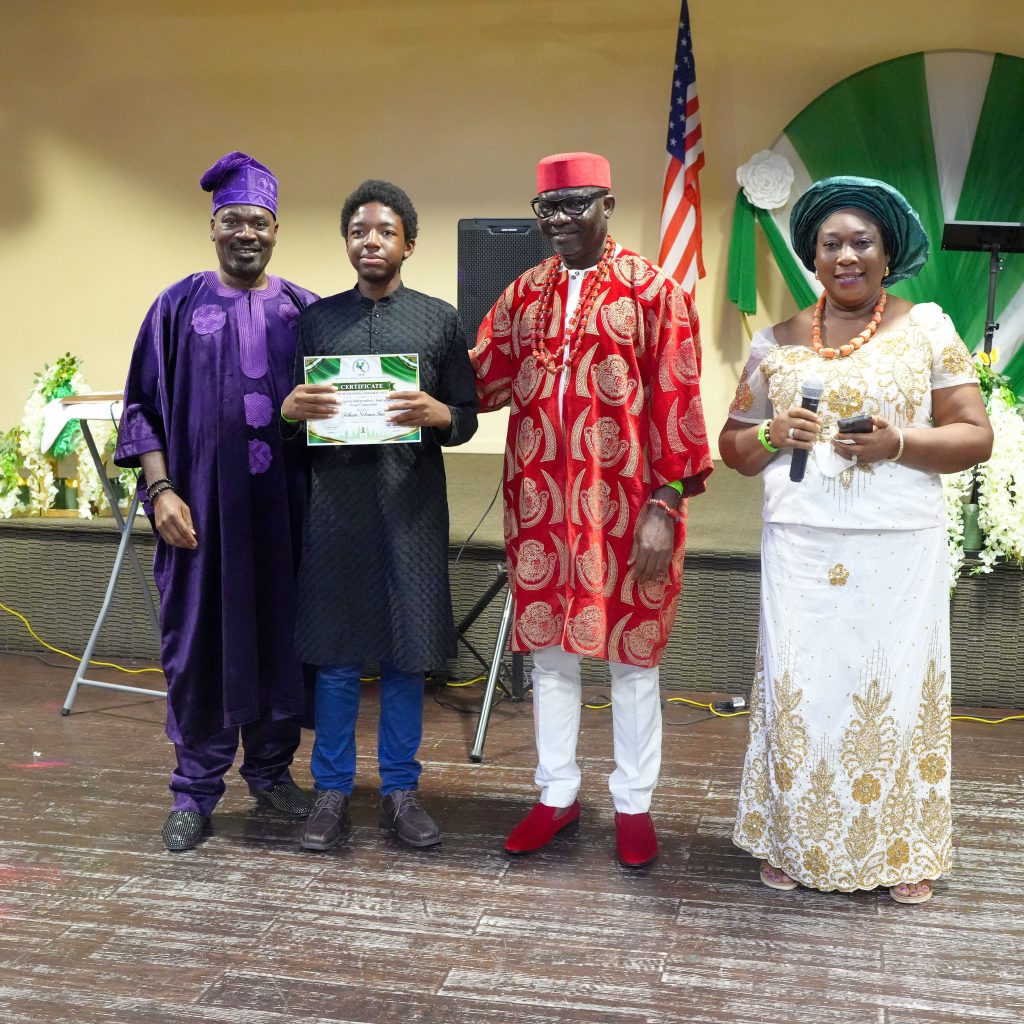
NAAB’s essay competition asked students from elementary through high school to write about their Nigerian heritage. For many of the children, that meant sitting down with their parents to ask questions they had never thought to ask.
Aderayo Awoleke, 11, winner of the elementary contest and a student at Ronald Reagan Elementary, said the contest opened up “fascinating things” that she had never known existed.
She learned from her father that some people call Lagos “The Town of Festivals” while her mother got her laughing with the knowledge that people in Edo State could wear so many beautiful traditional beads “that you may need help carrying them.”
“It was very fun getting to interview my parents and learn many things I never knew about,” Aderayo said.
Jotham Solomon Imie, 14, who won the junior high competition, said the honor meant a lot to him.
“It’s so shocking to see myself chosen as the winner out of all other participants in my category. I really appreciate it,” he said.
Teni Awoleke, 15, won the scholarship essay for grades 10 through 12. His essay was about how young African Americans can embrace their dual identity in the United States.
“People shouldn’t feel divided by their mixed nationality, because it’s all of those parts that really make you who you are,” he said.
He urged other students to enter the contest next year.
“Don’t think you won’t win it. Be confident in yourself because you never know,” he said.
College and university students received scholarships.
Culture on Parade
The evening also featured an elaborate celebration of African culture.
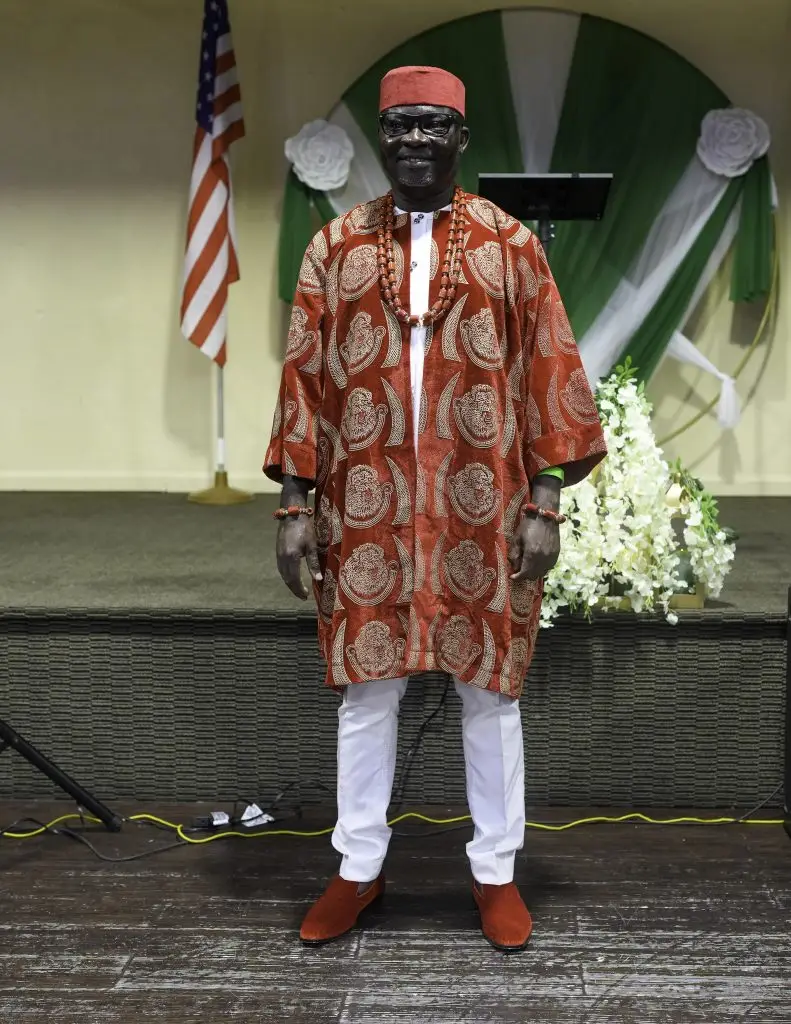
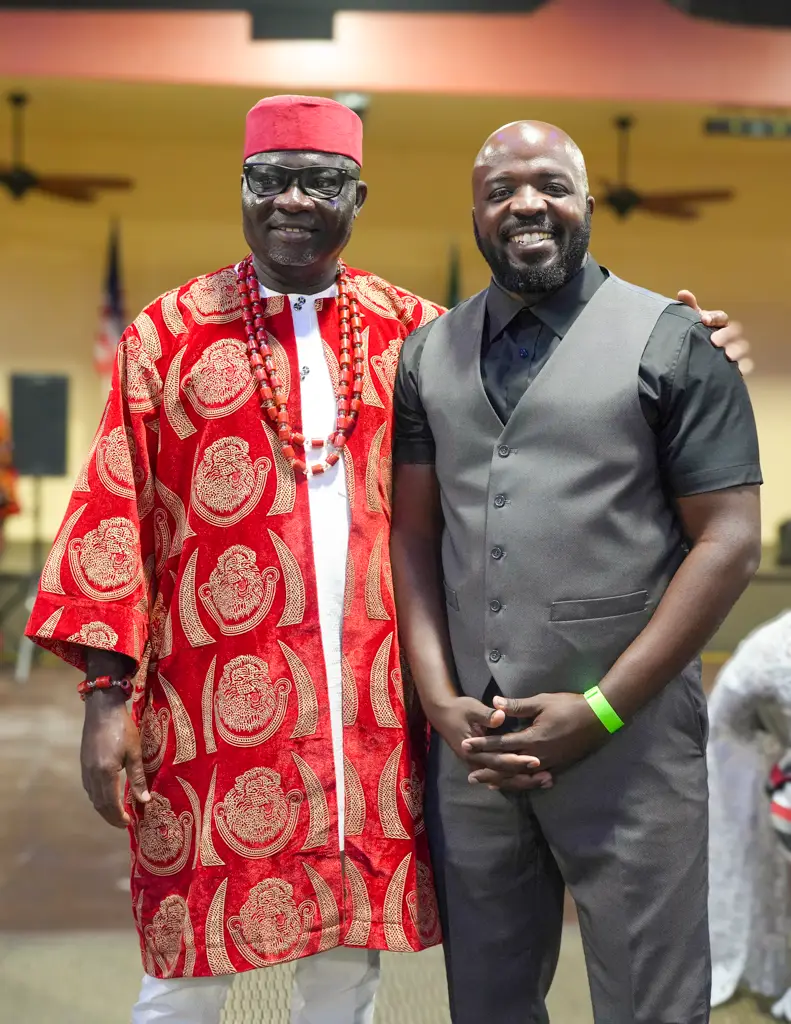
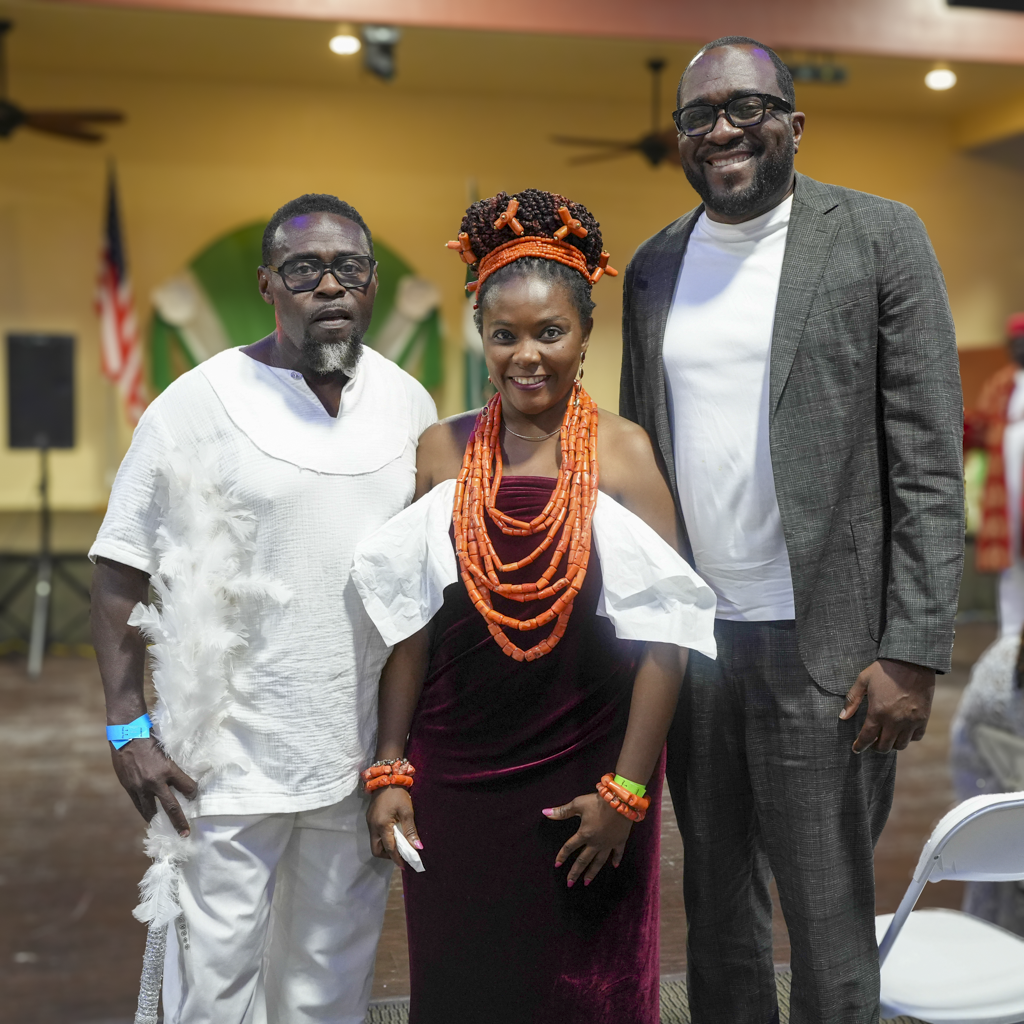
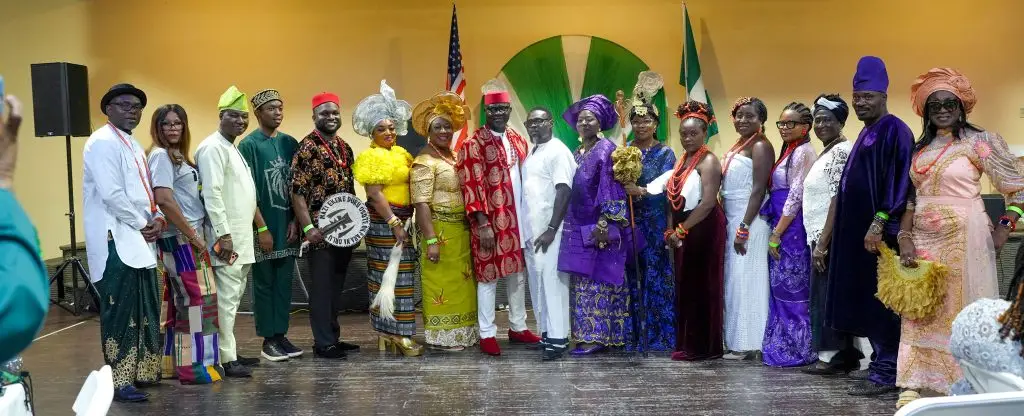
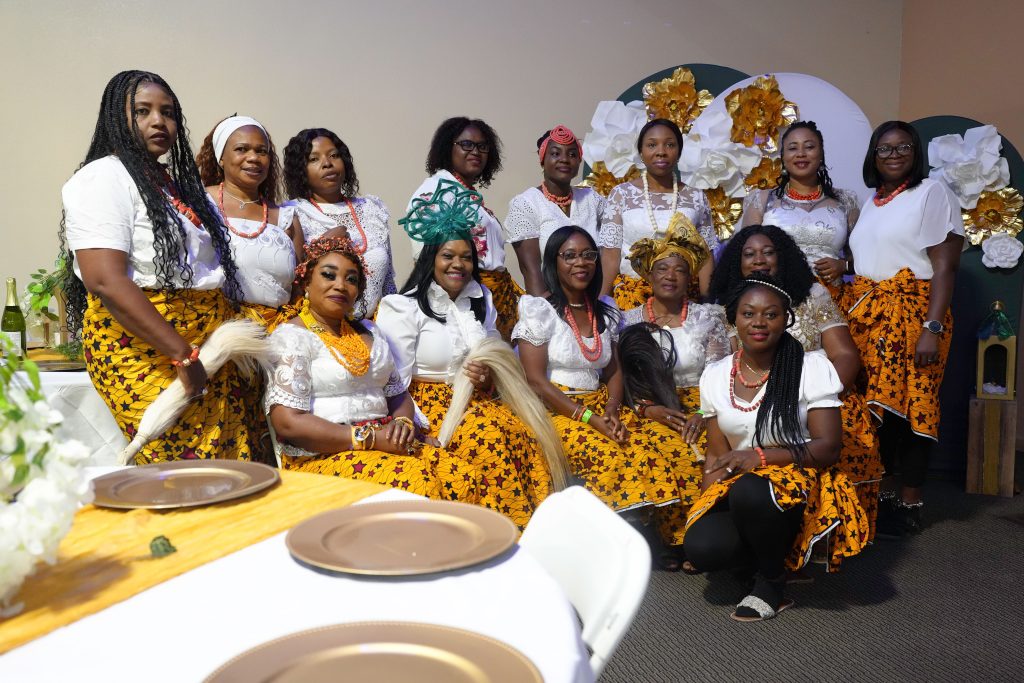
Attendees enjoyed a colorful parade of traditional outfits showcasing the diverse attire of Nigeria’s distinct regions. Parade coordinator Judith Eghre-Bello explained to the audience the meaning behind each outfit’s elaborate yet deliberate designs, colors, and patterns.
Young Bakersfield entertainers, including emerging Afrobeat artist Damila, energized the room with contemporary African rhythms, drawing guests to the dance floor.
The community cut an anniversary cake, while guests shared Nigerian dishes with friends from across the community. As is typical of a Nigerian party, there was plenty of dancing.
Teni Awoleke left the room with a message that summed up the night:
“Don’t try to change yourself to fit in. Always be unapologetically you.”