

By Bo Tefu and Antonio Ray Harvey | California Black Media
_______Sacramento: California Legislative Black Caucus Leads Capitol Juneteenth Celebration
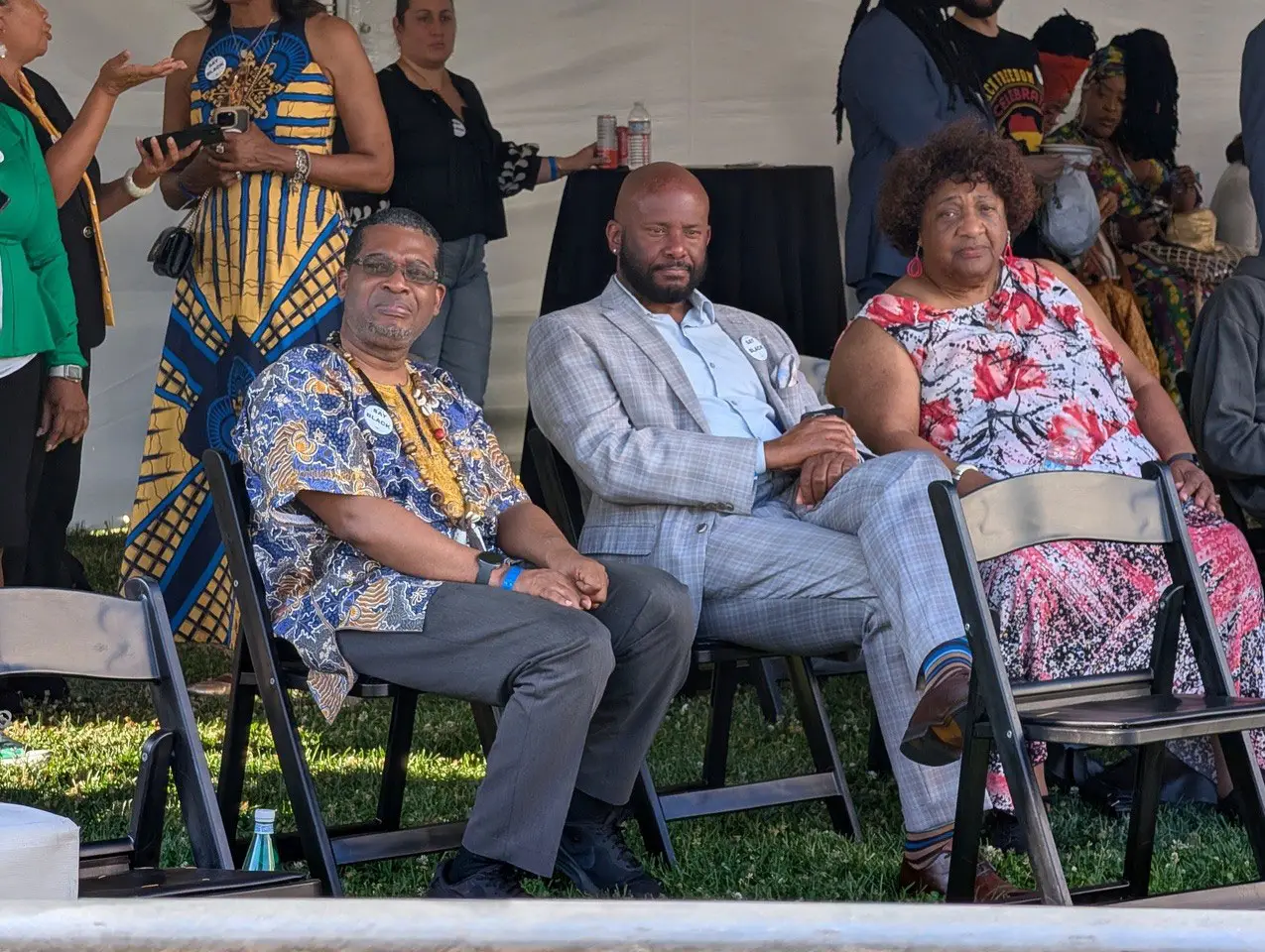
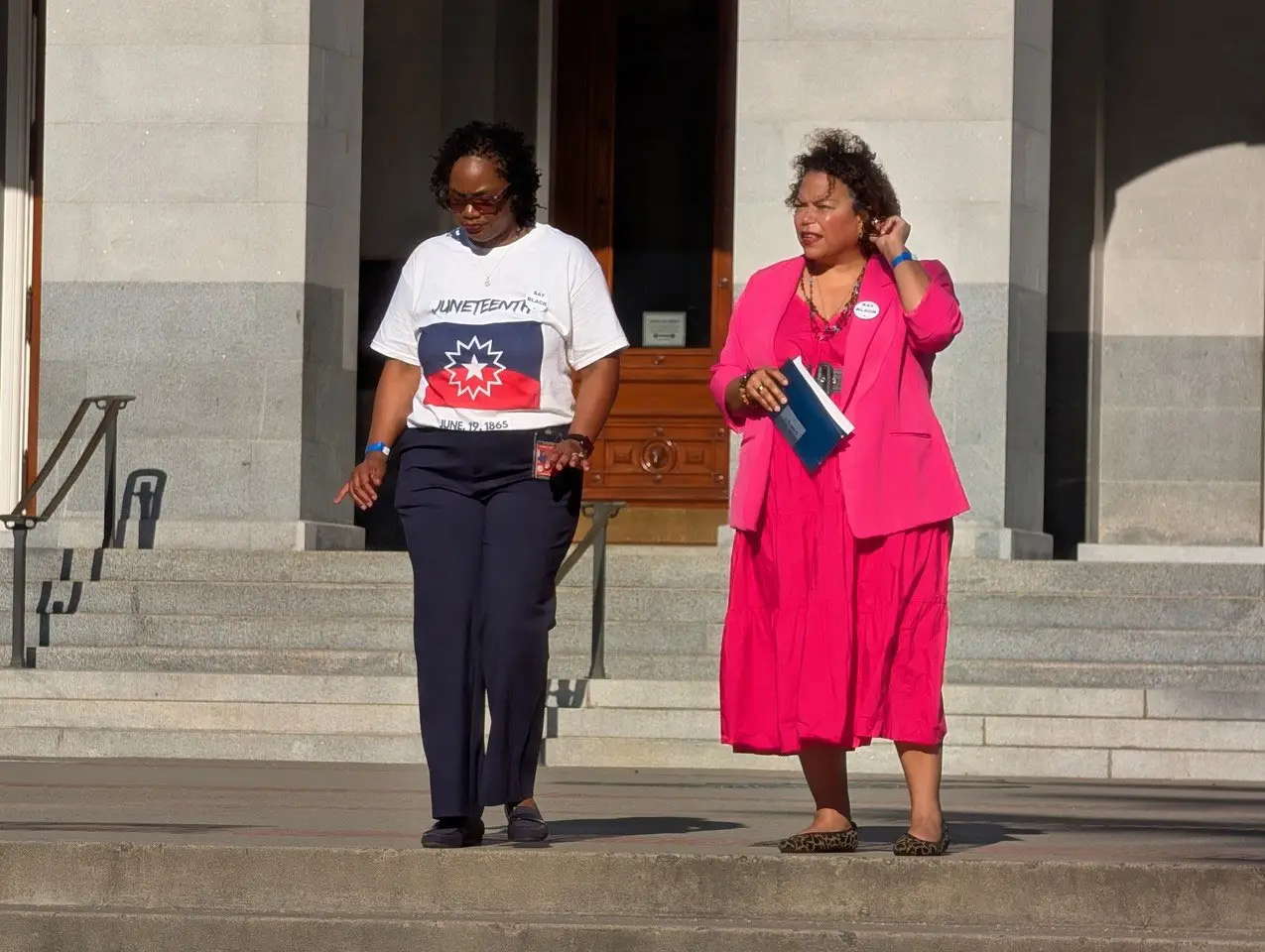
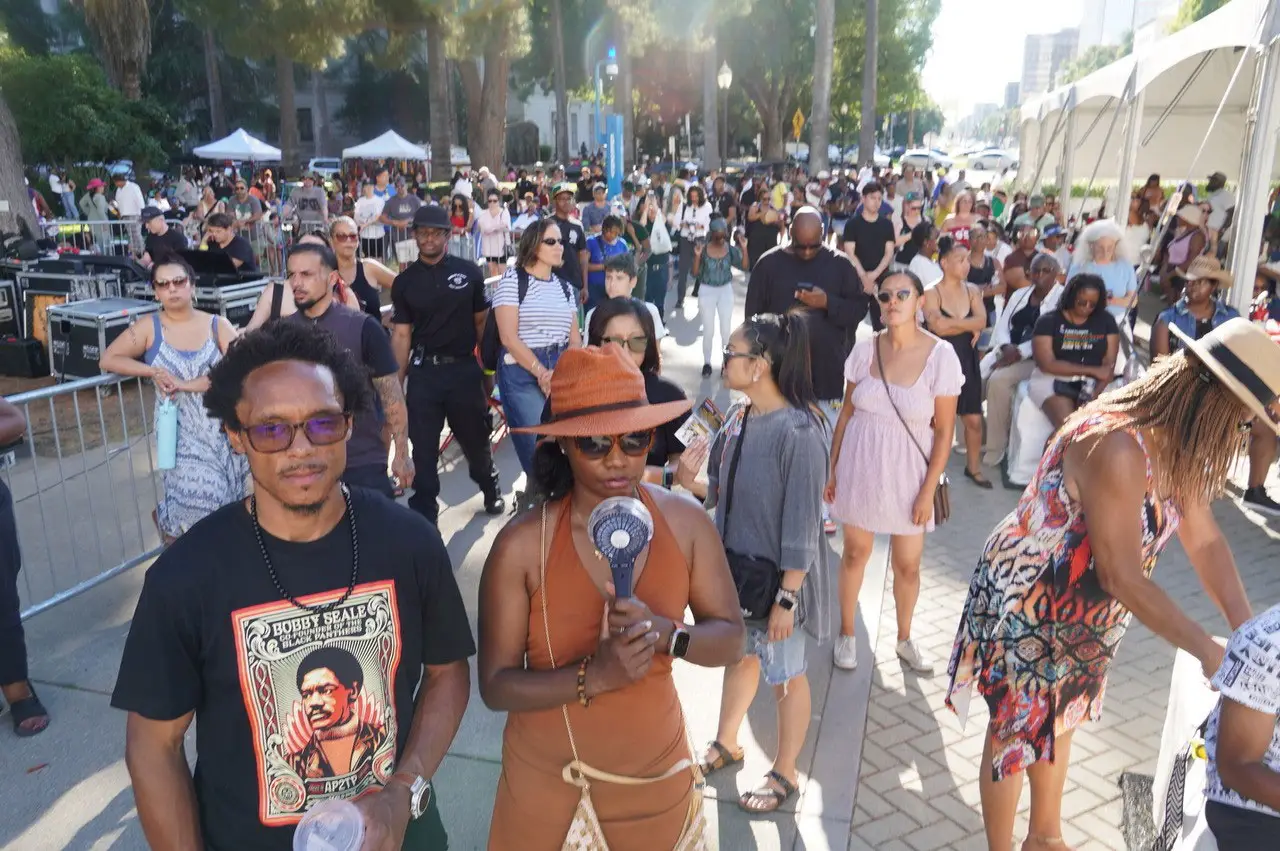
To kick off the holiday weekend, the California Legislative Black Caucus (CLBC) hosted its Juneteenth Freedom Day Celebration on June 17 on the West Steps of the State Capitol.
Alongside other lawmakers in the Legislature, hundreds of people gathered for the free community event, which focused on reflection, community, and African American heritage.
“Juneteenth is more than just a commemoration of the past,” said CLBC chairperson Sen. Akilah Weber Pierson (D-San Diego). “It’s a celebration of Black excellence, Black joy, and ongoing pursuit of equality and opportunity for future generations.”
The Juneteenth event featured live music from Oakland-born, Neo-Soul singer Goapele, Sacramento music producer and “NPR Tiny Desk” winner The Philharmonik, and the Grant Union High School Drumline.
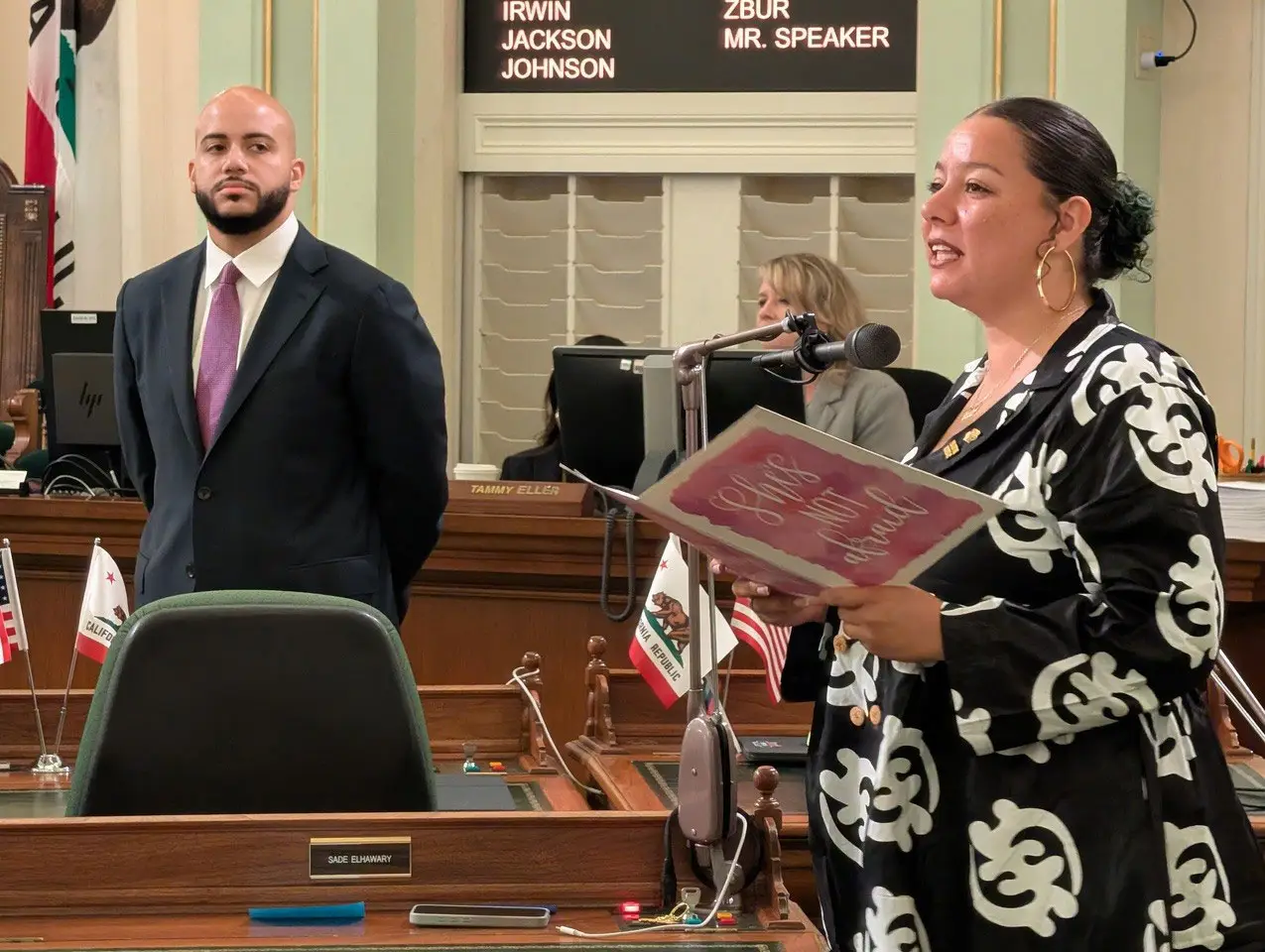
Following the public concert, the celebration moved into the Capitol as the CLBC called on legislative colleagues to pass Senate Concurrent Resolution 183 (SCR183) to recognize the holiday officially.
The day after the public concert, CLBC members formally called on their legislative colleagues inside the Capitol to pass the resolution and officially recognize Juneteenth.
Assemblymembers and Senators delivered powerful remarks in honor of Juneteenth, with legislative leaders reflecting on emancipation and the ongoing pursuit of equality. 🟰
Juneteenth, a portmanteau that blends the words “June” and “Nineteenth,” is a holiday commemorating the emancipation of enslaved African Americans in the United States. It marks the day in 1865 when Union troops arrived in Galveston, Texas, to announce that the Civil War had ended and that formerly enslaved people were free.
_______
Black Freedom Fund Awards $4.6 Million to Organizations Advancing Housing, Immigration and Economic Justice
Black Freedom Fund (BFF) has awarded $4.6 million to 119 organizations across California, expanding support for nonprofits working on housing justice, immigration advocacy, economic equity and other community-driven initiatives.
The funding, announced as part of the organization’s 2026 grantmaking cycle, will help community groups address immediate challenges while building long-term power in Black communities, according to BFF. The grants support organizations focused on keeping residents housed, protecting immigrant communities, increasing wages, expanding access to health care and improving educational outcomes.
The investment comes as philanthropic support for racial justice initiatives continues to decline nationwide. BFF said many community-based organizations are facing growing financial uncertainty despite increasing demand for services and advocacy efforts.
This year’s grantmaking round is the largest in the organization’s history and reflects a strategy to broaden support across California while strengthening community-led organizations. The cohort includes 119 grantees statewide, with 24% receiving funding from BFF for the first time. The foundation also reported a 59% increase in funding for organizations in historically under-resourced regions, including Northern California, the Central Coast, the Inland Empire and the San Joaquin Valley.
In addition, funding for organizations focused on immigration justice increased by 140%, while support for housing and homelessness advocacy groups rose by 89% compared with previous grantmaking cycles.
“We believe it is more important than ever to invest in the organizations and leaders building lasting power in communities across California,” said Marc Philpart, president and CEO of BFF. “This work is about helping build the conditions for Black communities to thrive; not only today, but for generations to come.”
Fund leaders said the grants are intended to strengthen organizations rooted in the communities they serve and provide the resources needed to address both immediate concerns and long-term systemic challenges. Areas of focus include civic engagement, worker rights, health equity, criminal legal reform, housing stability and movement-building efforts.
Since its launch in 2020, BFF has awarded more than $52 million to over 250 organizations throughout California. The organization said its latest investments are designed to help communities navigate current challenges while creating lasting opportunities for economic mobility, civic participation and community leadership across the state.
_______California’s News “Career Passport” Program Aims to Connect Workers to In-Demand Jobs
California is launching a pilot program for its new Career Passport, a digital tool designed to help workers connect with employers by highlighting their skills, training and work experience rather than relying solely on college degrees.
The pilot phase began June 17 and runs through Aug. 24 as the state evaluates four vendors competing to build the platform. Officials say the Career Passport will help qualified workers, including those without four-year degrees, gain access to in-demand jobs while making it easier for employers to identify talent.
The initiative is part of Gov. Gavin Newsom’s Master Plan for Career Education and reflects California’s broader effort to promote skills-based hiring. The digital tool will allow users to securely share verified records of their education, job training, military service, work experience and professional credentials with potential employers.
“We’re working to connect qualified Californians to employment opportunities they may have otherwise been overlooked for,” said Newsom. “California’s Career Passport will be a win-win for our workforce, ensuring that relevant skills, credentials and real-world experience are recognized, and that capable workers are not being filtered out simply because they lack a four-year degree.”
State officials say the Career Passport will combine traditional academic records, such as high school and college transcripts, with skills and credentials earned outside the classroom. The approach, known as a Learning and Employment Record, is intended to give employers a more complete picture of an applicant’s qualifications.
Labor and Workforce Development Agency Secretary Stewart Knox said the platform will help create stronger links between education and career opportunities.
“The Career Passport will create connected pathways that help workers and students gain the skills and opportunities they need to thrive,” said Knox. “California is committed to ensuring every person has access to family sustaining careers by building a workforce system that starts with the realities of workers, no matter where they begin.”
The program is being developed in partnership with the California Community Colleges system and will involve collaboration among state agencies, educational institutions, workforce organizations and employers.
Officials say the Career Passport builds on California’s workforce development efforts, including registered apprenticeships and earn-and-learn programs.
_______Secretary of State Weber: Measure to Limit Automobile Accident Insurance Payouts Makes It to Nov. Ballot
California voters will have the opportunity to decide on a proposed constitutional amendment that would limit certain compensation and attorney fees in automobile accident cases after the measure qualified for the November 2026 ballot, Secretary of State Shirley N. Weber announced.
The initiative became eligible for the Nov. 3, 2026, General Election ballot on June 17 after supporters gathered enough valid signatures to meet state requirements. The measure is expected to be formally certified on June 25 unless it is withdrawn by its proponents before that date.
If approved by voters, the proposal would make several changes to how compensation is awarded in motor vehicle accident cases. Among its provisions, the measure would limit the fees attorneys can collect when representing accident victims on a contingency basis, requiring that victims retain at least 75% of any monetary recovery. The restriction would not apply to attorneys representing defendants.
The initiative would also increase the burden of proof for certain medical expenses claimed by accident victims and limit the amount that can be recovered for those costs. In addition, it would prohibit certain financial arrangements between attorneys and medical providers.
To qualify for the ballot, the measure needed 874,641 valid signatures, equal to 8% of the votes cast for governor in the 2022 election. According to the Secretary of State’s Office, the initiative exceeded the threshold required to qualify through random sampling, a process that allows measures to advance if projected valid signatures surpass 110% of the required total.
A fiscal analysis prepared by the Legislative Analyst’s Office (LAO) and the Department of Finance found the proposal could produce annual savings for California trial courts ranging from millions to tens of millions of dollars. The savings would depend on how many motor vehicle accident lawsuits are filed and how quickly remaining cases are resolved.
The analysis also found the measure could increase Medi-Cal costs by millions to tens of millions of dollars annually because some accident victims may receive less compensation that would otherwise help offset health care expenses covered by the state program.
The initiative was submitted by proponents John Moffatt and Kurt R. Oneto. If certified later this month, the measure will appear before California voters in the November 2026 election.
_______“Nothing to Hide”: Newsom and Wife Say They Are Not Worried About New Federal Gov Probe
California Governor Gavin Newsom said he and his wife, First Partner Jennifer Siebel Newsom, have “nothing to hide” as they face what he described as a new federal investigation, accusing President Donald Trump of using government agencies to target political opponents and those closest to him.
Speaking in a video address, Newsom said federal agents have recently contacted family members, friends and former employees while seeking records connected to him and his associates. He argued the effort is politically motivated and tied to his outspoken criticism of Trump.
“In recent days, federal agents have knocked on the doors of family, friends and former employees, not because they found a crime, but because they’re simply trying to find one,” Newsom said.
The remarks mark a sharp escalation in the feud between the Democratic governor and the Republican president. Newsom contends that federal authorities are pursuing people in his orbit despite a lack of evidence of wrongdoing, while Trump and his allies have rejected accusations that investigations are politically driven.
Newsom said investigators could review any records they wished because “we have nothing to hide.” He added, “Donald Trump picked the wrong target.”
The governor reserved some of his strongest criticism for what he described as efforts to involve his wife in the probe. Calling her a dedicated public servant, Newsom said she had “done nothing wrong other than having the temerity to advocate for what she believes in.”
In an emotional moment, Newsom addressed his wife directly.
“I love you, and I’m sorry he’s doing this,” he said. “You have not earned a single one of the indignities that he’s trying to inflict on you and our children.”
Newsom also accused Trump of profiting from the presidency and using the Justice Department to pursue political rivals. He claimed the administration has targeted a growing list of critics and said he was prepared to join them.
“One by one, anyone who has challenged Donald Trump has ended up on his hit list,” Newsom said.
The governor concluded by vowing to continue speaking out against the president and rejecting any effort to silence him.
“Come after me,” said Newsom. “I’m not going anywhere, and the country is watching.”