
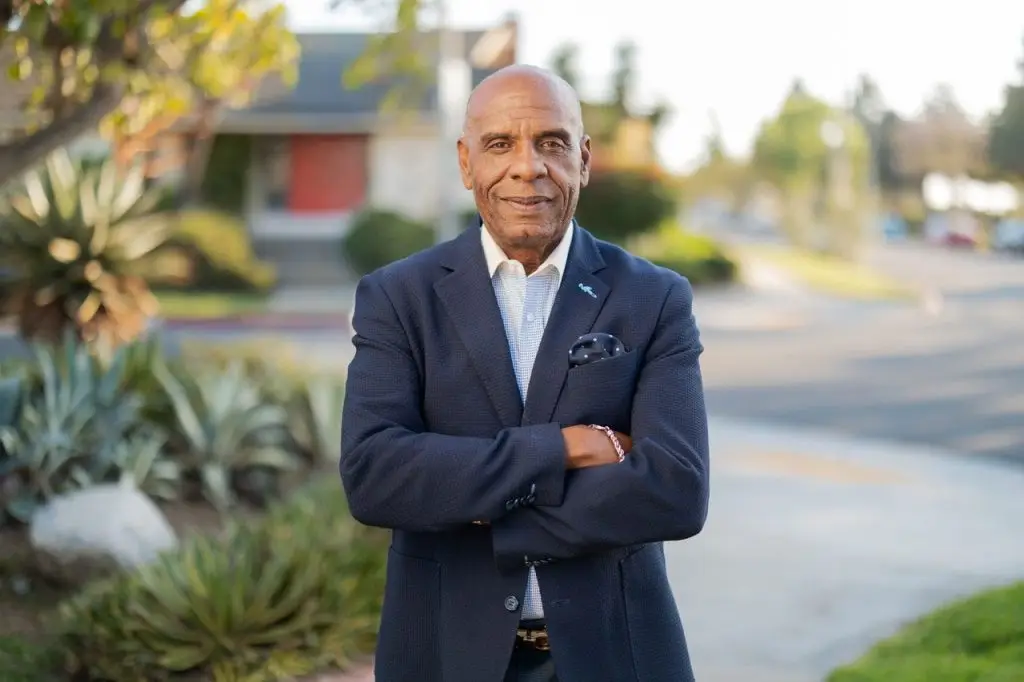
By Edward Henderson | California Black Media
As California confronts rising insurance costs, market instability, and growing concerns about access and equity, the race for the state’s top insurance regulator is drawing increased attention.
Among the candidates is Steven Bradford, a veteran public servant with more than two decades of experience in government, including eight years in the State Senate and five years in the State Assembly.
Known for his work on issues ranging from energy and public safety to economic development, Bradford has also engaged with insurance policy during his time in the Legislature as a member of the Senate Insurance Committee.
Now, as the June primary approaches, he is making his case to voters for why his background and perspective best position him for the role of California’s next insurance commissioner.
California Black Media (CBM) spoke with Bradford about his campaign experiences, key issues he plans to solve if elected, and his vision for the insurance commissioner role.
For readers who may not be familiar, what does the Insurance Commissioner do, and how would you use that role to address issues impacting communities in California?
The Insurance Commissioner is both a regulator and an administrator. The office oversees the entire insurance market—approving companies to operate, licensing agents and brokers, and reviewing rate increases or decreases.
It also has enforcement power to hold companies accountable—whether that’s denying claims unfairly or failing to serve communities appropriately.
This role is about oversight and action. The commissioner should be a watchdog, not a bystander, especially in a state like California, which has the third-largest insurance market in the world.
Last year, you shifted your campaign from running for lieutenant governor to the race for insurance commissioner. What spurred that decision and what do you hope to achieve in that role?
Insurance impacts every part of people’s lives. You can’t buy a home without it—that contributes to the housing crisis. You can’t legally drive without it—that affects people’s ability to work. And businesses can’t operate without it.
For years, insurance has disproportionately impacted low-income communities and people of color. While everyone is feeling the strain now, those communities have long been hit hardest. That’s why it’s critical that insurance is not just available, but affordable.
What sets you apart from the other candidates in this race?
My record: 26 years of public service. I’ve shown up, stood up, and spoke up for Californians.
I’m also not using this position as a steppingstone. For decades, people have treated this office as a launchpad for higher office. I’m not doing that. This is about doing the work and delivering results. What’s needed right now is someone focused on administration and accountability—not political ambition.
A recent Supreme Court decision impacting the Voting Rights Act has raised concerns about representation, especially from minority communities. What message do you have for voters in California regarding the importance of their vote?
It’s alarming. If people think this doesn’t affect them, they’re mistaken. There’s a real effort to roll back decades of progress and silence voters.
Your vote is your most powerful tool, and we have to use it—every election, not just when it feels urgent. This moment is as critical as the 1960s. We fought hard for the right to vote, and now we’re seeing efforts to take it away.
What are you hearing from voters as you campaign across the state?
Affordability and transparency.
People are struggling with rising costs, and many don’t fully understand what their insurance policies cover.
We saw that clearly in places like Altadena and the Palisades—people had insurance but were underinsured. They didn’t realize their coverage wouldn’t meet the cost to rebuild. That’s unacceptable.
We need more transparency and a more modern Department of Insurance. Right now, it takes over 300 days to approve rate changes in California—far too long. That delay pushes more people onto the FAIR Plan, which is inadequate.
We also have to acknowledge the inequities in the system. The FAIR Plan has roots in discrimination, and today we still see disparities based on ZIP code and income. We need a more competitive and equitable market where consumers actually have choices.