
By Cecil Egbele | Contributing Writer | California Local News Fellow
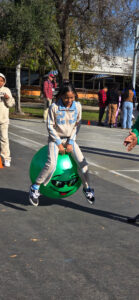
Students from Bakersfield City School District and Panama-Buena Vista Union School District got an energetic lesson in health and wellness at the start of the year, as the Bakersfield chapter of The Links, Incorporated, hosted an interactive educational event focused on the urinary tract system. Middle schoolers sprinted between stations, bounced on balloons, and raced their peers, not for prizes, but for knowledge about their own bodies.
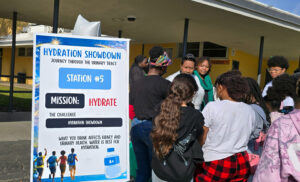
The outdoor learning event transformed health education into an interactive experience that taught students how the urinary tract works and why hydration is critical, particularly for growing bodies. The program, themed “The Amazing Race,” guided primarily Black and Brown students through hands-on stations that explained kidney function, bladder health, hydration, and the risks of holding urine for too long.
“The urinary tract is something that’s not addressed,” said Janelle Burton, co-chair of Health and Human Services for the Bakersfield chapter of The Links, Incorporated. “We see a lot of kids now with their sodas and other energy drinks. Hydration is important, especially when they’re out being athletes.”
The urgency of the program is driven by troubling health data in the region. Kern County has one of the highest numbers of dialysis patients in the country, with Chronic Kidney Disease (CKD) identified as a growing problem for the area. As of January 2026, California is still grappling with a “water gap” that disproportionately affects schools in underserved areas. According to the 2025 SAFER Drinking Water Needs Assessment, there are currently 390 failing public water systems in the state, with 52% serving primarily communities of color.
Recent United States Renal Data System (USRDS) 2025 data reveal that boys represent 56% of pediatric kidney disease cases among Medicaid recipients, highlighting the specific vulnerability of young males to these conditions.
Each station of the Amazing Race event focused on a specific function of the urinary tract, breaking down how the body processes fluids and removes waste. One popular exercise used balloons and physical movement to simulate bladder pressure, helping students understand why delaying bathroom breaks can lead to infections and other complications.
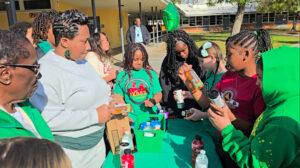
“Kids learn best when they’re engaged,” Burton said. “When they’re moving and having fun, the information sticks. That’s what we want to achieve”.
The event was part of The Links’ STEAM Academy, also called “Doctor Me,” which introduces students to medical careers and helps them understand how their bodies work. Dr. Christi Dugas-Cramer, president of the Bakersfield chapter, said the program, which serves about 900 students locally, aims to expose students to technology and medical fields while making learning engaging and relevant.
“We’re trying to target mostly black and brown students, but we’re trying to get them to learn about technology, the medical fields,” said Dr. Cramer. The Links, founded in 1946, is one of the oldest organizations of African American women working in nonprofit service.
Students rotated through different stations, each focusing on various aspects of the urinary system, from the kidneys and bladder to the importance of proper hydration. One popular activity involved balloons and demonstrated the importance of not holding urine too long to prevent infections.
Seventh-grader Novaya Nicholas said the event’s energy was contagious. “I woke up very tired, but I’m very energized now after doing all these activities,” Nicholas said. “I learned that you can get kidney stones because I never heard of that before. I have also learned that if you don’t have enough water in your system, then the salt and extra minerals can be clogged in your kidneys”. She said she’s going home with the knowledge of the dangers of holding urine too long and how urine color can indicate hydration levels.
For eighth-grader Miquella Lawson from Sequoia Junior High, the lessons hit home. “I used to hold my pee, but now that I learned that I can get an infection, I didn’t know that could cause infections. If I didn’t come today, I wouldn’t have learned that.” Lawson added that the bouncing ball activity was a favorite.
Another student, Tranell West, summed up one of the day’s key messages simply: “Water is the best option and the healthiest drink for your body,” he said after completing the full bladder exercise.
Burton emphasized that making the lessons active and engaging helps students retain information. “Kids like to be engaged and active. It helps them remember and retain all the information for later on in the future,” she said.
Cramer noted that in communities where health disparities exist, early education is powerful. “When kids understand their bodies, they’re better equipped to protect their health long-term,” she added.
Several students told organizers they would apply what they learned, including asking to use the restroom at school when needed and explaining why it’s important for their health.
As the day wrapped up, students left energized, with some still talking about kidneys, hydration, and bathroom breaks. For organizers, that was the goal.
“This is prevention,” Burton said. “It starts with knowledge”.
“Correction: The previous version of this story misspelled Dr. Christi Dugas-Cramer’s name as ‘Dr. Christie Douglas Kramer.” The error has been corrected.”
