Mobile street medicine teams treat the immediate health needs of the unhoused, but barriers to care, trauma, stigma and housing costs can leave the underlying causes of homelessness unresolved.
Marion Apio reported this story while participating in the USC Annenberg Center for Health Journalism’s 2026 California Health Equity Fellowship.
By Marion Apio | California Local News Fellow
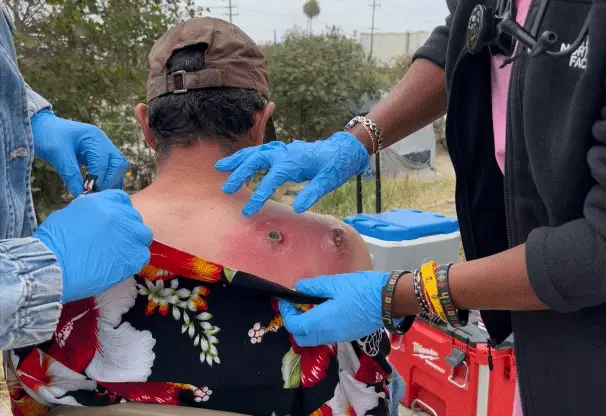
By the time a street medicine team met Alfred Flores last June along the Los Angeles River , two spider bites on his back had swollen with infection, untreated for three days.
Los Angeles News Observer
LA news, from Inglewood to South LA.
Local stories, community events, and the voices other outlets miss. Free every Thursday.
Free weekly newsletter. Unsubscribe anytime.
Divorced a year ago, the 53-year-old had been living along the riverbank for three years without a car or phone, making it difficult to connect with housing programs or reach a doctor as the infected wounds worsened with redness, heat, pus and pain.
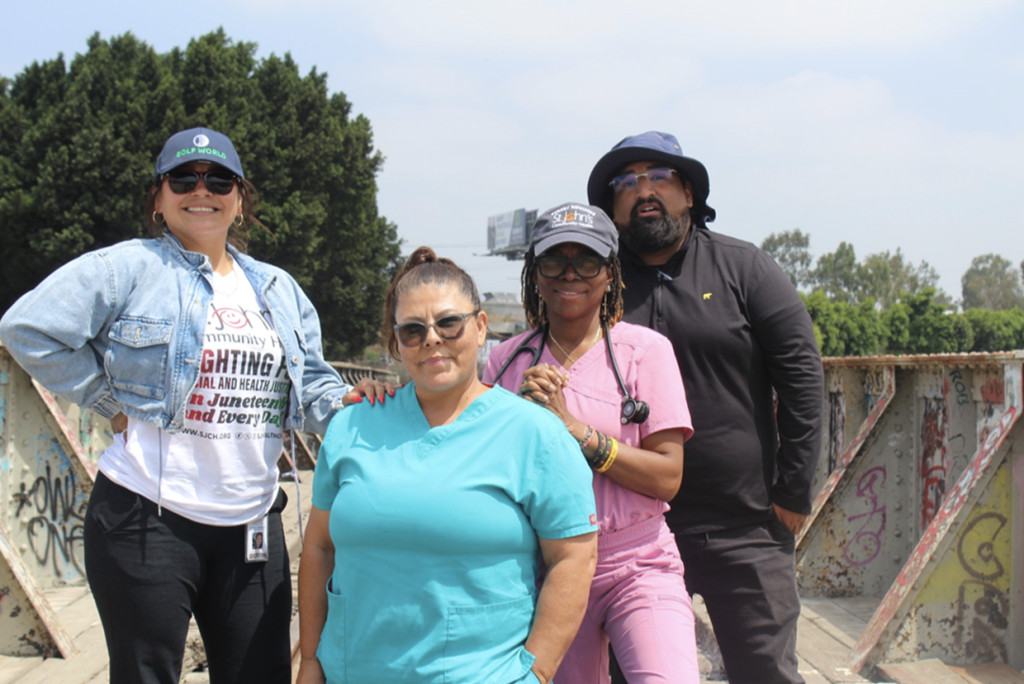
On her weekly outreach along the L.A. River, Bukola Olusanya—a nurse practitioner and a street medicine provider with St. John’s Community Health—examined Flores on-site and wrote a prescription for antibiotics.
“My wound is infected,” Flores said in Spanish through an interpreter. “It is normal to be bitten by a spider in this area but I need help finding a home.”
Flores’s experience highlights the steep barriers to receiving housing support and providing medical care among people experiencing homelessness in Los Angeles. Many cannot access care because of physical or mental health conditions, or can’t connect to housing programs because they often lack a phone.
Traditional health care systems often require patients to have transportation, identification, a safe place to store medications and the ability to make follow-up appointments — barriers that can be difficult to overcome for people surviving on the streets.
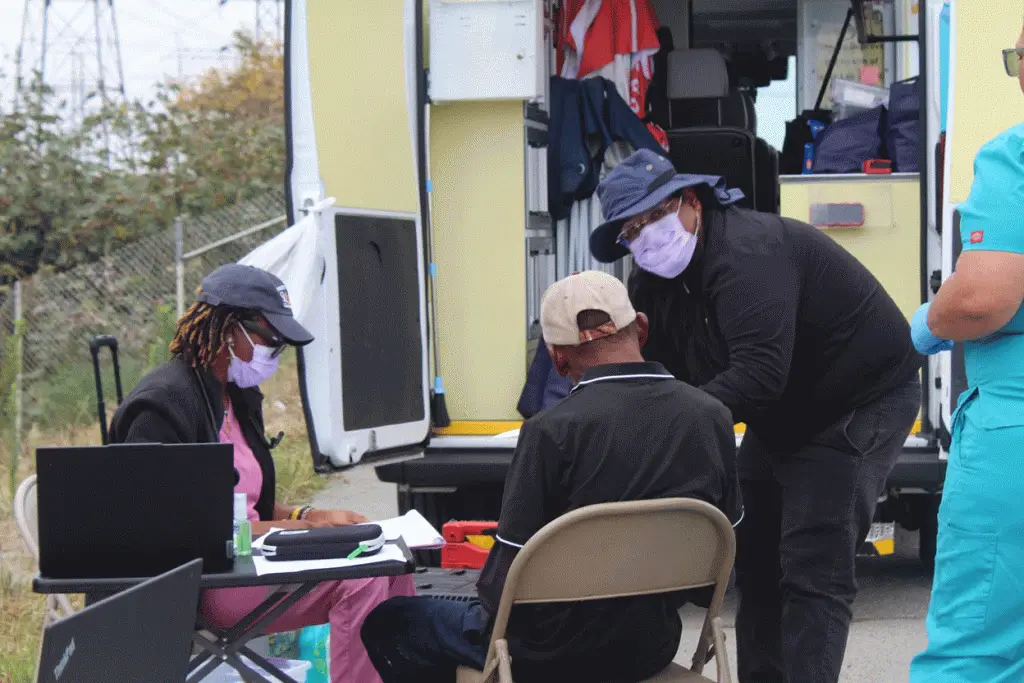
Street medicine helps people whatever their circumstances
Street medicine challenges the traditional notion that health care must begin inside a medical facility, extending services to those in non-traditional settings and in urgent need.
These teams shift the delivery model by bringing health care directly to patients on the streets, rather than waiting for them to seek treatment in hospitals or clinics. They provide critical care that can stabilize health conditions while helping patients connect with benefits, housing and other services.
Jessica Sanchez, director of the Street Medicine team at St. John’s Community Health, said the program receives about $500,000 annually from L.A. Care Health Plan, $365,000 from the Federal Health Resources and Services Administration and $100,000 from the Los Angeles County Department of Public Health. The team also bills Medi-Cal for eligible medical services, though not all patients are insured or eligible for reimbursement.
Sanchez said the program’s grants typically run for three to five years, providing funding stability. The “street medicine initiative is not currently facing a funding threat,” she said.
Since 2023, St. John’s Community Health—a network of non-profit, federally qualified health centers—has deployed a multidisciplinary street medicine unit in Los Angeles. The mobile vans are staffed by a nurse practitioner, a medical assistant, a health benefits counselor, a community health worker, a behavioral health clinician, a substance abuse counselor and a driver.
The teams provides primary care, behavioral health, and benefits enrollment on the streets, reducing administrative hurdles to head off medical emergencies and reach unsheltered patients.
Primary care and connections are what street medicine can do best
The teams work Monday through Friday and serve around 320 patients a month.
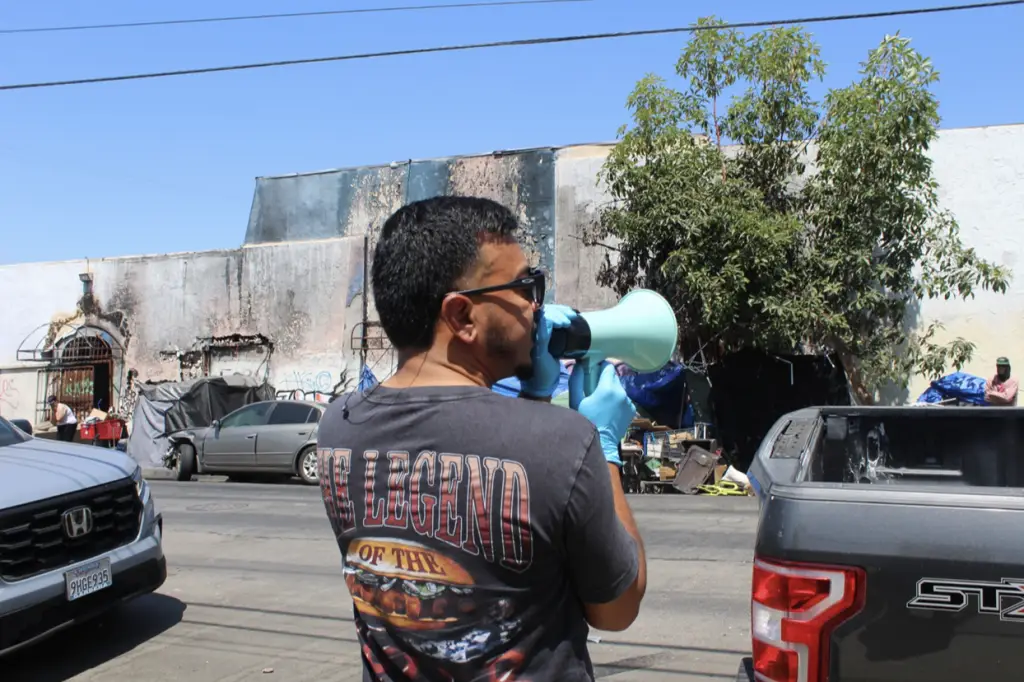
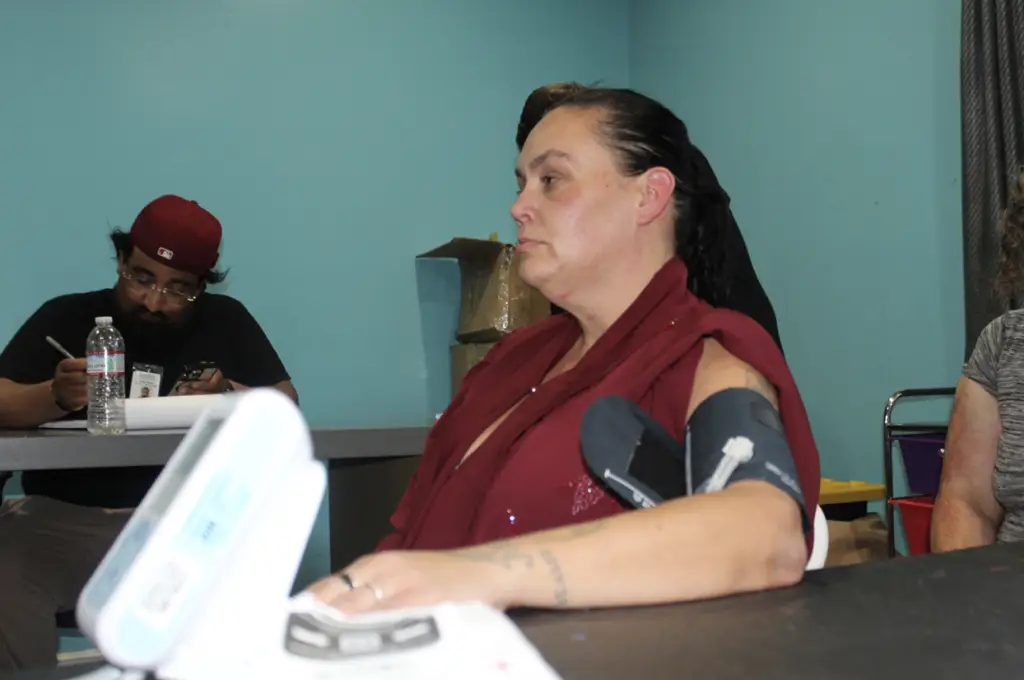
They treat acute wounds, manage chronic conditions like diabetes and hypertension, conduct field blood draws, dispense medications, and connect patients to housing resources through the Los Angeles Homeless Services Authority’s Coordinated Entry System.
“Three years ago when we had just started street medicine it was with one team and one provider,” Olusanya said. “But with the increasing demand—especially after COVID—the team doubled everything.”
Deploying two teams is not enough without building trust with unhoused patients, Olusanya said, a lesson she learned on the beat.
While street medicine often can stabilize chronic conditions on the pavement, clinicians stress that field care is a vital shield, not a permanent solution. Without a locked door or a refrigerator to store insulin, medical intervention only acts as a Band-Aid while patients remain trapped in what can be seemingly endless housing queues.
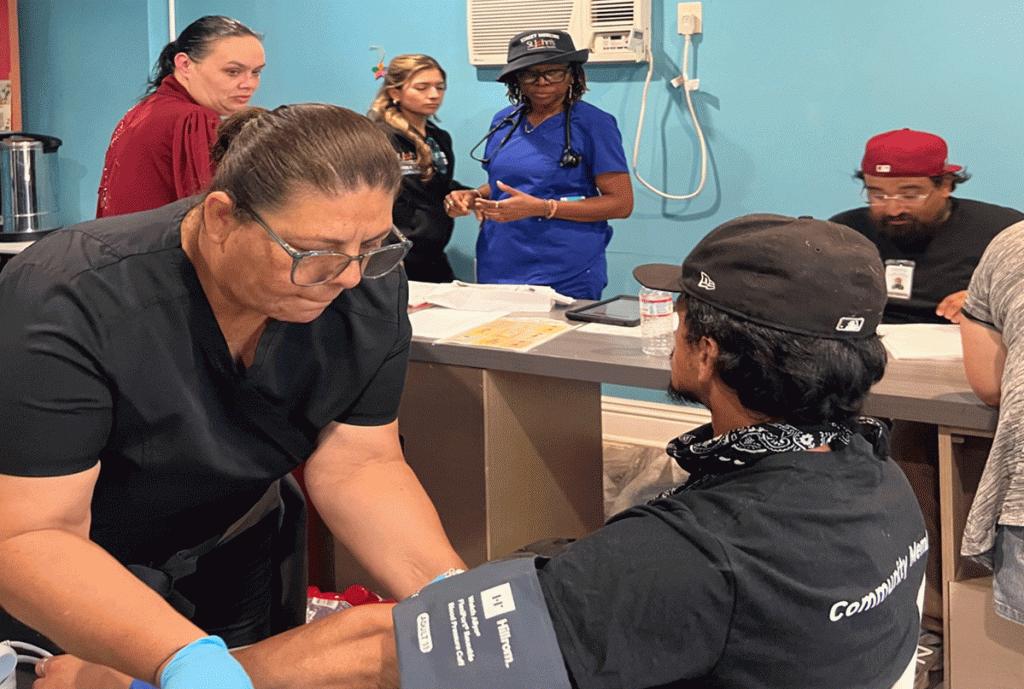
Tanny Hernandez, 45, and her husband, Benwell Hernandez, 35, spent over three years living on the streets. They are now living in a temporary shelter in downtown Los Angeles.
Struggling to manage diabetes without refrigerated insulin
Until they encountered the St. John’s street medicine team, Tanny struggled to manage diabetes without a refrigerator to store her insulin, along with experiencing grand mal seizures and bone disease that forced her to use a wheelchair.
“My sugar levels were crazy—I mean, in the 400 range,” Tanny said. “I can’t be in direct sunlight, so I mean, everything was bad and it was going downhill.”
The American Diabetes Association recommends a premeal blood glucose target of 80 to 130 mg/dL for most nonpregnant adults with diabetes.
When unsheltered Angelenos seek traditional hospital care, they often face health struggles while navigating trauma from administrative hurdles and aggressive security in environments that can feel hostile rather than welcoming.
“While it may be tempting to think that mental health disorders or substance use cause homelessness, there is stronger evidence that the reverse is true,” said Kathryn Leifheit, an assistant professor of Health Policy and Management at the University of California, Los Angeles. “When people become homeless, housing insecurity causes severe mental strain that worsens health conditions over time.”
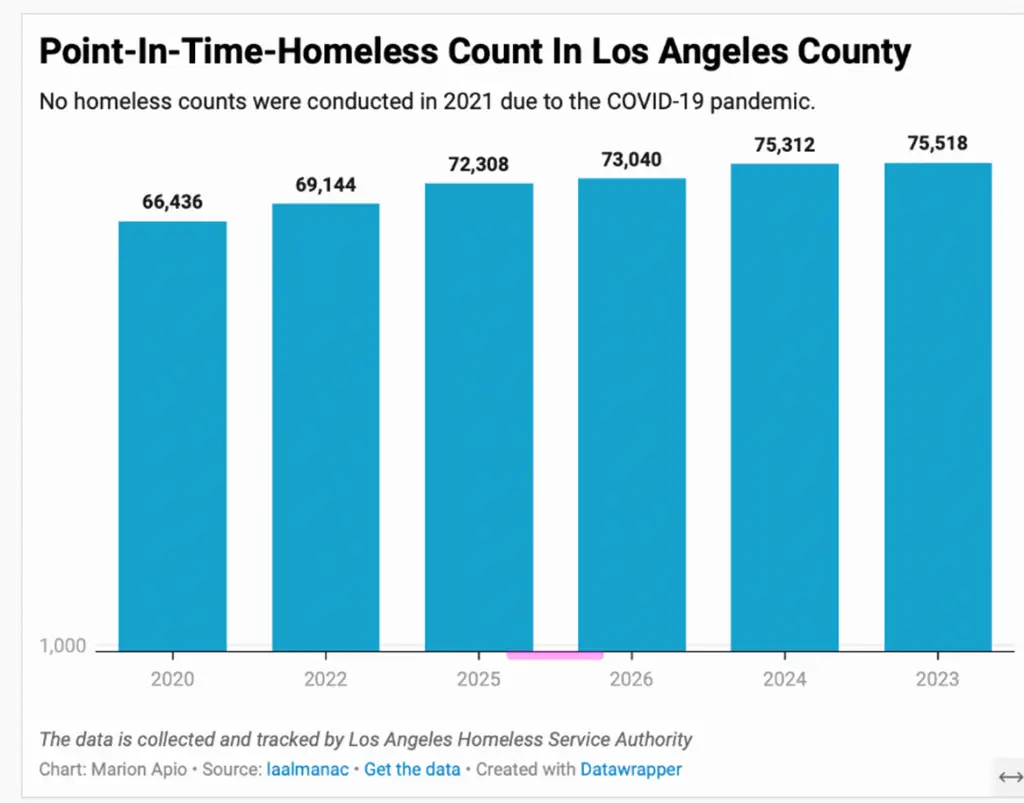
Homelessness remains at a crisis level in Southern California, mirroring national trends, Leifheit said. The insufficient supply of affordable housing puts many people at risk.
A rent increase can tip people already in crisis into homelessness, experts say
“When rents are high relative to incomes, any economic shock, life event, sudden illness or major bill can put someone at risk of becoming homeless,” Leifheit said.
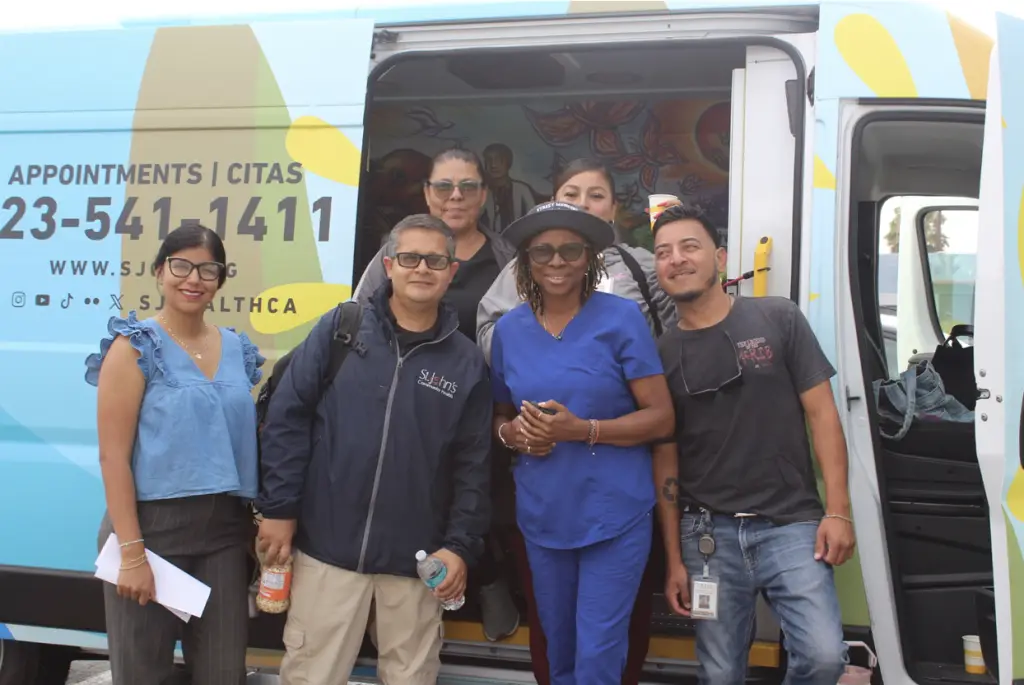
This crisis carries a stark racial dimension. Black residents make up less than 10% of Los Angeles County’s population but accounted for about one-third of people experiencing homelessness in the Los Angeles Continuum of Care’s 2026 count, according to the Los Angeles Homeless Services Authority. The Continuum of Care is a federally designated network that coordinates homeless services and housing programs.
The count identified 21,822 Black people experiencing homelessness. Street medicine is an important way to access care for unhoused people of color, with 25% of street medicine patients identifying as Black and 23% identifying as Latino, according to the California Health Care Foundation.
“Black Americans have much lower family wealth and they’re much less likely to own their house because of redlining,” said Margot Kushel, Director of the UC San Francisco Benioff Homelessness and Housing Initiative. She points as a key contributor to “generations and generations of anti-Black racism and other ways to extract Black Americans out of the home ownership market.”
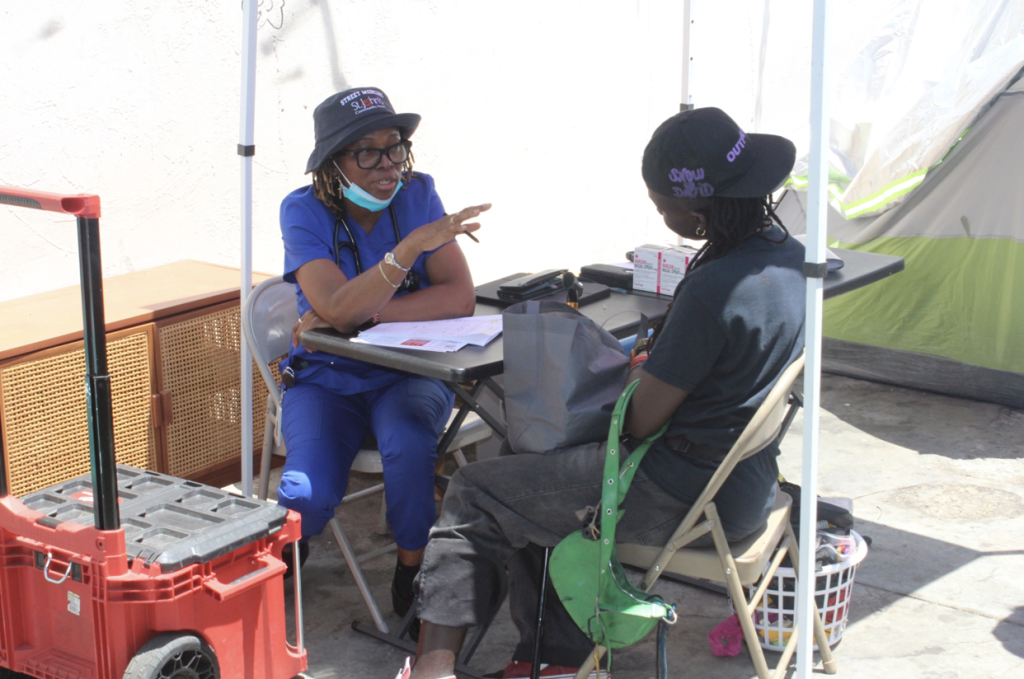
When Rayshawn Whittenburg, a 20-year-old Black Angeleno, encountered Olusanya and her team, she had spent six months on the streets with a high-risk pregnancy.
She was under the team’s care before her newborn inhaled amniotic fluid at birth, sending the infant to neonatal intensive care for two weeks. The baby was later released from the hospital into the care of Whittenburg’s mother.
“A stark racial dimension” to homelessness for Black Angelenos
Whittenburg’s experience highlights the severe maternal health disparities documented across Los Angeles County, where Black mothers and infants experience disproportionately high rates of life-threatening complications and mortality. For those surviving on the street, homelessness adds severe environmental stress and care delays to an already perilous baseline.
Whittenburg said she returned to the streets after losing her interim housing placement at the Los Angeles Inn because she did not realize that failing to remain continuously at the shelter would cost her a bed.
“I really keep to myself most of the time,” Whittenburg said. “I don’t really like people because it’s always drama.”
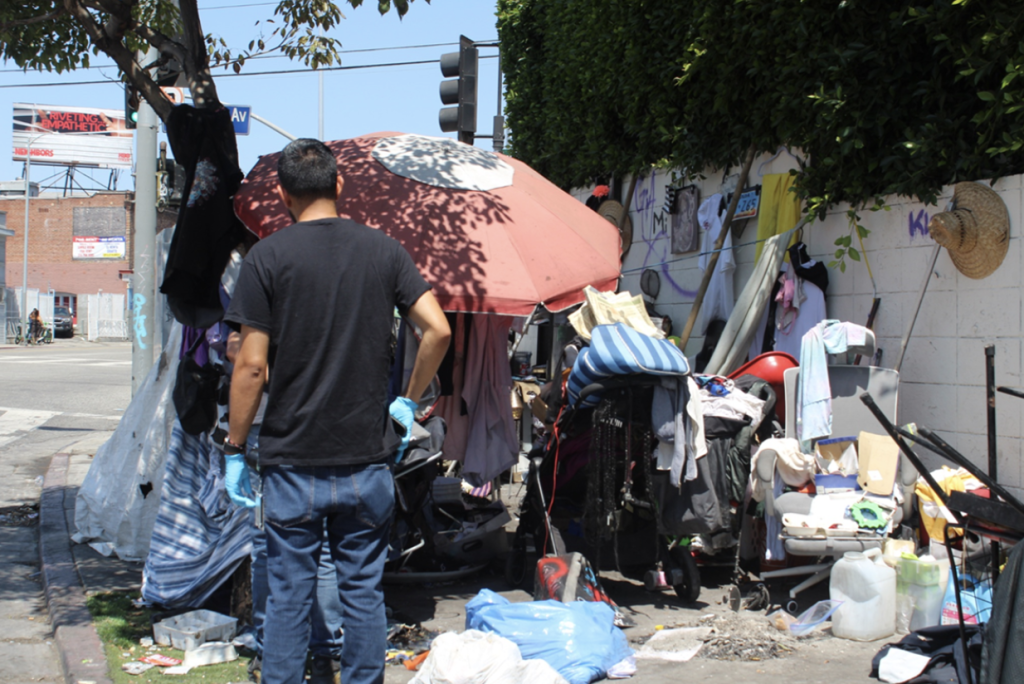
Olusanya noted that unsheltered patients routinely face judgment from healthcare providers based on their appearance or assumptions about drug use – preconceived notions she pushes back against, as most of her patients are not on the street because of addiction.
“One huge misconception is that unhoused folks are also inherently dangerous,” said Carol Ross, assistant director of Santa Monica outreach for The People Concern, a nonprofit that provides housing and supportive services. “Statistically speaking, folks with serious mental illness are much more of a danger to themselves than to others.”
After seven years of sobriety, Teff Ejigu, 37, is back on the streets navigating severe health and housing challenges.
Ejigu, who describes himself as a political science graduate, said he became unhoused after past triggers contributed to a relapse. He lost his housing six months ago and currently lacks a phone and essential documents to access benefits or housing such as a state ID and Social Security card.
“You know, we can’t give up,” Ejigu said. “I’m hoping that after I get back on my feet, I’ll be able to use this place as a launching pad to restarting my career and getting back to school.”
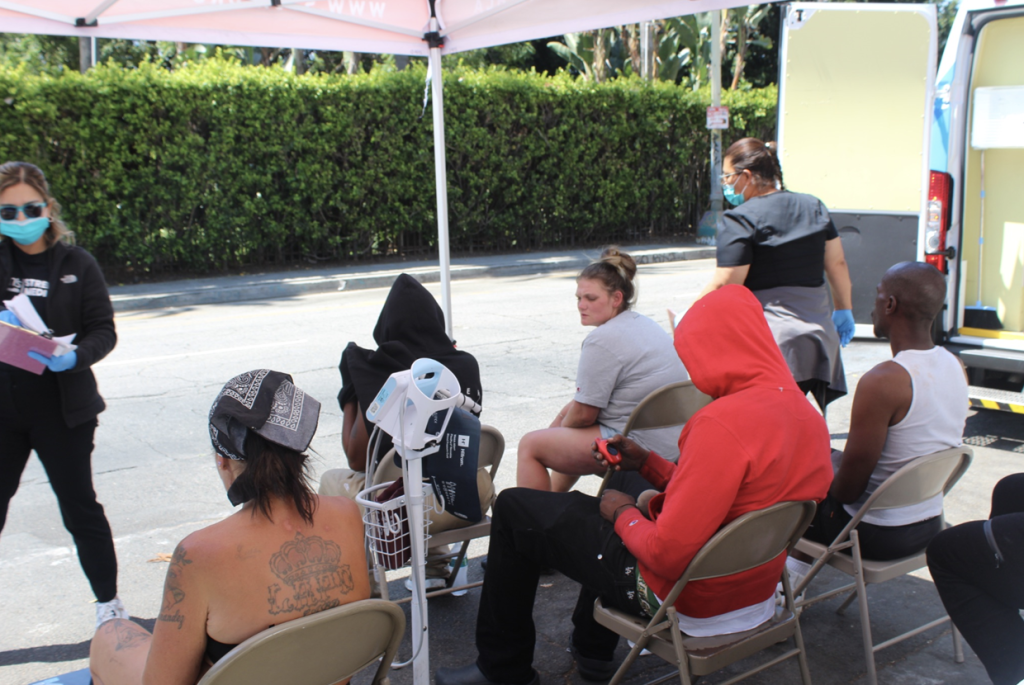
Navigating housing applications can be complicated and stressful
Beyond missing paperwork, navigating public benefit systems requires administrative literacy.
“There are resources out there, but you have to speak a special language to fill out all these forms,” Ross said. “People who don’t access public benefits have no idea how challenging it is. It’s like a full-time job.”
The main operational challenge for street medicine teams remains patient follow-up. Without phones or fixed addresses, patients are frequently lost to care, especially when encampments are cleared by the city. Olusanya said clinicians also encounter administrative barriers when trying to connect patients with services
Ross noted similar systemic limitations when patients face acute conditions, describing one unhoused individual struggling to receive cancer treatment—a case far more complex than treating a spider bite.
“In terms of getting folks connected to primary care, it works well, but there’s a lot of work to do in terms of linking people to higher levels of care,” Ross said.
“There’s definitely a need to be sure that street medicine is age friendly, that it has the workforce trained to deal with the unique needs of older adults…” Kushel said.
Local leaders should foot the bill for more street medicine teams, providers say
Some providers say city and county leaders could do more to strengthen mobile street units and cut red tape for permanent housing placements.
The Inglewood mayor’s office said the city is using federal, state and local funding to support affordable and supportive housing, including project-based vouchers and permanent supportive housing.”
The city said it is tracking 600 affordable units in various stages of predevelopment and monitoring about 46 existing density-bonus affordable units.
Roberto Chavez, HUD programs manager for the City of Inglewood, said the city is not equipped or funded to deploy mobile medical responses directly.
“I don’t think the city is equipped to deploy those resources because that’s more a function of the county or the state,” Chavez said. “We don’t have street medicine workers. That’s not something we receive funding for.”
Chavez noted that federal funding constraints continue to impact municipal budgets as housing costs outpace federal allocations.
“Every year costs go up for housing, right, and so the budget authority that we’re allocated from the federal government is not keeping up with that allocation,” Chavez said.
Off the streets, the next hurdle is going from temporary to permanent housing
The transition from temporary beds to permanent housing remains a challenge across the region. Across Los Angeles, the county identified the shortage of affordable permanent housing as the biggest barrier to moving people from interim to permanent housing.
“Healthcare is a human right. Just because somebody is living in an alley doesn’t mean that they don’t deserve to have a doctor who understands them,” said Ross.
“We only see some of them once or twice a week, so that’s the gap that we have,” Olusanya said of unhoused patients. “Cities have a bigger role to play. They have to provide the safety net that is needed by residents.” Health experts said when consistent clinical rapport and trust are established, street medicine can serve as a vital bridge to care.
“Street medicine doesn’t end homelessness. It is trying to keep people alive and safe while they’re homeless,” Kushel said. The street medicine team continues to care for Tanny and Benwell Hernandez, who live in temporary housing in downtown Los Angeles through the Inside Safe program. When Tanny cannot reach a pharmacy, the team delivers her medication directly to her door.
Regular health care “saved us,” one newly housed patient says
Benwell is studying to become a peer educator while the couple works to secure permanent housing. Still, their future remains uncertain.
Tanny said her biggest fear is waiting in temporary housing for six months only to end up back on the street.
Unlike patients living on the riverbank or sidewalk, Tanny can now benefit from reliable follow-up care because she now has a fixed address.
“We were at the point of giving up, but this program saved us,” Tanny said. “With what they do for me, my whole body—like my internal system—feels like it’s slowly getting better.”