
By Cecil Egbele | Contributing Writer | California Local News Fellow
For Adeyinka Glover, the meaning of her name has always been more than a definition.
“Surrounded by crowns.”
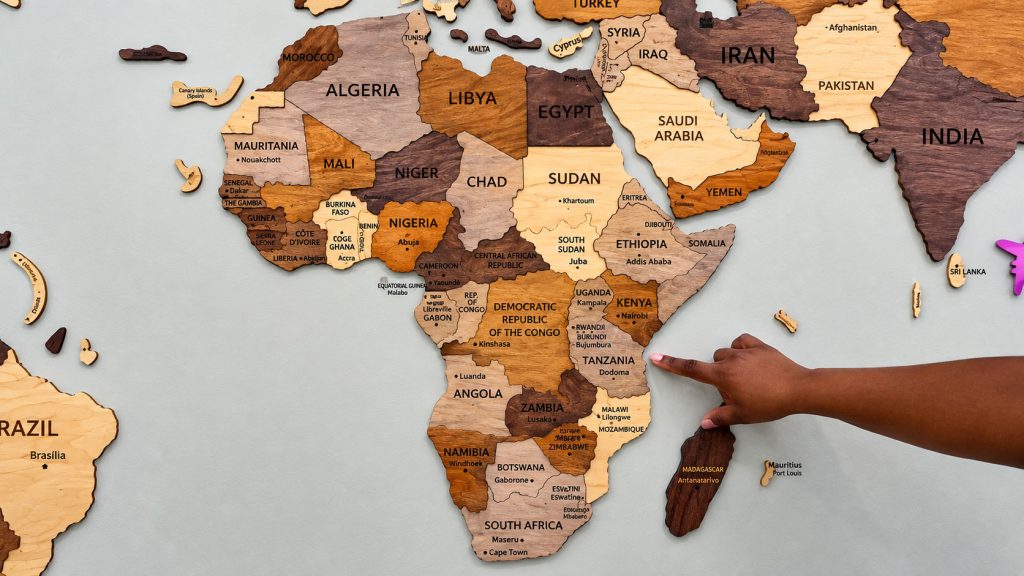
Glover, a Bakersfield attorney and first-generation Nigerian American, grew up knowing that her father was Nigerian, that he came to the United States from Lagos, that Yoruba was spoken around her and that Nigerian food was part of her family’s dinner table.
But for more than a decade, she has been trying to understand who came before her, and she chose to begin with two women she never met: her grandmothers.
Glover was named “Adeyinka” after her maternal and paternal grandmothers, both of whom died before she was born. As a child, she wondered who they were, why her parents wanted their names carried forward, and whether she could somehow live up to the women whose names she inherited.
Bakersfield News Observer
Get Bakersfield news that speaks to us.
The stories Kern County's Black community needs, in your inbox every Wednesday. Free.
Free weekly newsletter. Unsubscribe anytime.
“I was always curious about who I was named after,” she said. “Why were my parents interested in sharing their names with me?”
That question eventually became a genealogy project that has taken her from family records in the United States to archives at the University of Lagos and, she says, deep into the history of Lagos royalty.
Glover said her journey is not the typical story of an African American trying to discover an African identity obscured by slavery and generations of missing records. She already knew that.
She knew she was Nigerian. She knew she was Black American. What she didn’t know was how far back the stories on both sides of her family could take her.
Glover recalled starting with the basic steps: asking her father for records and reaching out to aunts who supplied genealogy charts. As a child, her father had told her one of her great-grandmothers was a princess. She said her research has since traced his line to the royal family of Lagos, and further back to the Benin Kingdom.
In 2017, she traveled to Nigeria for the first time, joining a study abroad trip with San Diego State students. She seized the opportunity to investigate the family history she had been piecing together from thousands of miles away. She met with relatives in person for the first time. At the University of Lagos library, she found and copied pages from a book titled Inquiry into the Obaship of Lagos. Fittingly for a lawyer, she said it reads like a trial transcript, an argument over who should be in line to be Oba, or king. She photographed and copied material from the university library, adding another layer of documentary evidence to the family history she had been assembling.
Her research led her to a startling family connection.
Glover said her research made her believe she descends from one of the earliest Obas of Lagos, Oba Ado, and that the family line connects Lagos to the Benin Kingdom through the Oba’s mother. For now, she said she has traced 18 generations on her father’s side.
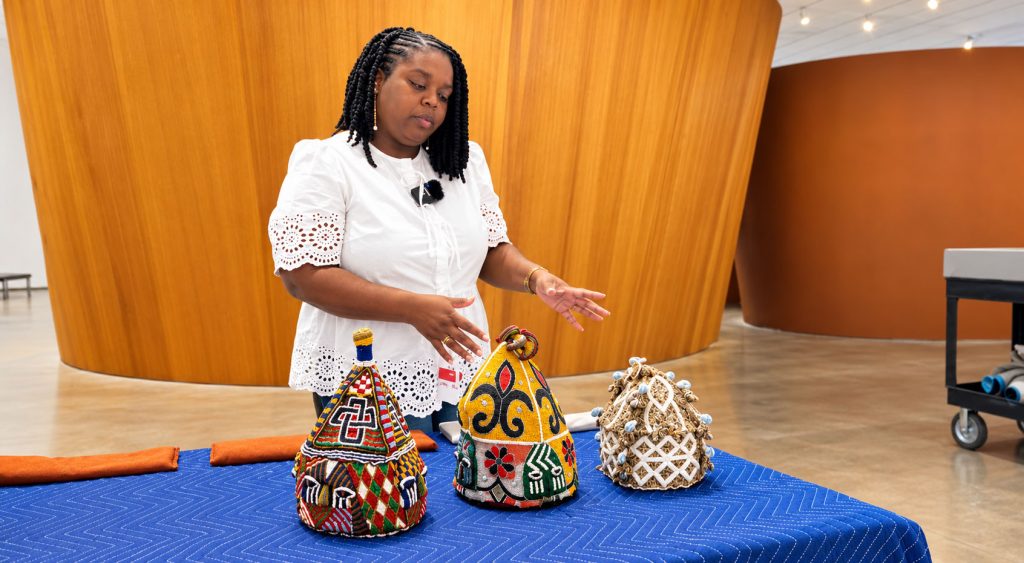
That history became more tangible when she encountered artifacts she believes were connected to her ancestors at the Los Angeles County Museum of Art.
She remembered trying to stay present as she stood before them.
“I knew I had a responsibility to document,” she said. “I Imagined they were items that my ancestors wore,” she said. “it was amazing.”
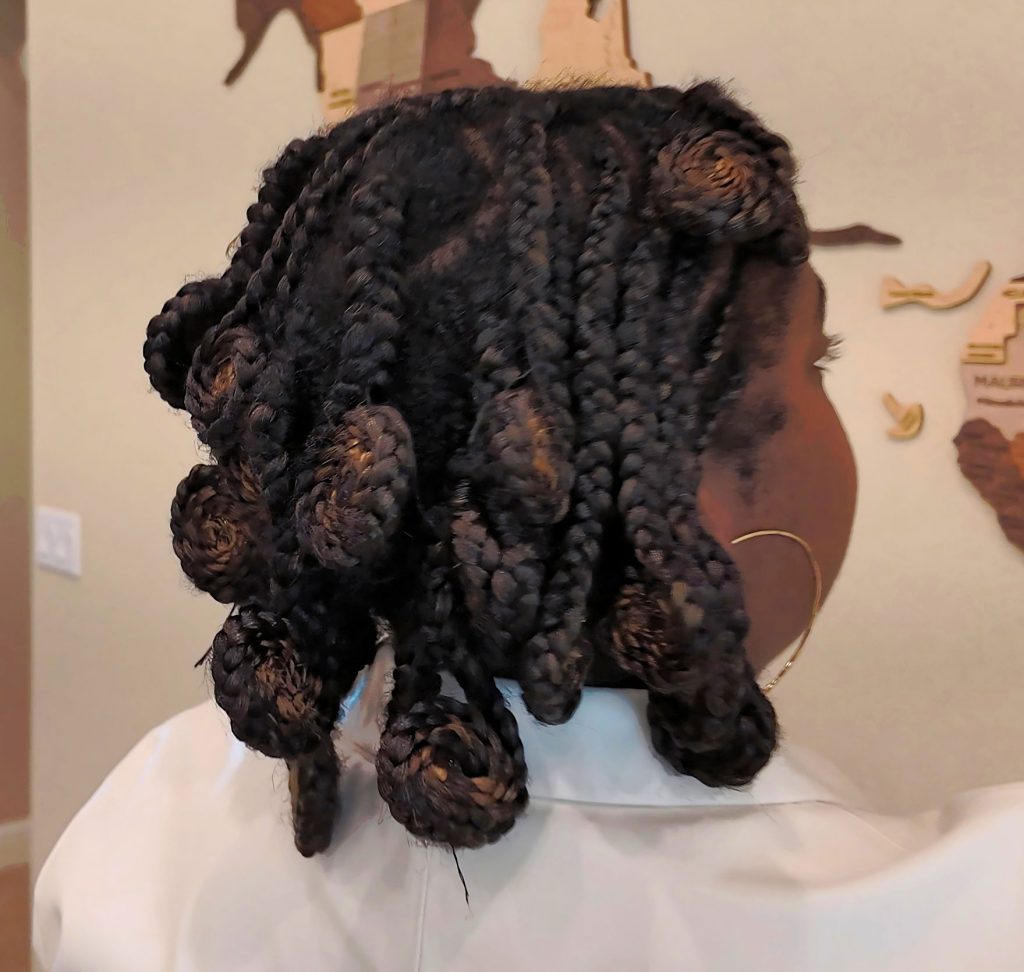
Glover said the experience changed how she thinks about the “crown” embedded in her own name. She said she always expressed herself through her hair, styling it in braids, twists, and other designs. She sees hair itself as a kind of crown.
“I have not yet fulfilled my name,” she said. “But I’m on the path.”
That path runs in two directions.
While investigating her father’s Nigerian ancestry, Glover has also been reconstructing her mother’s African American family history, piecing together census records, obituaries, certificates, and fragments left behind by earlier generations. She has traced relatives through Oklahoma, Louisiana, Tennessee, and South Carolina, finding records reaching into the 1800s. One delayed birth certificate for an ancestor was supported by a family Bible.
Now she wants to find that Bible to understand what part it plays in her search.
She said she doesn’t believe that Black Americans cannot trace their roots.
“One of the things that I am sometimes bothered by is the narrative that sometimes people say it’s impossible,” she said, “and I wholeheartedly disagree.”
It isn’t easy, she admits, and she has hit roadblocks. She moves between the two sides of her family depending on where she feels called. She also expects to travel to the Southern states where her ancestors lived, to find records she can’t reach online.
She pointed to similarities in traditions from both of her lineages, like gathering, respecting elders, and preserving family history. “I’m wholly Nigerian,” she said. “I’m wholly Black. I’m fully Black American. All of those identities make me who I am.”
What comes next
Glover said she plans to revisit Lagos and go to Benin City for a documentary she is planning. She also wants to go to Bahia, Brazil, where some of her ancestors traveled, and then to the British Museum, where she believes there are artifacts linked to her ancestry.
“I see it more so as a journey as opposed to a destination,” she said. “I am open to whatever my ancestors may want to reveal to me along the way.”
But perhaps her most important destination is still generations away.
“I really want to be able to pass what I gather together for future generations,” she said, “so that if they want to pick up the research, they’re not starting where I started.”
For anyone curious about tracing their own ancestors, she said, “by all means, I’m happy to share what I know.”
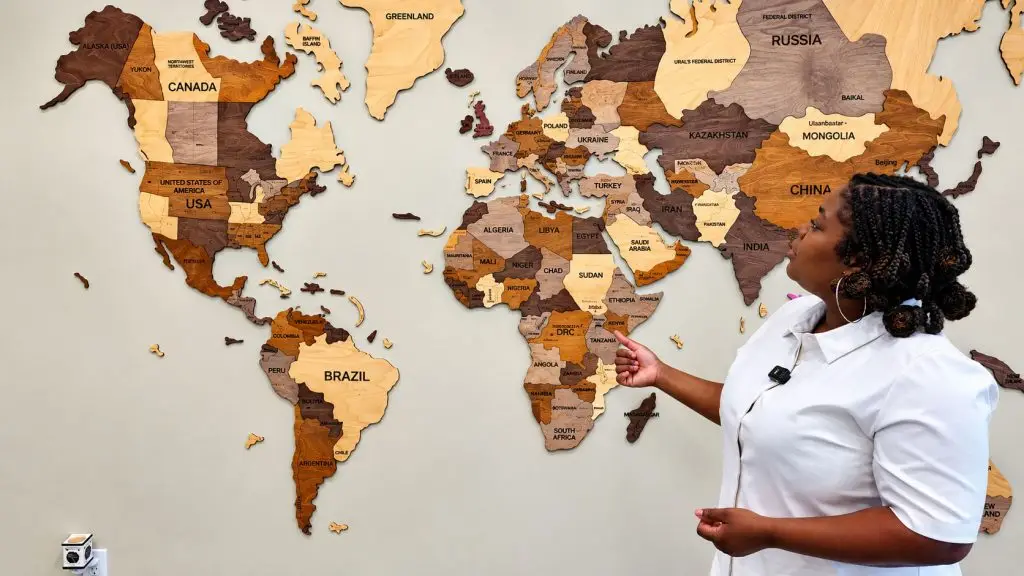
The large wooden world map in her Bakersfield home points to quests she has already covered, and pieces of her family puzzle still spread across continents.
