
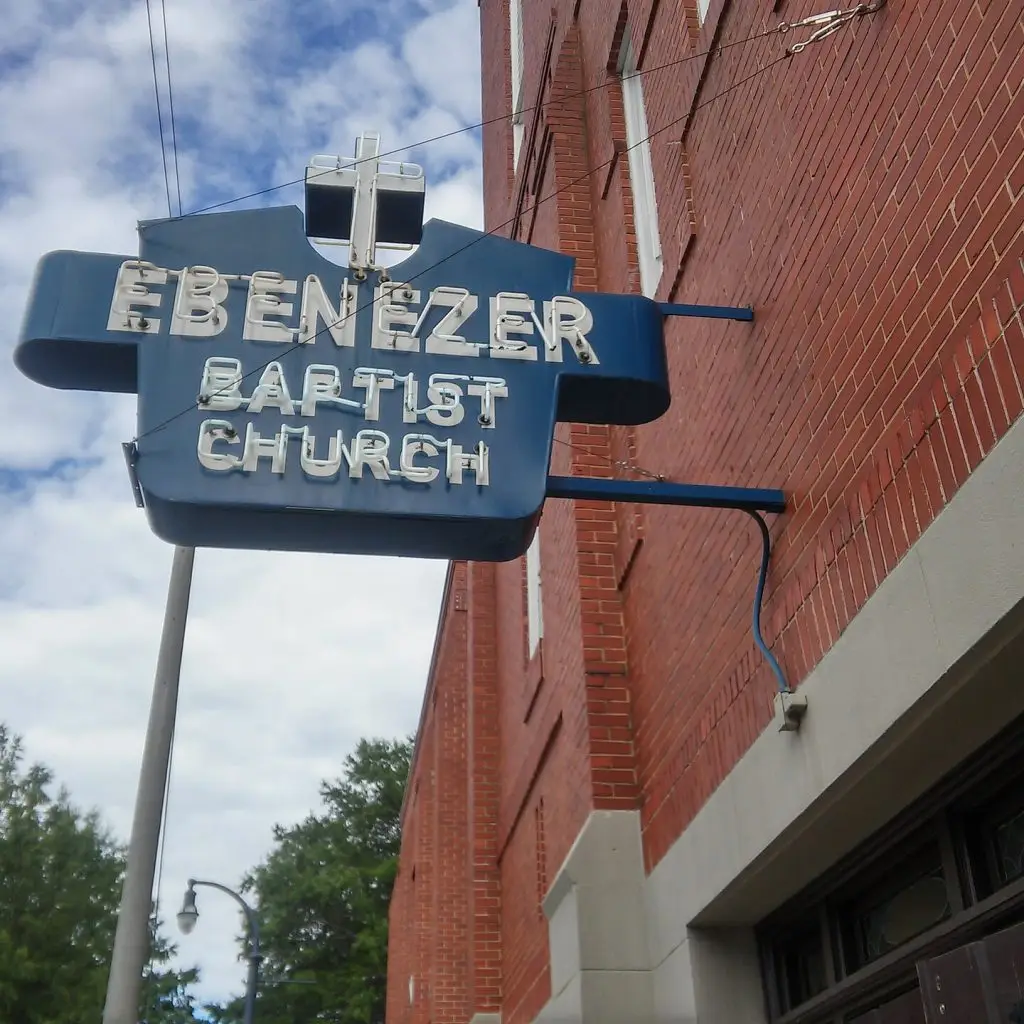
The Black church supplied the meeting halls, the communication networks, and the leadership pipeline of the civil rights movement — a role documented across historical scholarship and reflected in how Black Americans themselves describe the institution.
Today, nearly half of Black adults — 47% — say predominantly Black churches are less influential than they were 50 years ago, according to Pew Research Center’s study of faith among Black Americans, published in February 2021. That study, based on one of the largest surveys of Black Americans on religion ever conducted, remains Pew’s most recent comprehensive examination of the subject; a Pew synthesis published Dec. 2, 2025, drew on the 2021 study rather than superseding it.
But perceived influence and actual practice are two different measures — and on practice, the newest data cuts against a simple story of decline. Pew’s 2023–24 Religious Landscape Study, released in February 2025, found that members of the historically Black Protestant tradition report among the highest participation rates of any American religious group: 66% take part in services at least monthly, in person or virtually, behind only Latter-day Saints (80%) and evangelical Protestants (71%), and 56% belong to a congregation. One caveat: ‘historically Black Protestant tradition’ is a denominational category, not identical to all Black Americans.
The 2021 study also found deep appreciation for what Black churches have done. More than three-quarters of Black adults (77%) said Black churches have helped Black people move toward equality — though civil rights organizations drew even more credit (89%), and both far outpaced the federal government (55%), Black Muslim organizations such as the Nation of Islam (54%), and predominantly White churches (38%).
The same study documented real internal divisions. Roughly six in ten Black Americans said homosexuality should be accepted by society — compared with about seven in ten in the general public — while about half said religious leaders should not perform same-sex marriage ceremonies, a slightly higher share than among Americans overall.
The national backdrop is a long slide that may be flattening. Gallup data published in March 2024, aggregating surveys from 2021 to 2023, found 21% of Americans attend religious services every week and 30% attend weekly or almost weekly — down from 42% who attended weekly or nearly weekly two decades earlier. Pew’s Religious Landscape Study concluded the long decline of American Christianity has slowed and ‘may have leveled off,’ with daily prayer holding between 44% and 46% since 2021 and monthly attendance stable since 2020. Among Black adults specifically, 73% identify as Christian (65% Protestant, 4% Catholic), down from 79% in 2014 and 85% in 2007, with 22% religiously unaffiliated — but Black adults remain more likely than U.S. adults overall (62%) to identify as Christian.
On the ground, congregations are describing their present-tense work in civic terms. Detroit PBS’s ongoing ‘Black Church in Detroit’ series on ‘American Black Journal,’ hosted by Stephen Henderson, opened 2026 with an episode featuring Rev. Charles Christian Adams of Hartford Memorial Baptist Church, Rev. Cindy Rudolph of Oak Grove AME Church, and Rev. Aramis Hinds of Breakers Covenant Church International. According to Detroit PBS’s account of the episode, Rudolph spoke of the church ‘standing in the gap’ in 2026 by expanding outreach services and advocating for healthcare and education. The series has also examined the Black youth mental health crisis (July 2025) and the intersection of religion and politics (October 2025).
What the numbers show, taken together, is not an obituary. Nearly half of Black adults perceive a loss of influence relative to the civil rights era — and at the same time, Black Protestants remain among the most religiously engaged people in the country, and church leaders describe an institution still doing civic work. Whether those two facts represent decline, transformation, or both is a question the data does not settle — and the people inside the pews are still answering it themselves.
Drafted by News Observed Editorial AI, human reviewed and published.