By Marion Apio | Contributing Writer | California Local News Fellow
Nearly a mile of historic Market Street in Inglewood closed to motor traffic Friday as hundreds gathered for “The Wood Cup,” a free city-backed street festival for a local community priced out of the global tournament happening in its own backyard.
With World Cup ticket prices soaring between $300 and $1,600, and stadium parking climbing past $100, the vast majority of Inglewood residents are locked out of matches hosted just a mile and a half away at SoFi Stadium.
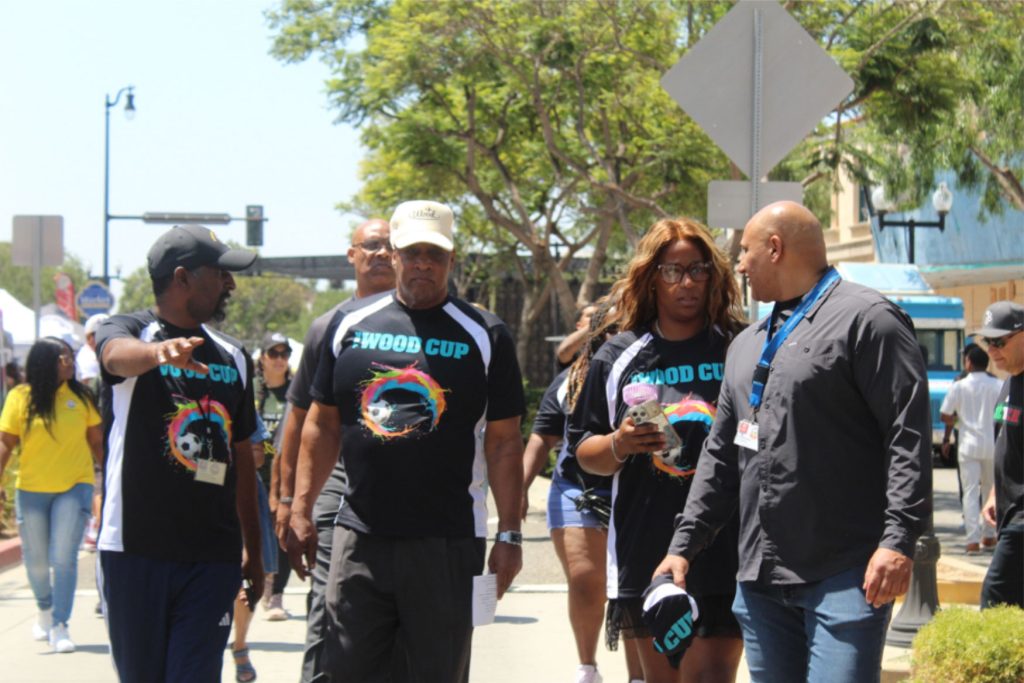
“The World Cup isn’t just happening in Inglewood; it’s happening with Inglewood,” Mayor James T. Butts Jr. told the crowd. “You don’t need a ticket to be part of history or to this party. This is free.”
The contrast between SoFi Stadium and the community festival reflects the competing realities of modern Inglewood. While city officials frame the festival as a celebration of culture and a business boost, the event has simultaneously become a focal point over who truly benefits when international sports entertainment descends on black and brown working-class communities.
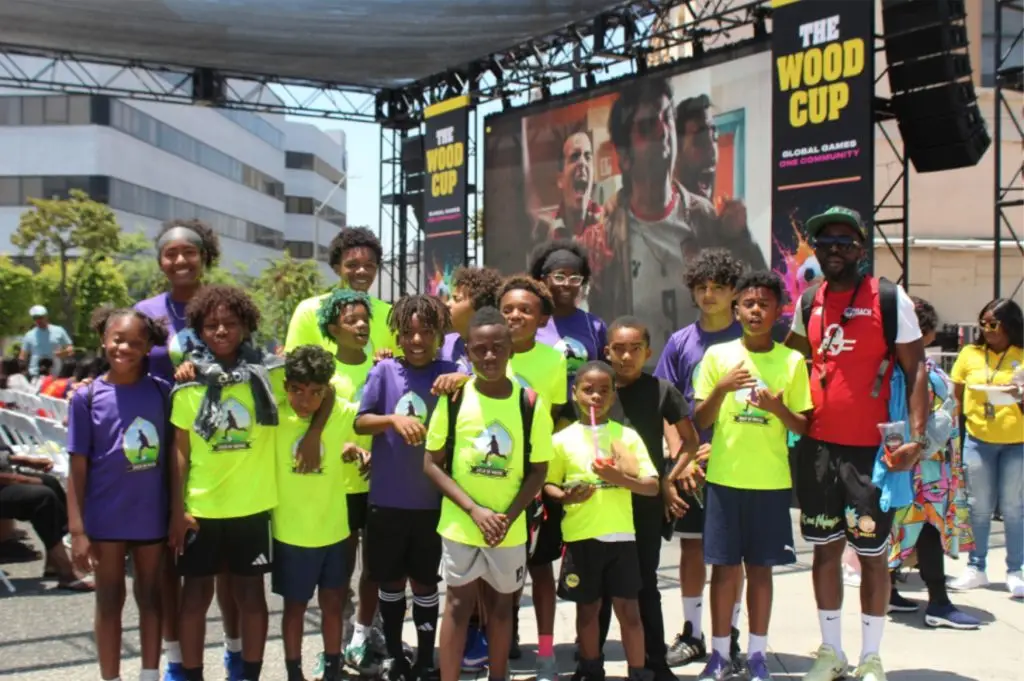
The festival was launched June 12 to coincide with the FIFA World Cup’s opening match day, when the U.S. Men’s National Team defeated Paraguay 4-1 at SoFi Stadium. Funded by a Metro Los Angeles Open Streets grant, the event transformed the downtown corridor into a pedestrian hub of youth soccer clinics, board games, tennis, and outdoor chess.
Organizers brought the ‘Wood Cup’ back for Friday’s quarterfinal match between Spain and Belgium. It served as a significant commercial footprint with local vendors invited by the city to set up shop at no cost.
Ricky West, an Inglewood resident who operates Grace Street Candle Co., said getting a free booth was a vital opportunity for advertisement, noting extreme stadium costs force locals to rideshare or walk because they simply cannot afford the sudden neighborhood price spikes.
“Such neighborhood-level events are a worthwhile investment for the community’s future and very essential for local businesses like [ours] to be able to meet, connect, and also sell products,” West said.
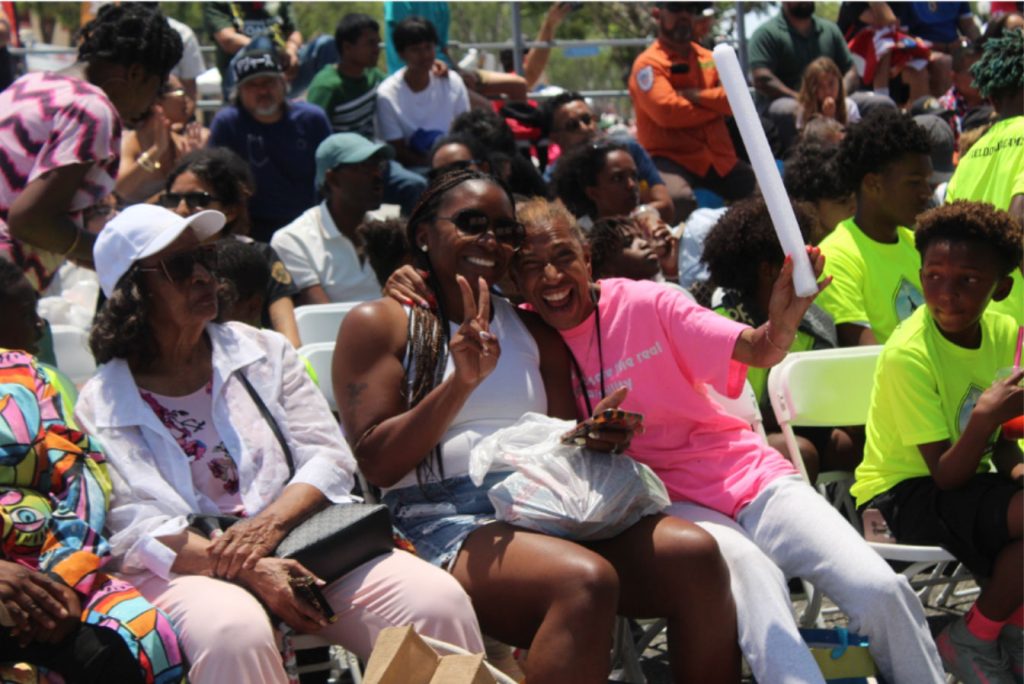
Beyond commerce, corporate partners and state officials utilized the stage to highlight major structural investments coming to the neighborhood. Assembly Member Tina McKinnor told the crowd she was able to secure $500,000 from the state to help with the building of the Inglewood High School.
Additionally, Fernando Ramirez of the Play Equity Fund announced a recently secured $4 million allocation to establish a youth sports commission for California by 2028. The fund partnered with the City to host a dedicated “Play Day Zone” on Market Street.
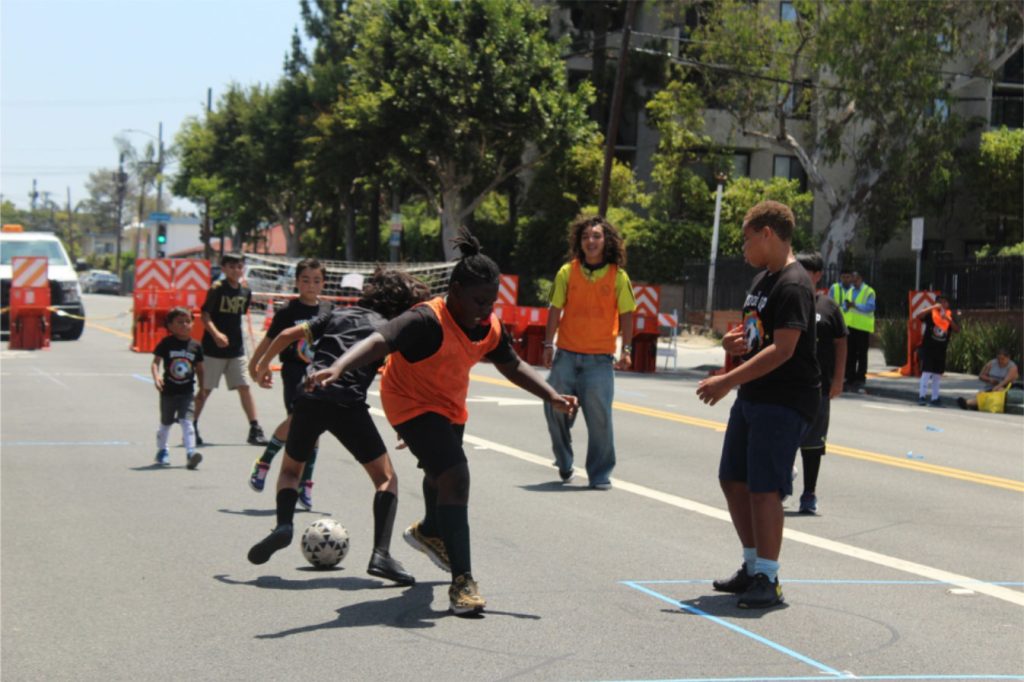
Local youth sports leaders emphasized that this free street access is vital.
“We run a soccer program here in the city of Inglewood… to create a pathway where kids can be able to play at no cost and make it affordable,” said Jose Palomares, director of the Audubon Soccer Club and Pacifico Soccer Club, which serves roughly 250 local youth.
Palomares noted that building a temporary pitch directly on the asphalt mirrors global street-soccer culture.
Macaiah Jackson, a 14-year-old soccer player, spent his afternoon playing scrimmages on the street pitch.
Coach Brown Jermaine from Sogee Youth Development brought a group of young players. He noted only one of the players was sponsored with a ticket to go inside SoFi Stadium.
For some community advocates, however, the festival felt like a superficial concession.
“The residents of Inglewood can’t afford to go to the games that are in SoFi Stadium, in the place in which they live,” said Carlos Sirah, a member of the Black Alliance for Peace of Southern California. Sirah pointed to broader systemic issues, noting 12 local schools have closed since 2018. “To me, it feels like crumbs. The people need more control, more sovereignty in their neighborhoods.”
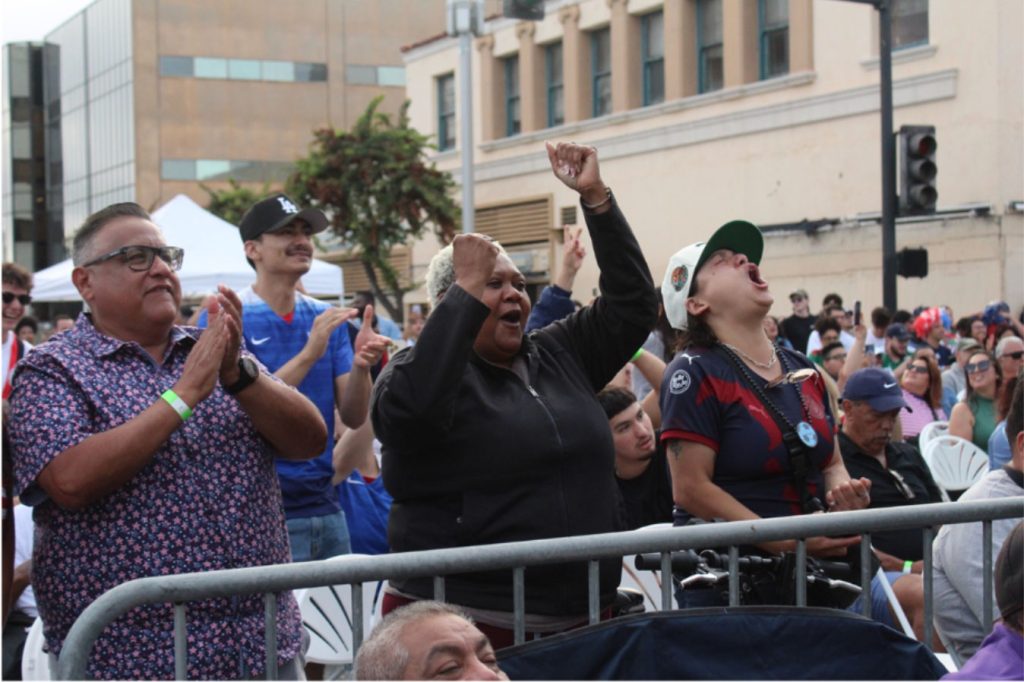
Other community figures viewed the festival as a critical tool for exposure, introducing local youth to spaces and opportunities they might otherwise never see.
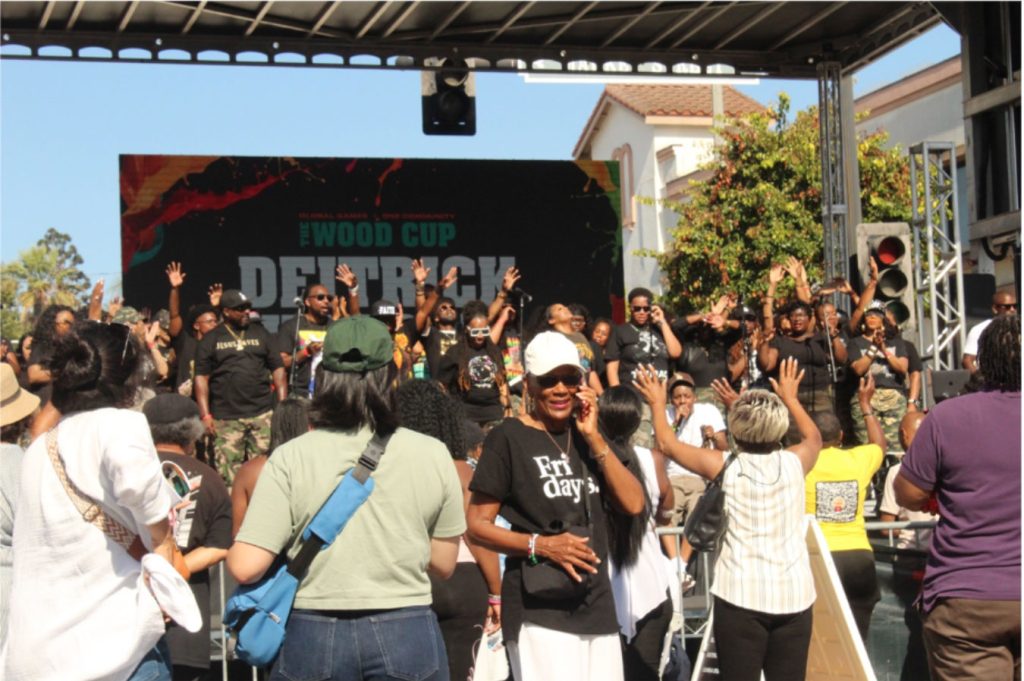
For spiritual groups on the street, the gathering was simply an opportunity to foster fellowship As the evening progressed, the festival culminated in another massive watch party on the street as Spain defeated Belgium 2-1.
Thomas D. Uwal, the Parks and Recreation Director for the City of Inglewood and a lead event organizer, framed the Wood Cup as a foundational ecosystem for future events, including next year’s Super Bowl and the upcoming 2028 Olympics.
“One of the things that the mayor and council want to do is to make sure that the businesses are thriving during the World Cup,” Uwal said.