
By OGNSC Staff
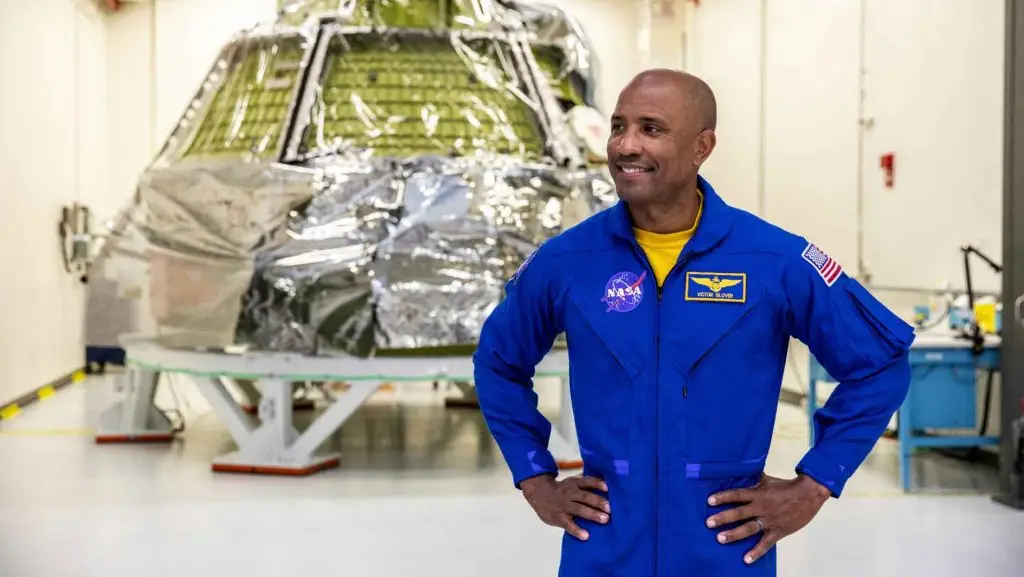
When Victor Glover first made headlines as the first Black astronaut selected to pilot a mission to the moon, the moment was already historic. Now, following the successful completion of the Artemis II mission, that history has been lived — and it’s still resonating deeply across Southern California and beyond.
Glover, a Pomona native and graduate of local schools, returned safely after orbiting the moon aboard NASA’s Orion spacecraft, marking a major step forward in America’s renewed lunar exploration efforts. The mission, led by NASA, is part of a broader initiative to establish a sustained human presence on the moon and eventually send astronauts to Mars.
But for many in the communities that raised him, Glover’s journey was about more than space exploration.
A Moment Felt Back Home
Across the Inland Empire and greater Los Angeles area, families, educators and young people gathered to watch the mission unfold in real time. For many, it was the first time seeing someone who looked like them at the forefront of such a historic scientific milestone.
“This is what representation looks like,” said a local educator in Pomona who organized a watch party for students. “Our kids aren’t just dreaming about being athletes or entertainers — they’re seeing themselves as scientists, engineers and explorers.”
Glover himself has consistently emphasized that point. In interviews before and after the mission, he spoke about carrying not only the responsibility of the mission, but also the hopes of communities historically underrepresented in aerospace.
“I don’t see this as just my achievement,” Glover said in a post-mission statement. “It belongs to everyone who helped me get here — and everyone who will come after.”
A Mission Beyond Science
While Artemis II successfully demonstrated critical systems needed for future lunar landings, its cultural impact may be just as significant. Glover’s role as pilot placed him at the center of operations during a mission that tested navigation, communication and deep-space travel capabilities.
His presence also challenged longstanding barriers in STEM fields.
For decades, Black Americans have been underrepresented in aerospace careers. Glover’s visibility — as a Navy pilot, test pilot, engineer and now lunar astronaut — offers a powerful counter-narrative.
Community leaders say the ripple effect is already happening.
“We’re seeing increased interest in STEM programs, especially among Black students,” said a youth program coordinator in Los Angeles. “Victor Glover made space feel accessible.”
What Comes Next
The Artemis program is far from over. Future missions aim to land astronauts on the lunar surface, including the first woman and the first person of color to do so. Glover’s successful flight has helped lay the groundwork for those next steps.
Back home, his legacy is already taking shape.
Schools are incorporating his story into their curriculum. Community organizations are using his journey to inspire mentorship and scholarship programs. And young people are asking new questions — not just about space, but about their own potential.
A Legacy Still Unfolding
Cecil’s original story captured the anticipation of a historic first. Now, in the aftermath of a successful mission, that story has evolved into something even more powerful: proof.
Proof that barriers can be broken. Proof that representation matters. And proof that greatness can come from right here in our communities.
As Glover continues his work with NASA, one thing is certain — his journey didn’t end when he returned to Earth. In many ways, it’s just beginning.