
By Cecil Egbele | Contributing Writer | California Local News Fellow
I wonder if “quiet” is the right reference here. Maybe it’s more a particular kind of “grief?” In Kern County, Dolly Parton is being mourned as much for her philanthropy and impact on children as she is for her worldwide impact on music and bridging cultures.
There’s a particular kind of quiet that settles in when someone like Dolly Parton dies.
Not the shock of a sudden loss, but the ache of losing someone who felt like she’d always be around. In Kern County, Parton has been arriving at people’s homes for nearly three years.
Not in person, but in books.
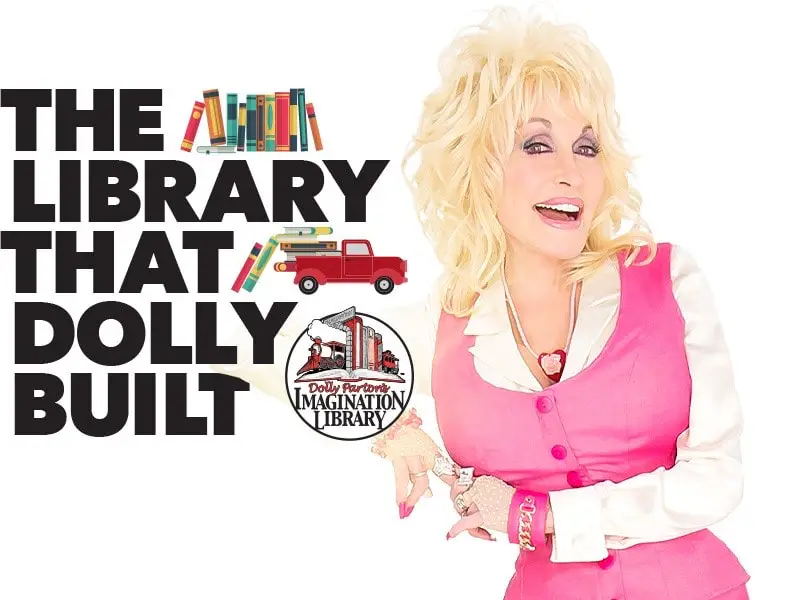
Through Dolly Parton’s Imagination Library in Kern County, more than 8,000 Kern County children between birth and age 5 have been enrolled since the program launched locally in 2023 to foster early literacy. Each child receives a free, age-appropriate book every month, regardless of family income. The Kern Literacy Council administers the local program through 22 library branches.
In a statewide expansion of her Imagination Library– a flagship program of the Dollywood Foundation– Parton has mailed almost three million free books to over 170,000 young children in 42 counties, notably creating the program’s first bilingual English-Spanish collection.
When the news came in on Aug. 25 that Parton had died at 80, there was already a reason for California to pause and pay tribute.
Gov. Gavin Newsom captured the state’s grief in a statement: “Dolly was larger than life. The only thing bigger than her hair was her heart. She challenged the double standards women often face and supported communities of color. The world will be less sparkly without Dolly.”
In Bakersfield, Parton’s death lands a little closer than one might expect. The city has its own country music DNA – the Bakersfield Sound built by Buck Owens and Merle Haggard.
Parton’s story was always bigger than country music. Perhaps one of the most interesting parts of her legacy is how deeply her music traveled into Black America.
Think Whitney Houston.
Let’s start with “I Will Always Love You,” a country song Parton penned in 1973about saying goodbye. Nearly two decades later, Houston turned it into one of the best-selling singles of all time for “The Bodyguard.”
Parton celebrated what Houston had done with her song.
“She’d have outsung me on that one for sure,” Parton said.
That relationship has become part of both women’s legacies. A white country songwriter from Tennessee writing the song, and a Black pop and R&B superstar transforming it into something that belonged to another generation.
Parton made an estimated $10 million off that cover in the ’90s. She chose to use part of the money to buy an office complex in a mostly Black Nashville neighborhood. Later telling Andy Cohen she wanted to “be down here with (Whitney’s) people, who are my people as well.”
Consider also Beyoncé.
Beyoncé’s Cowboy Carter in 2024 reopened a conversation about Black people’s place in the genre. The album includes “Jolene,” one of Parton’s signature songs. Parton also appeared on the album in the “Dolly P” interlude.
After Parton’s death, Beyoncé paid tribute on her website, calling Parton “the barometer” and the north star. She thanked her for the impact she had on music and on her own life.
Perhaps the song that best explains why Parton could connect with people far beyond her own background is “Coat of Many Colors.”
The song reflects a coat Parton’s mother made from scraps of fabric at the family’s rural Tennessee home. At school, the coat became a source of ridicule because it looked poor. But to Dolly, it represented something entirely different: her mother’s love.
The song’s emotional core is relatable to people from different communities and classes. Parton was a songwriter who could tell a very specific story about her life and somehow leave enough room for someone else to see theirs in it.
That may help explain why the reaction to her death has crossed racial and cultural lines.
Black media has been naming this legacy directly today. The Black Wall Street Times published a piece calling her a country icon who reached across racial divides, pointing to her blunt 2020 comment to Billboard that “of course Black lives matter.”
The Root ran its own tribute, in a post titled “11 Reasons Why Black Folks Will Always Love Dolly Parton.”
“She didn’t just collaborate with some of our favorite artists; she showed up for us as an ally and outspoken advocate for a variety of issues,” The Root said.
Online, the heartbreak across Black social media circles has been immediate and deeply affectionate.
On r/BlackPeopleofReddit, top posts refer to Parton as an “honorary Auntie,” and “National Treasure.”
The affection wasn’t confined to ordinary fans.
Dionne Warwick, who collaborated with Parton, described her as a “true child of God.”
Oscar-winning Black actor Octavia Spencer called Parton “a gift to the world.” Lil Nas X, who had previously performed his own version of Jolene, also remembered Parton as “the one and only.”
The political tributes have crossed party lines and ideologies.
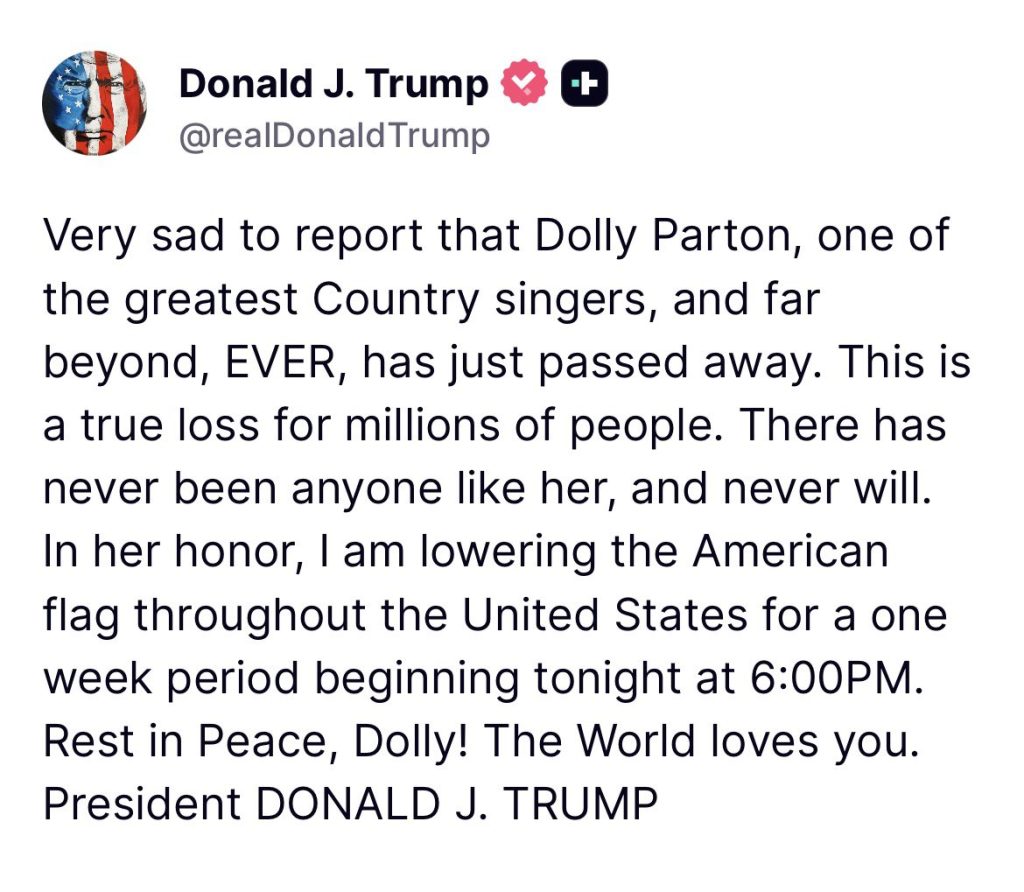
Referring toParton as one of the greatest country singers ever, President Donald Trump said her death was a “true loss for millions of people.” He ordered American flags lowered nationwide for a week in her honor.
Former President Barack Obama also remembered Parton, writing that it was difficult to imagine anyone else having such an impact. Obama said he and Michelle were thinking of Parton’s family and fans.
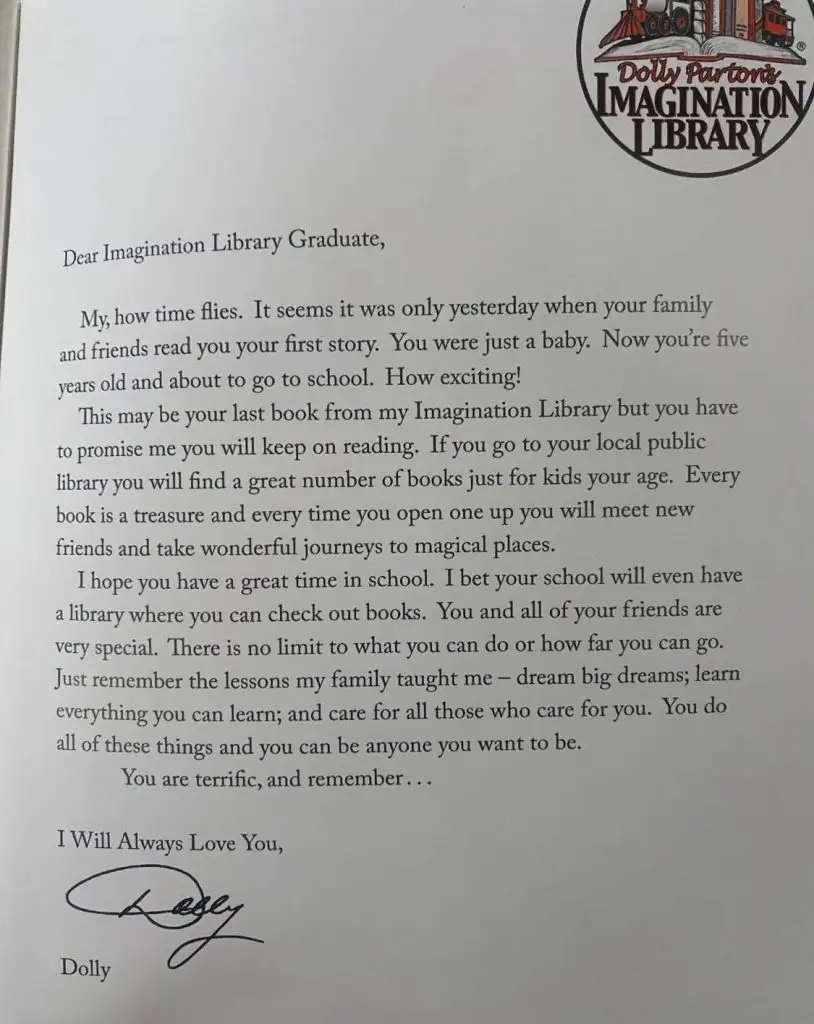
In Kern County, the most fitting reminder lies in the child waiting for next month’s book from the Dolly Parton Imagination Library.
The singer is gone. But her legacy remains in one book, one song, and one child at a time.
